



















“A thorough, enjoyable and ultimately very sad portrayal of how a famous, brilliant man couldn’t conquer his addictions”

The One About Matthew Perry, Netflix
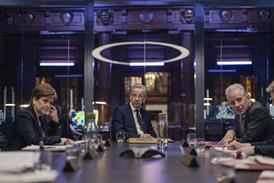
“It is an exhaustive but never (quite) exhausting film. Three hours is a long time, for sure, to tell what is in essence a sad but very simple tale, and some tiny trims could undoubtedly have been made, but it avoids tedium because of the quality of the interviews and the interviewees. The latter include his half-sister Mia and his best friends since his first days in LA, Roger Castillo and David Pressman. They all talk about the brother and the man with such love and such despair at the addictions he could not beat that it becomes at points not just a moving tribute to Perry but also to the thousands upon thousands of addicts and the people who love and despair of them, but whose stories don’t make international headlines.”
Lucy Mangan, The Guardian
“Netflix’s new documentary The One About Matthew Perry is a thorough, enjoyable and ultimately very sad portrayal of how a famous, brilliant man couldn’t conquer his addictions. Over three hours – a flicker in Netflix documentary space-time – director Mary Robertson works through Perry’s life in largely chronological order, speaking to friends and family (though not, notably, any Friends) to plot the brilliant American-Canadian actor’s extravagant gifts and equally prodigal flaws. The gifts are in evidence in every grainy Super 8 video from his childhood to every scene in Friends. Perry had comedy covered. He could do everything from pratfalls and put-downs to silly faces and catchphrases. His classic syntactical coinage on Friends “Could I be any more angry/happy/etc…” was his own creation, this documentary shows.”
Benji Wilson, Telegraph
Escaping Idi Amin, BBC2
“Anyone who has seen the terrific 2006 film The Last King of Scotland will recall the charm and monstrosity of Forest Whitaker’s Idi Amin. The actor caught Amin’s joviality — like a comedic front for mass-murdering brutality — with such magnetism he won an Oscar for it. Escaping Idi Amin, BBC2’s often distressing two-part documentary, started off with a similar picture of the Ugandan dictator’s paradoxical persona. When he first seized power Amin dazzled his people not just with promises of freedoms and boosts to the economy, but, as we saw in a clip, jokey talk of being a former boxer. “The only chance to defeat people who are against you or against the country is to win by knockout!” Everyone laughed, not realising that he meant this in more literal terms. Almost as soon as he was in power he was ordering a purge of his political enemies.”
James Jackson, The Times
“The contributors to Escaping Idi Amin hardly make any direct comparisons to the present day. They don’t say: look, this part of the story is what Britain is now heading towards. This part is where America is already. These are the same words you can hear across the western world in 2026. They don’t need to. The parallels are obvious and deeply shaming, and, in any case, the story of Uganda viciously expelling its Asian community in 1972 is a humbling terror on its own terms. The star witnesses are four people who would become British citizens, but were Ugandans born and bred when, in 1971, army commander Idi Amin took control of a country that was the only home they had ever known. Bharti, Harminder and Paresh were aged between nine and 11; Maz, who has died since filming his interview for this two-part documentary, was in his early 20s.”
Jack Seale, The Guardian






No comments yet