













Landmark industry conference pushed back a week and likely to be significantly cheaper in new city, organisers tell Broadcast
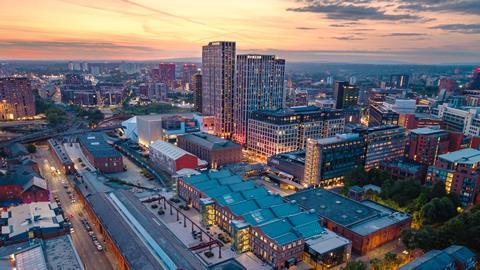
In its first year out of Edinburgh, the 2027 TV Festival will embark on a new chapter in Manchester after the August bank holiday, with Sony Pictures Television’s Wayne Garvie on board as advisory chair, Broadcast can reveal.
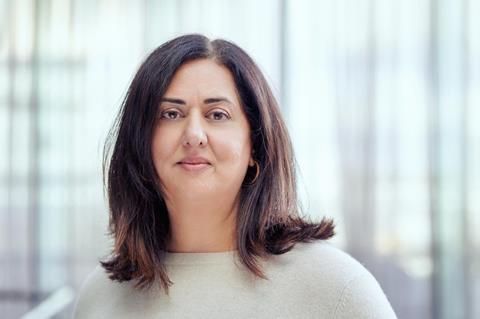
The TV Festival — now its official name — will run from Tuesday, 31 August, to Friday, 3 September. Ticket prices are still being modeled, but expected to cost around 25% less, meaning a full priced £1,500 pass could potentially drop to £1,125. Organisers also say that the majority of prices will be “well under £1,000”, with even cheaper passes for those facing challenges. Meanwhile, hotel prices are forecast to be at least half of what delegates paid in Edinburgh. In an exclusive interview, TV Foundation chief executive Campbell Glennie and the event’s executive chair Fatima Salaria underlined that accessibility and affordability are paramount for the refreshed festival.
“Our dream and vision for it is that if you work in TV, you should be able to reasonably come and be part of those conversations,” says Glennie. “It shouldn’t be something that only certain people can reach.”
Salaria added: “We asked ourselves, have we got the right voices at the TV Festival? Have we got the people who are going to be shaping the TV Festival for the next years? And maybe we just need to make sure that everybody is able to come. It was a really big piece of work, but we took it incredibly seriously.”
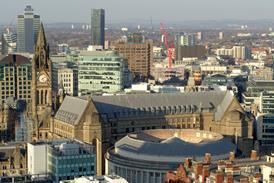
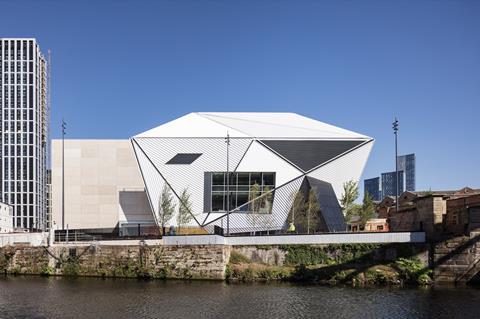
The festival, which kicks off the day after Manchester Pride concludes on bank holiday Monday, will be held across two sites: Versa Studios Manchester (on the site of Granada Studios) and neighbouring Factory International (part of Aviva Studios). Located in the St. John’s cultural district, the venues are a two-minute walk apart.
Garvie, president of international production for SPT, will serve as advisory chair, taking the reins from Netflix UK’s director of doc series Adam Hawkins. His appointment speaks to the “international scope and ambition” of the festival, says Glennie.
These key details emerge almost four months after Manchester won a competitive bid to become the new home of the festival after 50 years in Edinburgh. The bold move has been controversial, with critics bemoaning lost ties to the Edinburgh Fringe, which was frequented by some TV execs, as well as the Scottish screen sector.
Yet the very magic that brought that crackling energy to the TV Festival every August is also what made the event prohibitively expensive for many in the industry, particularly freelancers without expense accounts.
The team explored moving the event out of the Fringe period, and after the bank holiday, but Edinburgh hotel prices barely budged and cheaper student accommodation was scarcer. Meanwhile, migrating earlier or later in the TV event calendar also didn’t work. “We didn’t want to radically move,” explains Glennie. “People really value that ‘back to school’ feeling during that time of the year.”
The festival has delivered an average 2,000 delegates per edition over the last 10 years, but “there’s this whole other world of TV, screen and digital that we’re not quite reaching — and a lot of that is just having space,” says Glennie, who noted his 12-person team couldn’t program into the evening and was restricted by space at the Edinburgh International Convention Centre.
In Manchester, the TV Foundation sees an opportunity for growth. Then mayor Andy Burnham, now the Prime Minister, rallied for the city and — although the decision “was not financially motivated,” Glennie stresses — it’s understood there is considerable investment going into the new event.
The team are forming various partnerships in Manchester, and taking advantage of the working studio venues, which will contribute a distinct “texture and much more of a festival feel,” says Glennie.
However, the shape of the festival isn’t getting a drastic shake-up. The Tuesday to Friday flow will remain, along with such hallmarks as the MacTaggart and Alternative lectures, Spotlight sessions and Masterclasses. New additions could include screenings and more public-facing programmes that run alongside them. But the driver will continue to be content, says Salaria.
“It’s always going to be about what’s going on in the TV industry at that time,” she says. “The key thing for me will be getting all those new voices and people who’ve not been able to afford to come to the festival before, and giving them the opportunity to be those voices in those rooms and at those tables.”
Fringe benefits overstated
There’s no replacing the buzz surrounding the Fringe, but Glennie points out that the number of delegates doing business at the performing arts fest has been vastly overstated. The organisation’s research and industry conversations revealed that those working in comedy or drama will have already attended in the first two weeks of the Fringe — not at the tail end, during the TV Festival.
“It was lovely to see us being credited with the birth of Baby Reindeer and Fleabag,” says Glennie. “If we could take even 10% of the credit for that, we would be all over it. But the truth is: those amazing shows and creators would have found their way on to TV with or without us.”
Even so, the Fringe Society is partnering with Screen Scotland to deliver a new arts event pilot that will take the TV Festival’s place in August. Noting that the organisation knew of these plans from the outset, Glennie downplays any rivalry between the two confabs and insists they will be “completely complementary, and very different propositions.”
Heading into the new year, Glennie will remain as chief executive for the foreseeable future, while Salaria reveals that although her term as chair is up after six years, she will stay on for an additional two years to see out the transition. The TV Festival has a five-year strategy for Manchester, and five-year leases are in place with various vendors.
“But it’s not like in five years we’ll do all this over again,” says Glennie. “Hopefully, it doesn’t need to be done for another 50 years — or ever again.”






No comments yet