


Netflix, Apple TV and Prime Video are moving into live programming like never before – but why now and what changes are on the horizon?
There was a time when live entertainment was seen as broadcasting’s last great line of defence against the rise of global streamers. Live sport, in particular, was regarded as the unassailable domain of pay-TV: too expensive, too local and too operationally complex for on-demand platforms built around boxsets and binging.
Fast-forward to today and those assumptions no longer hold. Over the past three years, global streamers have moved decisively into live programming – first through eye-catching sports rights deals, and increasingly through live entertainment, awards shows, fan events and high-concept one-off s. Live is no longer the antithesis of streaming; it is becoming one of its most potent strategic tools.
Amazon Prime Video now shows live NFL and UEFA Champions League matches, while Apple TV+ has secured top-tier rights to Formula One and Major League Soccer, alongside a growing slate of live cultural and music programming.
Netflix’s move into live began in early 2023 with Chris Rock: Selective Outrage, its first live-streamed comedy special. Since then, it has gone further than most, executing more than 200 live events. These include streaming the Screen Actors Guild Awards, WWE Raw, NFL Christmas Day games, Jake Paul boxing bouts and live entertainment such as Star Search and Skyscraper Live (pictured top), the latter a one-off special produced by ITV Studios-owned Plimsoll Productions, following a free-climber as he scaled Taipei 101.
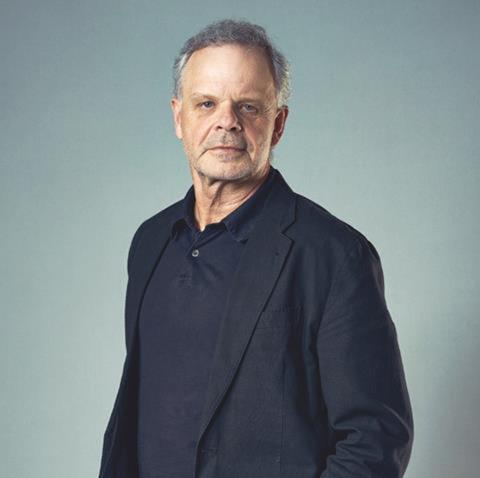
“It’s clearly become more than just a TV show,” says Grant Mansfield, Plimsoll’s chief executive and the executive producer on Skyscraper. “It became a global news story – a moment not just for Netflix, but for live television more generally.”
Live opportunity
Later this year, Netflix will stage one of its most ambitious live events to date: a global special focused on the comeback of Korean boy band BTS, produced by Done+Dusted and streamed live from Seoul. For Melanie Fletcher, chief executive and executive producer at Done+Dusted North America, Netflix’s embrace of live represents a major opportunity for producers.
“We feel pretty lucky in this moment,” she says. “Live is suddenly being talked about as a driver of audiences, subscriptions and advertising – and that’s been the basis of our business for almost 30 years. Almost everything we do is live.”
Done+Dusted’s credits span decades of high-end live production ranging from the FIFA Club World Cup Half Time Show to The Macys Thanksgiving Day Parade, while its co-founder Hamish Hamilton directs the Oscars and Super Bowl half-time shows.
What has changed, Fletcher says, is not the value of live, but who is commissioning it. “We still work with traditional broadcasters,” she explains. “But now we also work with streamers and digital platforms – YouTube, TikTok, Twitch – anywhere a live feed and entertainment collide.”
“Our space in the market isn’t about filming existing events. It’s about creating them”
Grant Mansfield, Plimsoll Productions
Brands are also critical to the new live economy, she adds, citing Victoria’s Secret Fashion Show Live, streamed across Amazon Live, Prime Video and the brand’s own social channels.
Plimsoll approaches live from a different angle, but also sees streaming as a growth opportunity. Best known for authored factual and adventure programming, the company has built a dedicated ‘Adventure and Live’ division designed to create events rather than simply cover them. “Our space in the market isn’t about fi lming existing events,” Mansfield says. “It’s about creating them.”
Skyscraper began as a producer-led pitch. Plimsoll had worked with climber Alex Honnold for several years when conversations turned to a live challenge. “Alex thought it would be incredible to climb Taipei 101,” says Mansfield. “Once we realised the climb time was around 90 minutes – perfect for live – we took it to Netflix.” The streamer was immediately receptive. “They were into it from day one. Everyone could see the potential.”
Securing permissions required months of negotiation with building owners and Taiwanese authorities. “This is a landmark building and the consequences of anything going wrong were serious,” Mansfield says. “But our reputation, Alex’s standing and a bit of timing luck meant the stars aligned.”
Streaming’s flexibility was key. “Alex predicted his climb time almost exactly,” explains Mansfield, “but we weren’t locked into a rigid schedule.”
James Townley, chief content officer at Banijay Entertainment, agrees live is now a more active consideration – particularly for new IP – but says that it brings distinct challenges. “Live is increasingly the starting point, where brands are born,” he says. “The upside is immediacy and relevance, but the risk is exposure on day one. If the concept isn’t robust, it can stall quickly.”
Mansfield echoes this, noting that the creative challenge on Skyscraper was as demanding as the technical one. “You can’t just watch someone climb a building for an hour-and-a-half,” he says, “so we storyboarded everything from cutaways to back stories and how the hosts guided viewers.”
Urgency and impact
For analysts, Netflix’s move reflects broader shifts in the streaming economy. “As the market has become saturated, streamers have had to become more generalist,” says Guy Bisson, executive director of Ampere Analysis. “They’ve diversified from high-end drama into unscripted, entertainment and now live – part of the ‘broadcastification’ of streaming.”
Live also creates urgency. “There’s infinite content available all the time,” Fletcher says, “but live cuts through because it creates a need to tune in – to be part of a moment.”
Netflix has acknowledged that while live accounts for a small proportion of viewing hours, its impact is disproportionate. “Not all view hours are equal,” co-chief executive Ted Sarandos said on the company’s most recent earnings call. “Live has outsized impacts on conversation, acquisition, and we’re also starting to see benefits to retention.”
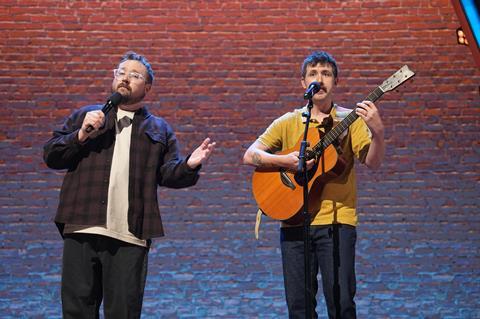
That effect is especially visible in sport. Netflix’s recent boxing and NFL events delivered audiences comparable to major broadcast networks. But Mansfield sees a more attainable opportunity elsewhere. “Live sport rights are expensive,” he says. “We’re interested in live events you create – where you don’t pay for rights.”
Live is nothing new to Disney+, Paramount+ and ITVX, streamers born of traditional media. But its resurgence also intersects with the rise of ad-supported tiers within the streamer ecosystem. “Binge drama is great for sign-ups,” Bisson says, “but advertisers want appointment viewing. They want repeat engagement.”
For Mansfield, the best live programming can initiate both. “Traditionally, interest falls off a cliff after [the event],” he explains, “but early signs suggest people are still finding Skyscraper.” Underlining this, the show was fourth in Netflix’s global top 10 for the week starting 26 January – two days after the livestream of the climb had begun.

Plimsoll has produced a cut-down version of the climb, and Mansfield sees potential for franchises to grow from live moments. “A big live event can be the start of a much longer relationship.”
Townley also argues that the shift taking place goes beyond scheduling. “Streamers can now layer real-time participation – voting, QR codes, app extensions – directly into the experience,” he says. “That helps shows build fast, loyal fan bases.”
He sees particular opportunity for talent shows, reality and gameshows – genres long associated with co-viewing but newly energised by global reach and interaction. “Live won’t replace on-demand,” he says, “but it will become a strategic pillar.”
Netflix’s reboot of Star Search, produced by Jesse Collins Entertainment, illustrates that potential. Hosted by Anthony Anderson, it airs live twice weekly, with real-time global voting. “The live voting feature is a game-changer,” Anderson said recently. “It adds a new layer of excitement.” Maintaining momentum is not easy, however, the show broke into the streamer’s top 10 in the US on its first week of airing (week commencing 19 January), but dropped out in the following seven-day period.
Social immediacy
Significantly, streamers’ interest in live also reflects changing audience behaviour shaped by social platforms. YouTube, TikTok, Fortnite and Roblox have all demonstrated the value of immediacy and participation by hosting live events.
Josh Barnett, chief executive of After Party Studios, producer of the Sidemen Charity Match, points to the event’s rapid growth over the past decade. “It’s gone from Charlton Athletic’s stadium to selling out Wembley,” he says. “Broadcasters and streamers want the rights, but the boys keep it on YouTube – because that’s where the audience lives.”
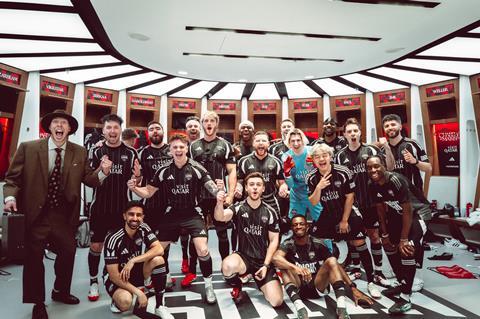
For Barnett, the appeal of live on social comes down to proximity. “People want to feel closer to the action. Live gives you that sense of being there, together.”
From YouTube’s perspective, live is simply one dynamic in its ambition to build engaged communities of viewers. Mairi Brewis, head of YouTube media partnerships in the UK, says events such as the Oscars, music festivals like Coachella and Tomorrowland, as well as major global sports events, are “fantastic at building immersive worlds around the moments fans are passionate about, but a livestream can’t be seen in isolation.
The real strategy is threading every format together – from shorts and VoD to the livestream itself – to build a lasting community. That’s how you turn a moment into true fandom.”
Cultural institutions are embracing this logic. From 2029, YouTube will be the exclusive global home of the Oscars, streaming the ceremony and year-round Academy programming to more than 2 billion users – prompting speculation that other major events may follow.
Viewed through this lens, live is not solely a drive towards ‘broadcastification’ but an illustration of streamers adopting the social media playbook, alongside vertical video, video podcasting and creator-led programming. Netflix’s Pop The Balloon Live, for example, was adapted from a viral YouTube dating series.
Equally intriguing is Best Guess Live, a mobile-first interactive quiz created by Jeff Apploff for Netflix Games. Airing at a fixed time each weekday, it offers short episodes and real-cash prizes. “When everyone shows up at the same time, that’s incredibly powerful,” Apploff says.
“You don’t bring young audiences to TV, you go to where they are”
Jeff Apploff
Since launch, the show has built a highly engaged returning audience on the Netflix app with minimal marketing – proof that live need not mean long broadcasts or global spectacles. “You don’t bring young audiences to TV,” Apploff says. “You go to where they are.”
Going where audiences reside also has a geographical connotation for Netflix. Alongside the BTS concert from South Korea, the platform is also gearing up to show the World Baseball Classic from Japan in March 2026. Greg Peters, Netflix’s co-chief executive, recently confirmed that two live operations centres would be launched in 2026, allowing it to monitor and address production and delivery issues for live shows in real time. “One is going to be in the UK and one in Asia to support the growth of our live efforts outside the US,” he added.
Ironically, streaming once promised audiences could watch everything whenever they wanted. Today, its investment in live offers something paradoxically modern: the power of instant gratification. In a landscape defined by content oversupply, shared immediacy may become the most prized asset for all streaming platforms.




No comments yet