

Chief executive tells Broadcast he has ‘no plans’ to close labels, talks up DTC investment and stronger negotiation power with streamers
Banijay chief executive Marco Bassetti has outlined his vision for the All3Media merger, with “no plans” to close any labels, an increased focus on direct-to-consumer and an expectation of greater negotiating power with global streamers.
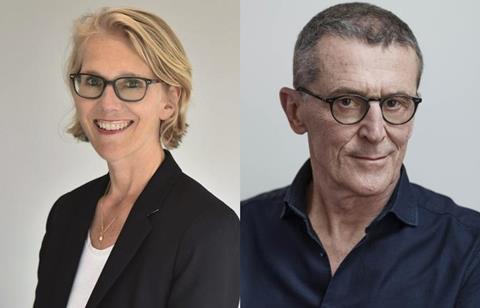
Bassetti, who will lead the enlarged entity with All3 boss Jane Turton as his deputy, talked up the combined production-distribution entity’s prospects during a far-reaching discussion with Broadcast International, revealing that talks first began six months ago.
The deal is expected to formally close in autumn, but its structure – a 50/50 venture with All3 owner RedBird IMI investing additional funds to balance the equation – reflects both companies’ willingness to combine.
It is, the Banijay chief claims, “the best structure” possible, with RedBird IMI’s injection of €796m enabling the group “to be one of the biggest producers in the world and giving us opportunities to grow in different areas, adding new, fantastic talent into the group”.
Bassetti and Turton, long-time friends who talk frequently, both run companies which are increasingly squeezed by buyers, and part of the rationale behind the merger is to even out that equation.
Only last week, Paramount agreed a deal to buy Warner Bros Discovery, and it is through the context of streamer consolidation, plus the broader decline in broadcasting, the All3-Banijay merger should be viewed.
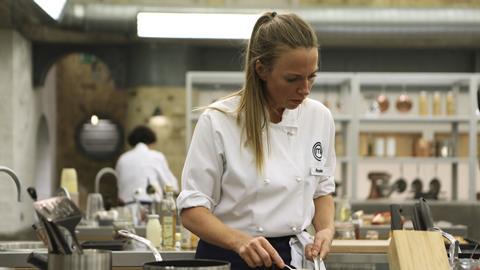
Its (even greater) scale enables more formats such as The Traitors and MasterChef to be better monetised in multiple countries, Bassetti said, and it also means the supplier is in a better position to “say no sometimes” when buyers offer “a very, very poor deal” or interfere with the creative in a way that “doesn’t make any sense”.
“If you are a big group, we can step in and [say] we will do something else, to protect us. If you are a small company, you are obliged to accept any terms that they offer to you. That’s why scale is so important, and why it makes sense to be a natural consolidator.
“Talent understand that if they join us, they could have much better [commercial] terms than if they were just acting alone.”
Bassetti said he expects four or five streamers to emerge globally on a longer-term basis, “maybe one for sport, one for family, one for young viewers, another that is more premium and one that is more basic”.

“That is going to happen,” he said, noting that the implications for suppliers are clear, irrespective of which companies emerge victorious.
Bassetti also pointed to the importance of distribution scale, both in terms of selling shows but also in providing deficit financing, particularly on scripted, to ensure a good deal can be struck with a buyer.
On top of that, he added, is the importance of retaining IP so it can be monetised, including on YouTube, social and FAST channels.
Going direct
Those ambitions are part of a major wider push in direct-to-consumer, Bassetti noted.
While it may represent only a small proportion of revenues today, it is an area of significant focus going forward and All3-owned Little Dot Studios was highlighted several times in the investor call following the deal announcement.
“Today, I can’t see a sustainable business model that can replace the current business structures, but we are already launching a few shows on YouTube to test the market and we’re doing that with new formats too,” he said, pointing to countries like Brazil where shows can sit on YouTube alongside windows on free or pay TV.
“I think there may be more of that,” he added. “It would also be good to bring content creators into our camp and bring our IP to them. That mix can create value.
“We are not sure that it can work all the time, but creators need more IP, and we need them to attract younger audiences [to our content]. The integration between production companies and creators will grow in the coming years.”
Creative protected from synergy squeeze
Given the size of the companies once brought together – Banijay Entertainment revenues are €3.3bn (£2.9bn) and All3 turnover stands at €1.1bn (£960m) – there have been some raised eyebrows that only €50m (£44m) of synergies have been identified.
Bassetti admits “it’s not a lot” and points to back office and procurement as areas that will deliver savings, along with “some duplication” that is expected to come from the two companies’ distribution outfits, Cathy Payne-led Banijay Rights and Louise Pedersen-helmed All3Media International.
“We will never touch something from the creative part of the business. Why would we do this? It would be stupid to buy a creative content and cut costs [there],” he said.
“It is the other way around. If we save some money, we’ll invest that in new creative pilots or talent.”
He emphasised this means no consolidation of production companies.
“There are no plans to cut any labels. It’s not about labels, we need to think differently,” he said. “We need to think about talent – we want to keep them independent as much as possible, with their own autonomy to let them deliver a good show with the right momentum, [for the] right channel or with the right platform. That’s our goal.”
The mega-merger also deleverages Banijay, but Bassetti cooled talk of further large-scale M&A.
“First, we need to create value with this deal and make this work, then we can think about other things. I don’t believe that we need to have any extra producers right now,” he said.
“We would really like to invest more in digital, in live, maybe in sport, and – as always – in IP and talent. Creating is our core business.”






No comments yet