

Succession, The Thick of It and Mountainhead creator on AI, disliking Trump and finding his own creative spark
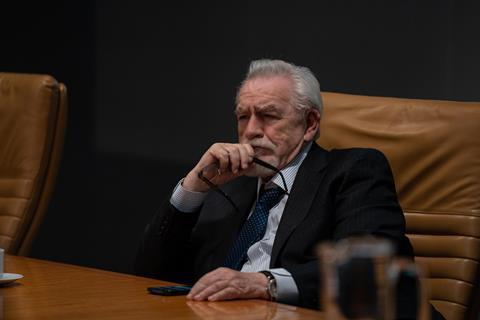
Succession creator Jesse Armstrong doesn’t expect the imminent takeover of HBO by David Ellison’s Paramount to affect the types of shows the storied US network and streamer commissions – but he has no inclination to use AI in any of his upcoming series.
Armstrong has an overall deal at HBO and works closely with chairman and chief exec of content Casey Bloys at Warner Bros Discovery, delivering his directorial debut on feature film Mountainhead last year.
The satirical comedy drama tracks four billionaires enjoying a mountain retreat as the world goes through turmoil, with the film the latest Armstrong production to delve into the psyche of questionable characters following his smash hit Succession, which charted Logan Roy’s sprawling media empire.
While Paramount’s $110bn acquisition of WBD is not yet closed, Armstrong said he did not believe the potential impact of David Ellison – son of Oracle founder and Donald Trump supporter Larry Elllison – owning HBO would impact how he or the network worked.
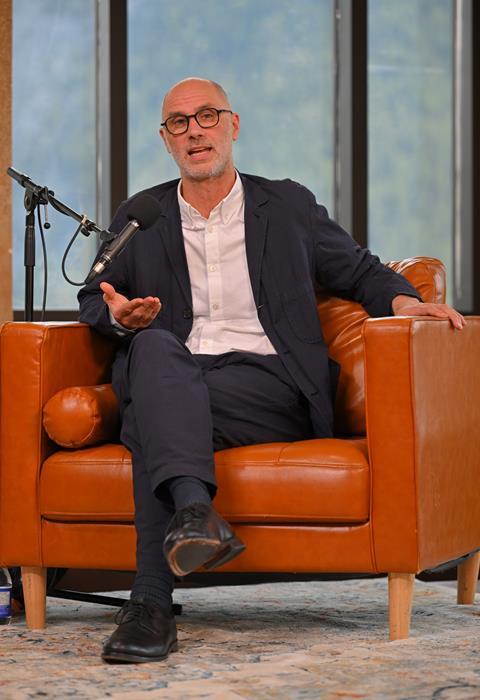
“It won’t affect what I pitch and my sense is that the team that I pitch to at HBO wouldn’t accept any interference with what they wanted to do creatively, and I wouldn’t want to be with them if they felt otherwise,” he told Broadcast International at the Banff World Media Festival.
“Will there be pressure from media moguls and tech people who own big companies not to do those kind of shows like Succession? I don’t know, people exert influence on their dominions in different ways but I think they’d be unwise to lean on the content they own because they’ll find creators don’t want to go there.”
Motivation and inspiration
Armstrong has been behind series ranging from Channel 4’s Peep Show to BBC political satire The Thick of It and black comedy feature Four Lions, but he said producing drama that looks to provoke change is not a major motivating factor for him.
He pointed to author George Orwell’s line about “having a lie I want to expose”, adding: ”I know what he means about that. Sometimes it’s an impulse to get at the truth of something, which seems a bit obfuscated or fake or not talked about in the world.”
Armstrong said his next project would likely be set in the worlds of business or politics, nottng the “evergreen” interest in “the way that power works in society” in the latter. “I’ve got no worries about finding the right territory for that,” he added.
But he said the ambition with his projects is to reflect characters, with Mountainhead not explaining the inner workings of the tech world but rather the types of people who inhabit it.
“I don’t think anyone who is close to tech will watch that film and think, oh my god, he knows tech inside out. That’s not my angle, though. The research and elements around the tech should be solid of course, but that’s not going to be where the insight lies.
“The insight I hope to bring, if any, is about the people and the ways of thinking.
“You don’t need to hear what I reckon about the Makerfield by-election [in the UK] or who’s going to win in California, because that would just be another person who’s read the paper and is giving you a sort of messed-up version of that news.
“My creative impulses come from thinking about the people behind those situations. I don’t mind talking about politics but I don’t think it’s directly related to my creative work, which is why I might not lay down the law about Trump or UFC or Anthropic,” he joked.
Asked what he does think of the US president, Armstrong is clear.
“I don’t like Trump, I think if you’re in a democracy you have to accept the results of elections, and that’s a red line. So, yeah, I don’t like his politics.”
Armstrong also dismissed using AI in his creative process, citing an acclaimed group of showrunners at a panel at Banff earlier in the week who “curdled” at the notion of embracing the technology in their work.
“If we were all robots, we might be able to incorporate AI into our work without it frying our creative impulses. But we’re not robots, and the feeling of a non-human element coming into the creative work, it’s like a piece of road salt hitting a patch of ice – it just melts, it all goes, and the feeling that there’s some of that other element in the work destroys your creative engagement.”
Armstrong, famed for his deep research into the worlds his dramas explore, said he wouldn’t even trust AI to create a reading list for him. “I would not like that to be the work I base my show on, the reading list I used would have to be in addition to what I compiled.”
While Mountainhead launched last year, Armstrong is keeping his next move close to his chest. TV remains his preferred medium, he said, but jumping back into a show the size of Succession is not on his immediate agenda.
“Doing a multi-series show is still such a big endeavour, and that’s what I hope to pitch to Casey and HBO, but I might need a bit more of a wait before I dive back in. I might try writing some prose though,” he said, adding that HBO comedy-infused dramas such as DTF St Louis and The Chair Company were among his recent watches.
“I need an impulse or a creative engagement that often comes from a political or a business thing that seems weird or wrong, or is doing damage in the world, and I react against that.
“What I know is that although that might be the impulse that gets me intrigued, it needs to be completely shot through every fibre of the show, and if the audience thinks they can feel your hand on the scales, that you’re not portraying a real version of the world, they recoil.
“You can feel that you’re being sold something so quickly, right? If the point of view is too strong, it’s like watching a party political broadcast versus watching a sketch.
“Viewers are being sold things all through their day, they don’t want to be sold anything else – that’s how I am too. It’s a very curious thing: a show without a moral impulse or a feeling about the world is a bit dead. And yet, if that impulse pokes through all the time, if you’re trying to persuade people with a point of view, you’re dead creatively.
“You have to take that feeling and turn it into this other thing, a show, a piece of art, or whatever you want to call it.”
Armstrong said his approach is focused on “not looking down on my characters”.
“If I’m trying to get myself into the head of [Succession’s] Logan Roy, I need to be able to believe what he believes and see the world the way he does, and for it to be a complete 360 view, including a moral sense of himself in the world and how he treats everyone.”
He added: “Would I be sad if someone said that their attitudes to the world had changed [as a result of watching my show]? No, I wouldn’t be, I’d be gratified. But I don’t expect it.”






No comments yet