

Unpacking how an unprecedented period of turmoil coincided with public broadcaster’s biggest-ever shift to streaming
France Télévisions has been battered over recent months by a highly publicised and highly polarised parliamentary enquiry, but it has managed to not just keep its head up high but also unveil a sweeping reorganisation aimed at modernising the organisation.
The public broadcaster’s travails are not dissimilar to those being faced by public broadcasters across Europe and beyond, with political pressure, budget cuts and changing viewing habits creating pressure on all sides.
France TV’s ‘streaming-first’ overhaul aims to deal with some of these issues, accelerating its digital transition by shifting from traditional, genre-based departments to units built around strategic missions.
Programmes and channels MD, Stéphane Sitbon-Gomez, becomes deputy MD in charge of content and editorial strategy, overseeing two major departments: Current Events (Actualité) and Content.
The Current Events department brings together three divisions: News (which includes newscasts, current affairs magazines and talk shows), Sport & Special Events, and Regions.
The Content department comprises five units, including: Creation (run by former programmes and drama director Anne Holmes); Cinema and International Series, which remains headed by Manuel Alduy; and Young Audiences, run by former editorial strategy director Tiphaine de Raguenel, who was also head of children’s programming and France 4.
Daily Life, run by former head of magazines Florent Dumont, will promote “testimonials, experiences, advice, guidance, discovery, lifestyle, leisure…” he wrote on LinkedIn, while a Knowledge unit is headed by ex-documentary director, Antonio Grigolini.
YouTube first
These structural changes come alongside a shift in emphasis, with France TV wanting all shows to be conceived for digital consumption as well as for linear, and to expand its offer to other digital platforms in addition to streamer france.tv.
After last year’s carriage deal with Prime Video, the public broadcaster has also struck a major pact with YouTube for its news content, partly as a way to fight disinformation. Newscasts, as well as investigative and current affairs magazines, will run on the social platform, with specific YouTube channels being created and organised by programme and topic.
They will also carry original programming produced specifically for YouTube, with the public broadcaster managing to negotiate so its own advertising sales house sells the advertising space. (France TV is allowed to run ads in daytime linear and on digital.)
Budgetary pressure
The reorganisation is also designed to help drive savings. France TV’s budget was cut by €80m (£69m) for 2026, on top of savings the pubcaster already had to make as it tried to break even after finishing 2025 in the red. Total savings for 2026 will amount to €150m (£130m) and will affect content investment, the broadcaster has said.
These moves follow the September publication of a report from the Cour des Comptes (the French Court of Auditors) that urged France TV to reform itself for the digital age following volatile budget allocations by recent governments, as well as the cost of the failure of the Salto streamer.
Pressure increased further with the controversial parliamentary commission inquiry on neutrality, operation and financing of public media, set up in late October, which put the cost of public broadcasting in the national spotlight. Hearings were spread over six months and the final report was published on 5 May. France TV answered the commission’s findings point by point last weekend – but while the furore around its publication may be a flash in the pan, it could nonetheless leave scars.
Public media under attack
The parliamentary inquiry was initiated by minority party the UDR (Union des Droites pour la République), an ally of the far-right National Rally party, which advocates for the privatisation of French pubcasters. A year ahead of the French presidential elections, polarised politics have taken centre stage in the French audiovisual landscape.
Although the commission comprised 30 MPs from all political sides, the UDR rapporteur took centre stage and created a political spectacle. His questions accounted for 14% of total hearing time, compared to just 7% for all other MPs combined, according to an analysis by Le Monde, while Reuters characterised the hearings in a piece titled “How a rising star of France’s far right weaponised a routine inquiry against public broadcasters”.
Leveraging his parliamentary immunity, the rapporteur was very active on social media, asking what many saw as loaded questions and making insinuations about popular hosts and top executives. Cropped video clips of the hearings were posted on social media, especially when witnesses lost their temper, along with other posts framing the rapporteur as a righteous vigilante.
“This is a circus,” summed up Xavier Niel, boss of Free and one of the three co-founders of Mediawan, which was among those under fire. “But I am not a clown.”
The Bolloré galaxy wants the scalp of France Télévisions
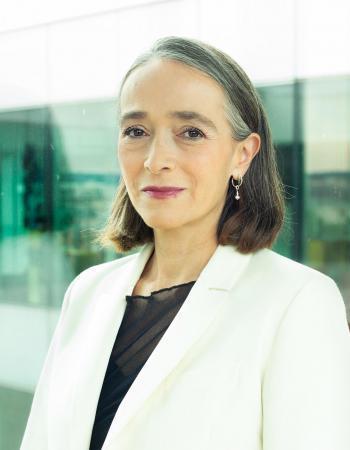
Delphine Ernotte Cunci
The six-month long inquiry culminated with a sensationalist documentary on CNews titled Charles Alloncle, Alone Against All. Opening with the tagline “€4bn - this is your money…” It was by no means the first show looking to attack public media, with the conservative outlets controlled by the Bolloré family - CNews and JDD – leading the charge for many months before the launch of the commission. Coverage escalated in September, after footage of two France TV and Radio France journalists having casual talks with socialist party members emerged, edited in a way that suggested connivance.
“The Bolloré galaxy wants the scalp of France Télévisions,” wrote France TV president Delphine Ernotte Cunci in Le Monde that same month. In November, France Télévisions and Radio France sued JDD, Europe 1 and CNews for defamation.
Vincent Bolloré was part of the hearings, denying any involvement and any interest in France TV’s privatisation, describing himself as a “convenient scapegoat”. He added that he did not know much about public TV, adding: “I don’t watch TV besides Canal+,” which he owns.
“The problem,” he continued, “is not public service, it is its €4bn cost at a time when France needs money”. Bolloré also said he knew nothing about Banijay, in which he holds just a minority share, he stressed.
Outcomes & opinions
On publication, one of the report’s main recommendations was for the French president to appoint the heads of public broadcasters.
“It is paradoxical that a commission created to shed light on independence and impartiality should end up making executives accountable for their appointment to the President,” said Radio France president Sibyle Veil in French daily La Tribune. “Add to that an attachment to the Prime Minister’s office and increased financial pressure, and you have all the ingredients for a ’tightening of the reins’.”
Veil also pointed to an outdated vision that fails to address the core issues, while ignoring the profound technological shifts currently taking place.
The cost of public service broadcasting was also repeatedly highlighted throughout the hearings. However, while €4bn is sometimes seen as the headline figure, it accounts for all public media - France Télévisions’ 2025 budget was only €2.9bn (£2.5bn), for example, with 14% coming from commercial activities, including 10% from advertising. And since the abolition of the licence fee in 2022, French taxpayers no longer know exactly how much they are paying for when it comes to public media.
There were also insinuations that budgets are being mismanaged. For instance, one recurring accusation was that France Télévisions president Ernotte stayed at the Majestic Hotel during the Cannes Film Festival at a cost of €1700 (£1470) per night. She explained it was a barter deal with no money involved, a concept seemingly lost on the rapporteur.
Entertainment remit & consolidation
The report also suggested slashing a third of France TV’s budget, although proposed cuts look unrealistic. These include illogical channel mergers and cutting entertainment budget by two-thirds, with the rapporteur questioning France Télévisions’ entertainment remit and the fact it has many gameshows.
France Télévisions countered that its entertainment remit is enshrined in its charter and mandated by official decree, making it a regulatory requirement. The broadcaster also argued that these popular programmes promote culture and knowledge, while bringing large audiences together.
The rapporteur also criticised France Télévisions for working with external producers rather than creating more in-house, but the broadcaster pointed out that such a relationship is regulated and governed by trade agreements with producers’ unions.
In the less regulated unscripted sector, producing more in-house would force France TV to hire additional staff, which would not help cut costs, it pointed out. Another talking point was market consolidation. The rapporteur tried to force Mediawan’s founding partners to admit that US private equity firm KKR was their majority shareholder - a claim they denied, asserting that they have retained control of the group.
Other recommendations suggested that France Télévisions should dedicate one-third of its budget to in-house productions, one-third to small and medium-sized companies, and no more than one-third to large production groups (with a cap of 10% per group). France TV responded that such a breakdown would be difficult to achieve given current market consolidation, although the broadcaster is not far off the 10% mark as things stand.
Mediawan and Banijay account for 11.6% and 11.4% of the commissioning budget respectively, it said. In 2025, France Télévisions worked with 850 producers, 725 of whom were independent of any group. These independent companies accounted for 45% of domestic commissioning budgets, while large groups took 36%, in-house productions stood at 11%, and international companies made up the remaining 8%.
Casualties & cancellations
While Banijay as a group was less directly targeted, some of its shows were. Nagui Fam, who hosts and produces the access-primetime adaptation of Don’t Forget the Lyrics! and several other shows via his company Air Productions, now owned by Banijay, was singled out. The rapporteur accused him of making the most money at the expense of public service broadcasting. Meanwhile, Drag Race France was accused of being mere reality television - France TV countered that the show is not reality TV, but rather a “talent contest”.
Although France Télévisions defended its entertainment remit, it did, shortly after Nagui’s hearing, cancel his summer primetime gameshow, Intervilles, officially citing budget constraints. Around the same time, online title L’Informé reported that Banijay France was making around 40 staff redundant, partly, because of budget cuts at TF1 and France Télévisions. Banijay declined to comment but did subsequently confirm a reorganisation by bringing labels together.
It is worth noting that in France Télévisions’ new structure, entertainment no longer has its own dedicated unit. However, Broadcast International understands that entertainment has been absorbed into several newly created departments, with primetime shows sitting in ‘Special Events’, and daytime and daily programmes falling under Daily Life.
What next?
Few see the report leading to any major legislation changes before the next presidential elections in May 2027. The French government previously planned to create a holding company for public media, but has since postponed the project and is not backing the Commission’s report.
The prime minister, Sébastien Lecornu, dismissed the inquiry as “a missed opportunity”, writing on X that “controversy does not make public policy,” while pointing out that work has been underway “since last autumn” to deal with France TV’s finances. “It is based on solid and objective foundations, such as the report from the Court of Auditors,” the prime minister added.
While the vast majority of industry players gave little credit to the parliamentary inquiry or its conclusions, the general public may tell a different story
The rapporteur, meanwhile, intends to use his parliamentary window to submit a bill aimed at preventing conflicts of interest - one of the core topics he addressed. Following the report’s publication, the National Rally (RN) also launched a petition for privatisation, though it remains unclear whether it has gained any traction.
What is abundantly clear, however, is that with the upcoming presidential elections, polarisation and politics have started poisoning the French entertainment industry.
Anxiety has been rising among creatives, as illustrated during the Cannes Film Festival last week, when 600 film talents and professionals signed an open letter in French daily Libération attacking Vincent Bolloré.
Some are worried that Canal+, of which Bolloré is the controlling shareholder, will increase its stake in cinema outlet and distributor UGC to 100%, allowing it to eventually control the entire cinema value chain. There are fears that the conservative billionaire will use the pay-TV group to spread reactionary ideology, as was achieved with CNews and newspaper JDD, which both changed editorial focus after they came under the control of Bolloré, or with Fayard, now the publisher of far-right leaders.
Canal+ chief exec Maxime Saada has previously sought to address such concerns, stating during November’s Rencontres Cinématographiques convention that the company has ”no political prism”. He continued: “If we had one, Canal+ would die. The only prism is artistic and commercial,” reported online investigative newspaper Mediapart.
Saada’s retort to the Libération letter was less conciliatory, however, with the chief exec telling a producers’ brunch that he viewed the petition ”as an injustice towards the Canal teams who are committed to defending the independence of Canal+, and the full diversity of its programming choices”. He added: ”Consequently, I will no longer work with, nor do I wish Canal+ to work with, the people who signed this petition.”
Another recent flashpoint occurred recently at France’s Grasset, when more than 100 prominent writers quit the historic publishing house after respected veteran chief executive, Olivier Nora, was forced out, reportedly by Bolloré.
As for France TV, the new ‘streaming-first’ model is now being implemented, with further details around how it will operate expected in the coming months, as each director finalises their respective units. Broadcast International understands more will be revealed at the broadcaster’s autumn line-up press conference this summer.
But just how the turbulence of the past nine months has affected France TV in the longer term remains to be seen. While the vast majority of industry players gave little credit to the parliamentary inquiry or its conclusions, the general public may tell a different story. The relentless political attacks have undoubtedly damaged the public broadcaster’s image.
Perhaps, this trial by fire will serve as a catalyst, pushing public media to explore more deeply what their core mission looks like - and what public service broadcasting truly means - in the digital age.


No comments yet