

Innovative three-parter drafted in scripted heavyweights to power drama elements for Nat Geo and Disney+ epic
Bringing the star of Loki together with the tragic tale of Pompeii was always likely to deliver a show that made headlines, but delivering on screen would always be a different matter.
Even Alan Eyres, recently upped to become Plimsoll Studios’ chief development officer, was not sure what would emerge from a meeting with Tom Hiddleston, fresh from narrating Apple TV’s Big Beasts.
“I’ve worked with a fair bit of A-list talent over the years so I had a sense in my head of what was going to happen – we’d probably turn up, do the niceties, and then nothing would come of it.”
An altogether different scenario played out.
“Nothing could’ve prepared me for the meeting we actually had,” Eyres explains. “Hiddleston turns up and he has this way of communicating that is unlike any other human being I’ve ever met. He takes really smart ideas and turns them into a form of poetry. When he talks about his intellectual passions, whether that’s the ancient world, or Shakespeare, or Arsenal Football Club, there is a rhythm, a cadence and an emotional weight to the way he speaks.”
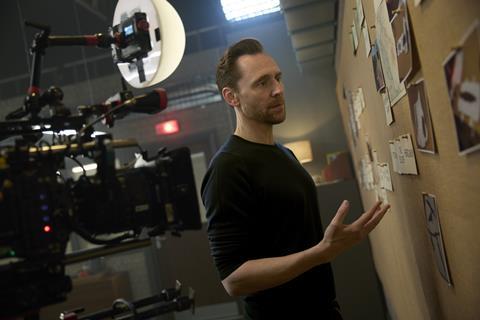
It also turned out that Hiddleston and Pompeii had form. The actor had been deeply affected by a visit to the site when he was 17, in particular by the casts of a family of four and their dog. In reflecting his own life, The Night Manager star saw himself and “in Hiddleston’s telling of it, the space between AD79 and the present just completely collapsed,” Eyres says.
That moment acted as a creative spark and the show’s focus shifted to “an act of empathy rather than intellect,” Eyres continues. “That was incredibly compelling.”Amid all the emotion, it is probably worth noting that Hiddleston’s smarts – a double First in Classics from the University of Cambridge, in addition to speaking Latin – were something of a given, but nonetheless vital for a show that while embracing drama remains fundamentally rooted in factual.
Adjoining all of this was Hiddleston’s previous role as Loki in the Disney+ series of 2021 (he also previously played the character in the 2011 feature Thor). Pompeii features in the Marvel show, and the confluence of factors made for what Eyres and his Plimsoll team were hoping would be a compelling package.
“The challenge from my perspective was that this was March 2023,” Eyres says. “We’re post-Netflix correction and nobody’s buying anything that isn’t true crime or sports docs or celebrity stuff, so I had to somehow figure out how to get this incredible person on screen.”
A serendipitous call from Nat Geo development exec Cooper Brooks propelled the project onwards – aided by an “interesting if unfounded internet statistic about men thinking about the Roman empire four times a day” – and it emerged that ancient history projects were being actively sought. The catch was they had “to be big, bold, entertainment-led and uniquely suited to Disney+,” Eyres says.
“Now, Cooper’s not a particularly expressive guy so I mentioned our idea, and he just said, ‘huh’. By his standards, that’s quite good.”
It turned out Eyres was probably the fifth or sixth person to suggest a show based on Pompeii to Brooks, but others didn’t have his Hiddleston-shaped trump card. “I said, what happens if the show stars Loki, and Cooper goes ‘huh’ again. By this point, I was thinking double ‘huh’ – that’s when you know you’re in rare air.”
It was becoming clear that to get the greenlight, Eyres and the Plimsoll team needed to deliver an idea that was quite unique to anything that had come before it. The focus, therefore, shifted onto how Hiddleston’s feeling of time collapsing could be brought to bear on screen.
Showrunner Tom Barbor-Might was brought in and a plan to incorporate recreations that reflected what Hiddleston was seeing and feeling was developed.
“We knew we’d always have an investigation with Tom in the present finding stuff out, but we wanted the recreations not to be just a statement of fact but rather representing what Hiddleston knows at that moment.
“It’s essentially something that he’s projecting in the world, so you’ll see the recreation and then a little bit later, you’ll find out maybe that some of the facts he had were wrong. Those recreations will then play out in a different way – he’s constantly chewing over the story in order to figure out the essential truth, with a grand mission of finding people who actually survived this horrendous event.”
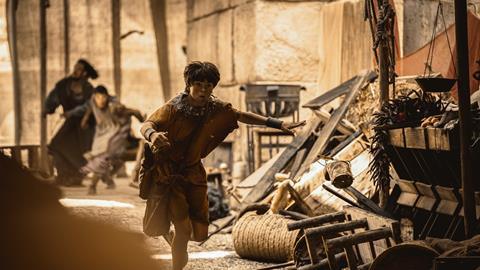
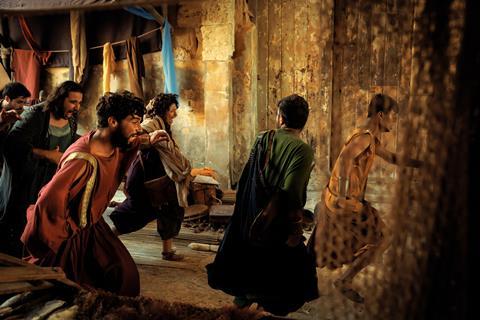
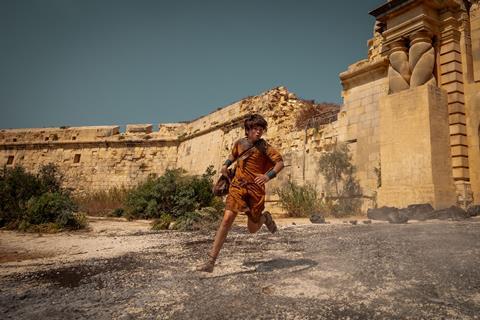
The show itself drills down on the lives of three central characters – a teenage apprentice, a powerful businesswoman and a mysterious Praetorian Guard – exploring how their lives shift during the deadly eruption.
Pitch and budget
Once polished, the project was taken to Tom McDonald, exec vice president of content for Nat Geo (including Disney+ and Hulu), as well as Brooks and soon-to-exit vice president of development, Charlie Parsons. McDonald says he made his mind up early on, deciding “within a few minutes” of the pitch that the project would greenlight.
Showrunner Barbor-Might then began what he describes as a “huge research period” with experts, before introducing a writers’ room, something of an eye-catching move for an unscripted series. “We’d already identified the beats of the documentary but we needed to write out the drama, so we went into this with a screenplay.”
Mark Ravenhill of Shopping and Fucking fame and Geek Girl’s Jess Rushton were drafted in, while Hiddleston – who brought in his frequent producer and collaborator Kevin R Wright, was involved throughout – “he was page turning with us,” Barbor Might adds. Acclaimed scripted exec Helen Flint (Patrick Melrose, Get Millie Black) also joined the production and assisted with location scouting.
Clearly, given both the on and off-screen talent involved, this is an expensive show by most measures – but no one involved is budging on just how much it cost. Plimsoll chief exec Grant Mansfield says it is the “biggest thing we’ve done that doesn’t involve animals” while McDonald points to the A-list scripted talent on and off screen while acknowledging the “price differential between factual and drama.”
“I should add that I think it’s unbelievably good value for money,” adds the show’s commissioner, “compared to a lot of drama tariffs.”
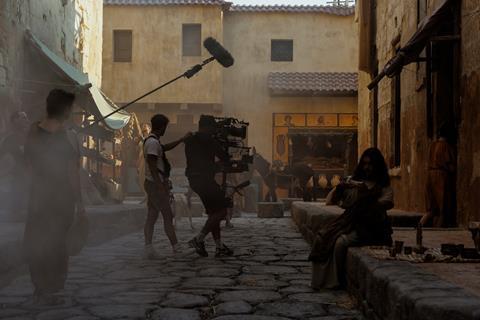
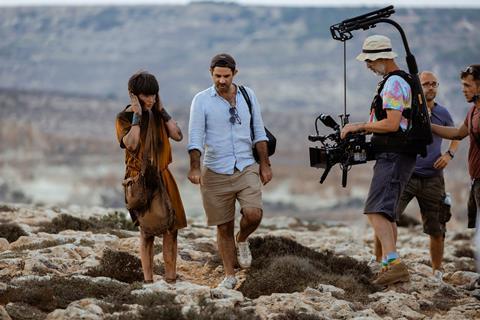
With script in hand, the teams headed out on location, with drama sequences shot in Malta on the same sets as Gladiator 2. Parts of Pompeii were rebuilt “and then blown up, which was great fun”, Limitless director Barbor-Might says.
The team compiled footage and tweaked plans for the documentary element, before heading to Pompeii itself for a 10-day shoot with Hiddleston.
“What was interesting about that methodology was that because we had the drama edits, it meant Tom could emotionally respond to what was happening inside those sequences. Having that empathy with the past was key.”
It also allowed Barbor-Might and the team to mesh drama and documentary into one “porous” narrative, as the showrunner puts it.
“The drama is front and centre… and the show works because it tells the story of Pompeii through the eyes and perspectives of three real people. Those people are genuine and real, they come from the archaeological record, but we use dramatic techniques to bring their stories to life. We’re using two forms of filmmaking to tell one story, and I hope that creates a show that is really fluid, and hopefully fun and playful but also moving.”
Recreating the devastating final hours of Pompeii was largely delivered via more traditional VFX rather than AI, a tricky task given that this was a world being rapidly enveloped by suffocating plumes of pumice and ash.
“The team were spraying the set constantly with tonnes of burnt cork to simulate the pumice, and we had loads of smoke machines, so everyone was just constantly having to clean themselves up,” he says. “You’d go home at the end of the night with all this cork and dust coming off you.”
Easter eggs and Loki
The show was then stitched together across a relatively speedy 14-week edit and a lengthy period in post, delivering a series in which scripted accounts for around 40%. But Eyres says the series’ “braided” nature means such a statistic is somewhat reductive.
“The show doesn’t really resemble anything that we’ve seen on TV before,” he suggests, a point that McDonald doubles down on. “It feels like we’re doing something that’s a bit more creative and more imaginative, because our dramatisations are about bringing Tom Hiddleston’s detective work and thought processes to life.
“It means he’s able to play with the drama in a way that a conventional show couldn’t,” highlighting how Hiddleston uses a flick of his hand – something immediately familiar to fans of Loki – to switch between time periods. Such Easter eggs are dotted throughout the show, McDonald adds.
“The other thing which is different is Tom’s able to step into the drama himself, which brings two different timelines together at the same time. That play on timelines comes from what he and Kevin, his producing partner, were doing with Loki. It ups the entertainment quotient for a history show without ever scrimping on its basis in truth and fact, that’s the bit that excites me.”
It also underlines what seems to be a growing interest in combining seemingly disparate parts of the Disney universe together. This is not necessarily new – Plimsoll was behind 2025 series A Real Bug’s Life, inspired by the similarly titled 1998 Disney feature A Bug’s Life, while docuseries The Real Finding Nemo is also in the works – but McDonald is clear that such shows can reach “a family heartland”. The key is that they remain authentic to the Nat Geo brand, he adds.
“This is our first big commission in the history space, and it feels like it’s catering to family viewing as well as adults. A lot of our history content tends to be much more recent history, testimony driven, eyewitness driven, so this is something which is singularly about asking how can we do something that feels more broadly entertaining.”
What’s clear is that Hiddleston is now no longer only a man in demand among scripted execs. Eyres and McDonald are clear they’d like to work with him again, with both also pointing to the show’s ambitions as a positive signal to the embattled unscripted production community.
“There is a lot of doom and gloom in the industry, and I know it’s very tough out there, but I think we are more likely to win by being big and ambitious, and that does mean going to our clients and saying we know times are tough, but if you give us a good budget, we will make you a phenomenally good show.”
It is of course helpful to be able to call on a bonafide star to front said show, but Mansfield is clear about his focus. “That is our offer to our clients - and generally speaking, when they’ve come up with the money, we’ve come up with the shows.”
Pompeii: Out of Time with Tom Hiddleston debuts on Nat Geo and Disney+ around the world on 23 July.






No comments yet