

Geopolitics, distribution concerns and the growing importance of pre-sales among key topics as buyers gathered in Paris

The rapidly changing TV landscape provided plenty of fodder for discussion at Unifrance’s Rendez-vous in Paris event last week, with the impact of geopolitics, potential regulatory changes and an expected distribution squeeze among key topics.
Originally a screenings market for French theatrical films, Rendez-vous expanded to include TV exporters following the merger between Unifrance and TV France International four years ago.
The event’s film-skew continues - its Export Day saw Unifrance unveil international sales figures for theatrical movies in 2025, with numbers slightly up despite a lower domestic theatrical market, largely thanks to strong performers including animated movie Flow and Luc Besson’s Dracula.
TV sales figures take longer to compile, hence they are only unveiled in September, but some research was published, including data highlighting the new French shows that enjoyed the most launches in 2025.

TF1’s light crime series Panda took the top spot for shows that launched on the most streaming platforms in 2025, appearing on five across seven different countries.
Arte’s No Man’s Land, which had its second season last year and is distributed by Fremantle, was named as the drama that was broadcast on the most international TV channels, launching on 10 in total.
On the documentary front, the equivalent was Pernel Media’s Clash of Ancient Warriors for Planète+, which aired on 15 channels, while animation series Jade Armor - distributed by Madgic Distribution (formerly APC kids) - reached 13 channels.
There was also more integration between film and TV this year on the ground in Paris.
TV distributors had initially been located on a separate floor, but with the event moving to a new location it brought everyone together in a single exhibition space with small booths.
Some companies, such as France Télévisions Distribution, organised line-up presentations while others held talent press junkets and there were also screenings, such as Balanga with its new documentary A Journey to Our Future and Gaumont with its drama series The Deal.
And while film still dominates the event, the TV element of Rendez-vous in Paris provides an opportunity to attract buyers who cannot attend Unifrance’s main TV event in September, Rendez-vous in le Havre, such as those working in animation who are less available because of Cartoon Forum.
This year, the Paris-based event hit the 100 TV-buyers mark for the first time, with execs from all genres in attendance. There were also more than 400 film buyers, with 43 film sales firms and 50 TV distributors in attendance.
“The timing is not necessarily the best for TV, with buyers not always having their annual budgets finalised, but [this event] is very convenient as it’s very easy to escape the office for a couple of meetings,” noted one documentary distributor.
Unifrance also used the event to recognise those making the greatest contribution to promote French programming, with Saskia Krijnenn, animation acquisition executive of Switzerland’s RTS, taking the inaugural prize.
Realistic optimism
Although the event was busy and optimistic, there were numerous concerns around the French export industry and it is clear that 2026 is expected to be a challenging year.
“We are navigating an uncertain context,” said Gaëtan Bruel, president of the CNC (Centre National du Cinema), during his opening remarks. He stressed that alongside audience erosion, tensions are growing as the battle for attention intensifies. This is leading to further market contraction and consolidation, resulting in a heavier reliance on proven, established IPs - a trend that Bruel warned is threatening creative diversity.
“The cake is threatening to shrink,” he said, referring to the domestic market. Among current issues are planned cuts to content spend at France Télévisions and attempts to reduce CNC’s budget.
There are budget tensions everywhere, especially at public channels, and threats of channels closures even when they perform well in terms of ratings
Bruel pointed to another threat: the potential renegotiation of the European Audiovisual Media Services (AVMS) directive, the regulation that has enabled France and other European Union countries to impose local investment quotas on international streamers.
“We need to redouble our export efforts and change the way we look at things,” he stated, adding that the CNC is ready to assist and enhance its support for export tools.
Regarding international TV sales, although the 2024 export figures unveiled in September were strong, distributors are warning that 2025 figures will likely tell a different story due to the profound market changes underway. “Our members have been warning us for quite some time and it has finally happened,” said Unifrance managing director Daniela Elstner, talking to Broadcast International.
“Animation sales were already affected the previous year - a period marked by the disappearance of a major player like [kids group] Cyber Group. In 2025, the downward trend is now being clearly felt in the documentary sector,” she added.
This was confirmed by documentary distributors at Rendez-vous, who reported increasingly lengthy decision-making processes, although some shows and genres are faring better than others.
“There are budget tensions everywhere, especially at public channels, and threats of channels closures even when they perform well in terms of ratings,” one documentary distributor told Broadcast International.
“You can no longer look at sales figures without considering geopolitics,” added Unifrance’s Elstner. “When a country shifts toward the far right, the strategy of its public broadcasters changes very, very quickly. This affects, among other things, their acquisition of political documentaries - a field in which the French are particularly strong.”
Pre-finance focus
In the highly competitive drama market, there were no major French show remakes in 2025, unlike in previous years. Ongoing French ‘light crime’ series remain popular internationally, while several of the more successful mini-series - such as Surface - were broadcast towards the end of the year, sparking a resurgence of interest recently.
CNC’s Bruel also noted the growing role of international co-productions in both film and TV.
“Previously, we could invest minimum guarantees based on sales after delivery. Now, the goal is to secure as many as possible during the pre-financing stage, with sales being merely the cherry on the cake,” added one documentary distributor.
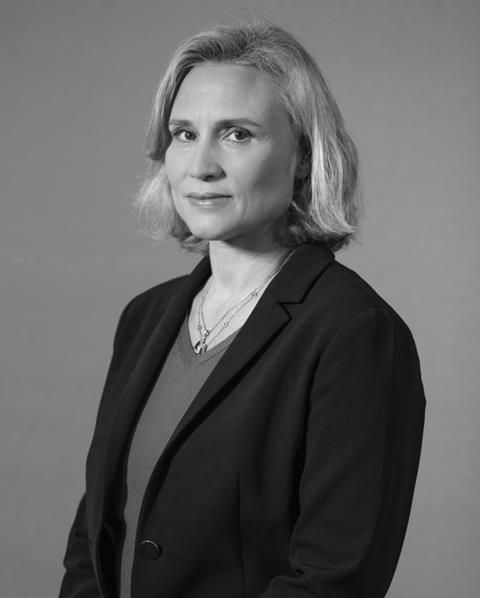
“Compared to when domestic funding was stronger, producers are now conscious that they must consider the international market as soon as possible and work hand in hand with a distributor,” added Elstner.
Adding to the industry’s troubles is the instability of international TV markets. In the documentary sector specifically, the collapse of April’s Mipdoc has left a void for French documentary exporters, with February’s London TV Screenings not seen as such good timing.
Documentary distributors do have hopes for the upcoming Content Europe in Lisbon, however, not least because it is in an attractive destination and takes place in April.
The lack of Sunny Side of the Doc for at least this year is also being seen as a major blow. What happens to the event further ahead remains to be seen, but the CNC said after the event’s cancellation was announced last month that it would be happy to lead discussions with professionals to check what can be done.
“I heard there are discussions already,” says Elstner. “Overall, all markets are interesting, MIP London included - the thing is that they must not be [too] expensive. The TV industry is going through such a major upheaval that it is important to let this year pass and wait for the dust to settle,” she added.
Philosophical, perhaps, but TV distributors at Rendez-vous were - in spite of everything - in a rather good mood because despite all the challenges, business is nevertheless continuing.
“It’s not our first crisis,’ one small documentary distributor said. “We aren’t big, so we are flexible and we can adapt.”





No comments yet