













Gabriel Tate joins Sid Gentle Films on set in Lithuania to chat about revisiting a popular character and learning the art of Cold War spycraft
PRODUCTION COMPANY Sid Gentle Films
COMMISSIONERS Lindsay Salt for BBC1; Frank Seyberth for ZDF
LENGTH 6 x 45 minutes
TX Late 2026
EXECUTIVE PRODUCERS Sally Woodward Gentle, Lee Morris, Emma Moran
CO-EXECUTIVE PRODUCER Toby MacDonald
DIRECTORS Toby MacDonald, Michelle Savill
PRODUCER Christopher Hall
DISTRIBUTOR Fifth Season
WRITERS Emma Moran (lead writer), Emme Hoy
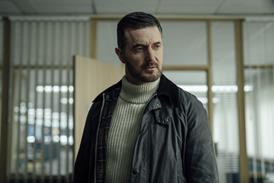
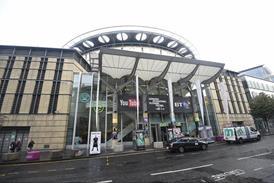
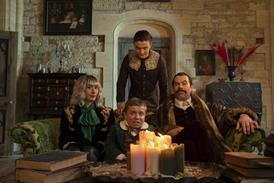
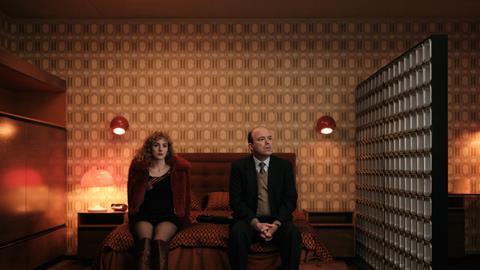
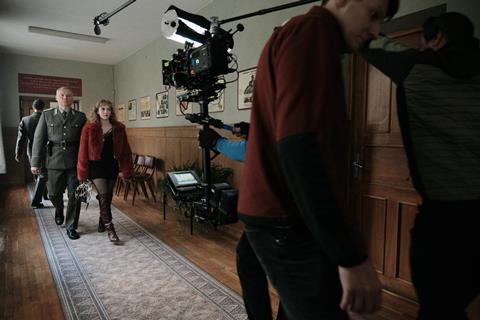
One March morning on a Vilnius industrial estate, it is cold both literally and conceptually. The Lithuanian capital is doubling as East Berlin for Honey, the first project from the BBC and ZDF’s co-production partnership. As tensions in the Cold War peak in 1982, MI6 rookie Martha Schmitt (Ann Skelly) has entered deep cover under ‘press attaché’ and handler Graham Anderson (Rory Kinnear).
Chafing against her initial assignment as a honey trapper assigned to pick up and take compromising photos of usefully positioned men, Martha allies herself with all-American misogynist and CIA operative Kurt Fischer (Nate Mann) and Stasi spymaster Friedrich Bauman (Jannis Niewöhner), a true believer and oddball loner who tries to recruit Martha for his own ends.
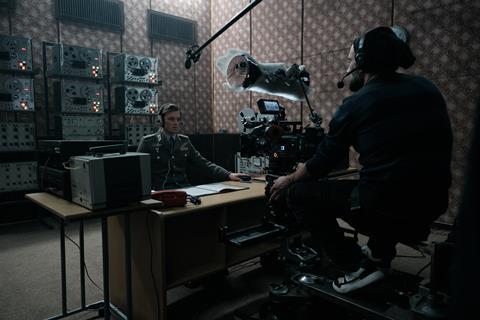
The end-of-days vibe is palpable as I watch a desperate exchange between Martha and Graham in a CIA safe house where Bakelite phones, mounted antlers and colours running the gamut from yellow to orange and brown to grey prevail. No surprise that the previous production to film here was Apple TV’s Star City – yet Honey offers something very different.
“It’s a mash-up of spy thriller and rom-com,” explains writer Emma Moran. Her previous series, Extraordinary, was, like Honey, also made with Sid Gentle Productions and lead director Toby MacDonald, and was an unapologetic sitcom. Here, she cites The Lives Of Others and Goodbye Lenin! as influences.
“If you put those tones together, hopefully that’s Honey: a love triangle where there shouldn’t traditionally be a love story. East Berlin felt like a very rich playground for that.”
“Martha’s a good spy because of her empathy and her difficulty around emotions,” explains Skelly, whose performance juggles quiet vulnerability, flinty determination and withering wit. “She feels deeply for people, while also extracting data. She’s smart and brave – I thought of her like a shark who just has to keep moving forward.”
Except Martha isn’t really Martha, but an alias for one Carolyn Martens, who 30 years later would lead both MI6’s Russia desk and the hunt for an assassin by the name of Villanelle. The two incarnations share a humour and forthrightness, and Fiona Shaw (who played older Carolyn in Killing Eve) has given the project her blessing.
But Sally Woodward Gentle, Sid Gentle’s chief executive and an exec producer on both Killing Eve and Honey, is keen to play down the connection as far as possible, despite the earlier series’ capture of both critical clout and popular success.
“[Distributor] Fifth Season will lean on that to sell it,” Woodward Gentle concedes, “but I’m 95% sure it didn’t make a difference to the BBC or ZDF. When we were embarking on season three of Killing Eve, I wanted to finish it soon but AMC wanted it to go on for a long time, so I suggested branching off into the Killing Eve universe.
“One idea I suggested was ‘Young Carolyn’ in Russia, at the beginning of her journey. You’re a very different person in your 20s so, while there is some connective tissue with Killing Eve – and the fact Ann looks like the love child of Jodie Comer and Fiona Shaw doesn’t hurt – we’re essentially starting again with brand new characters. The cynicism about love in Killing Eve has here become more joyous, more about being young, still having beliefs and being open to opportunity.”
“We realised East Berlin is far more interesting than Moscow, because it’s the fulcrum of the spy world”
Sally Woodward Gentle, Sid Gentle Films
Despite a cast-iron premise, the real world forced a rethink when Russia invaded Ukraine in February 2022. “We realised East Berlin is far more interesting than Moscow, because it’s the fulcrum of the spy world,” says Woodward Gentle. “Citizen informants had risen exponentially in the 1980s, because the Iron Curtain was more permeable and the Stasi couldn’t use outright brutality to clamp down on dissidents anymore.”
With Berlin both expensive and unrecognisable from 45 years ago, Lithuania became the stand-in, with executive producer Lee Morris and producer Christopher Hall recalling a scouting trip for 2005 Daniel Craig vehicle Archangel.
“It ticked a lot of boxes,” says Hall, “so we settled on Vilnius, while also filming in Kaunas and Klaipeda [known as Little Germany] on the Baltic Sea. There are Soviet buildings there, and a lot of our sets are brutalist decors that haven’t been too well looked after, which suits an era when things were a bit rundown. We’ve had two studio bases, three little stages and the crew have worked together so many times, they absolutely know each other and their stuff.
“They also have a very good tax credit here, where businesses are approached and can offset their profits by investing in film. It was quite a lot of work for Lineta Miseikyte [of Baltic Film Services, who pulled the tax credits together] but, little by little, businesses are understanding how it works.”
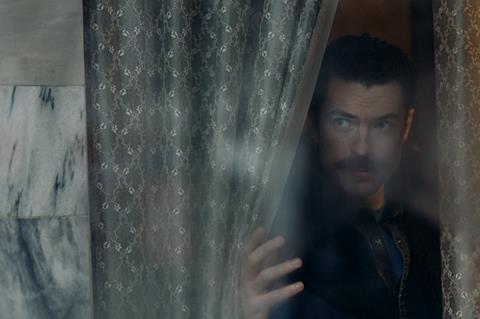
Production designer Erwin Prib drew from his memories of moving from Soviet Kazakhstan to East Berlin in the mid-1980s, aged nine. “They still used coal in Berlin, when even in the steppe we had central heating. And the GDR felt stricter and more serious about this communism thing – you felt watched. But Honey was not about reliving trauma for me.
The genre allows you to be bolder and more theatrical, although we tried to get the details right. The interpretation here was more about different classes: we gave Stasi people the same floorplan as everyone else – because there were few differences in floorplans of these newly built socialist apartments – but dressed them differently.
“The outsiders had these huge, old Wilhelmianstyle apartments, which are gentrified now but in those days were damp and mouldy. We sourced a lot of original GDR stuff from German prop houses, constructing stoves, bringing in furniture like the ‘Mufuti’ or ‘Multifunktionstisch’, which you used as a couch and then elevated into a dining table.”
The art of spying
The cast mastered an assortment of spycraft techniques, from sweeping a room to deploying a prosthetic scrotum, and were fascinated by Prib’s insights: how teachers would suddenly disappear from classrooms, having gone on the run, or the lingering stink of cheap petrol powering the ubiquitous Trabants.
“We gave a few notes,” Prib adds. “There was a scene where Kurt throws a rotten banana towards Martha – I was like, ‘Guys, we had no bananas!’”
And while Prib cautions against ‘Ostalgie’, nor was East Berlin a dystopian nightmare: there was colour (costume designer Nicole Fischnaller made extensive use of archive copies of Sibylle, East Berlin’s fashion magazine, sourcing many outfits from Studio Babelsberg), the streets were clean and crime relatively low, while Martha is dismayed to see women being given far greater opportunities in the Stasi than at MI6.
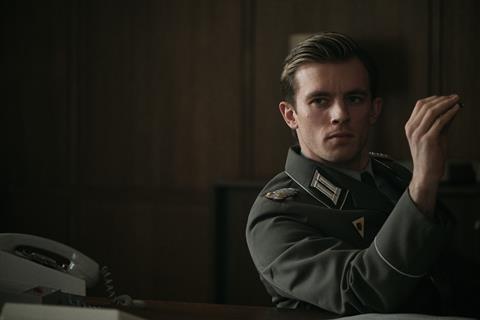
But it all came at the considerable cost of personal freedom – a reality reflected in MacDonald’s use of long lenses to foster a sense of voyeurism.
There were also challenges to overcome when AMC Networks – which acquired a 100% stake in Killing Eve commissioner BBC America in 2024 – passed on the series. Talks are ongoing with US broadcasters, but no deals have yet been agreed. However, a setback became an opportunity for Woodward Gentle.
“We were keen to see whether we could make a show where you didn’t need the Americans in there, apart from Fifth Season as a distributor. To be able to piece together the financing out of the UK and Germany, a bit of money from France TV through an enhanced pre-sell to France Télévisions, and then tax credits and so on, meant it was a big challenge but a great achievement.”
Woodward Gentle remains a fan of PSBs even as the landscape shifts. “The original budget was much higher than the one we ended up with and it’s quite possible we could have got it elsewhere. But the BBC and ZDF are practically supportive, creatively in line, give good notes, turn around things in good time and have insight you want to listen to.
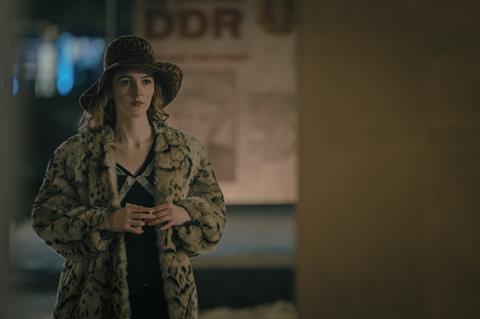
“It’s a risk for ZDF to commission a show set in Germany from a British production company, so it had to deliver something that felt different for them.”
Indeed, while the scripted industry has changed over the intervening eight years since Killing Eve debuted, Woodward Gentle says “the fundamentals” remain the same.
“A show has to mean something or have thematic resonance or have characters to capture your heart,” she explains, “but the ideas you can sell need to be far more instantaneous and grabby. Simply a lovely piece of writing is harder to sell. But I get it. There are so many shows, how do you get people’s attention?”
Provided Honey does just that, all concerned hope for a reprise: after all, Carolyn Martens had a long and eventful career. “Romance is always messy,” says Moran, “and you never run out of mysteries in the spy world. We’re sliding towards totalitarianism on a macro level in the real world, so it’s always good to be reminded that even in the darkest times, you still find love and joy. That’s what gets you through it.”
PRODUCER CHRISTOPHER HALL ON KEEPING THE SNOW PILED UP
We were filming in Lithuania between October and March, so we knew we would have snow. The number of snowy days was quite few in story terms, but we had a lot of exteriors and sets, so it was quite an endeavour to make them snowy.
Snowy exteriors worked creatively, because they give you the feeling of how we perceive East Berlin, but it was a practical consideration because the big problem with snow is continuity.
We were lucky because block one, which featured a frosty dusting of snow, coincided with a lot of frosty days. Block two, we had serious dumps of snow, the sort of which they hadn’t had in Vilnius for 15 years. I said to the crew: “Does the river ever freeze?” They said, “Oh, no.” My apartment was on the river, and I opened the curtains one morning and the river was frozen.
Across a lot of block two, it was seriously snowy and we filmed in hostile conditions that were down to -20°C. But moving into our final week, the big thaw started and because we have to make our scenes match, we had to import snow.
Fortunately, the city of Vilnius is very clever – nothing stops here because they’re used to it. They pile the snow into large mounds, load it into trucks and dump it on farmland where it melts over the next few months. We wanted pristine snow though, so we sourced it from the ice rinks, which are scraped every morning. They didn’t charge us, but we had to provide the trucks.





No comments yet