














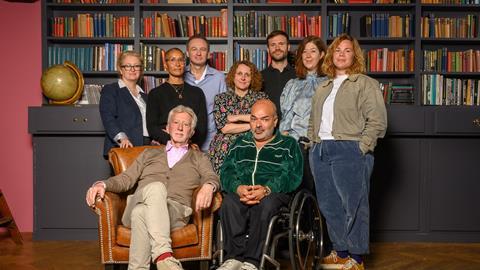
Top producers and broadcasters come together to discuss the current state of the genre and what can be done to ensure the laughs keep on coming

Sponsored by Pinewood TV Studios
Compared with other genres, scripted comedy is “the least viable in terms of true breakout hits”, “slow-moving” and “too expensive”, according to Broadcast’s latest indie survey.
Both spending and hours of new programming have fallen over the past decade and, with few blockbuster successes in traditional terms, comedy has found itself under an unwelcome spotlight as a genre in trouble.
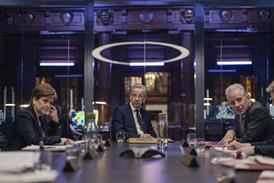
To discuss the issue, Broadcast convened a roundtable of some of the UK’s most renowned comedy creatives, from both sides of the commissioning divide, to consider what can be done to safeguard the genre.
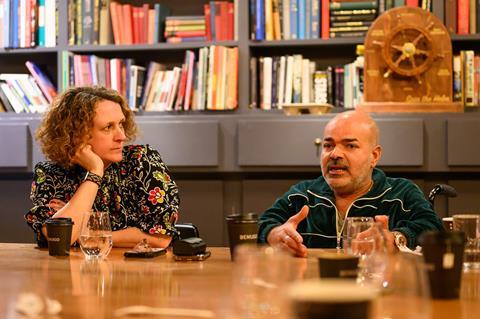
“There are reasons for real concern,” says Roughcut TV managing director Ash Atalla. “Old-school half hours are endangered and bringing on new talent is becoming almost impossible – and I say that as someone who’s done it many times before. It’s such a long, arduous path, littered with very little gold.”
Despite following hits such as The Office and The IT Crowd with the more recent Big Boys, producing comedy “can feel a bit thankless right now”, he says.
The reasons are complicated but inevitably linked to money. “Comedy is precarious at the best of times,” says Expectation TV creative director of scripted Nerys Evans. “Taking risks doesn’t always pay off, but you have to take them to find the new stars of tomorrow.”
It has become significantly harder to convince broadcasters to take risks when “slots are sparse and money is even tighter”, she notes.
Shrinking finance
Industry-wide risk aversion driven by the tough economic climate seems to have hit scripted comedy hardest, producers at the table agree. For such a subjective genre, it can be difficult to reach the same range of audience as an entertainment show or drama, and subsequently funding has come under particular strain.
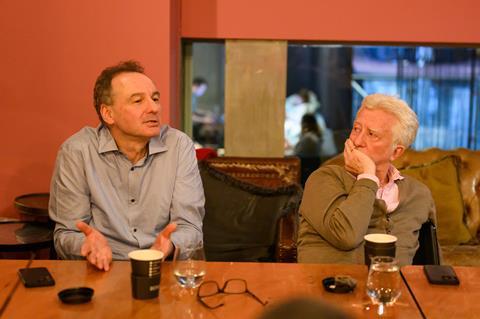
“The money being spent on comedy today is less than I can ever remember,” says Avalon joint founder and co-executive chairman Jon Thoday.
The lack of a tax break for comedy hasn’t helped, he says. “The BBC, which is the leading funder of comedy, is financing entertainment formats that are not created here or are old, rather than comedy,” he adds.
BBC director of comedy Jon Petrie is quick to point out that the BBC has ploughed more money into comedy in the past year, but has struggled to keep track with rising inflation. Nevertheless, Thoday argues: “If there was more money, there’d be more hits.”
Atalla says the genre is unlikely to find a cash injection from the saturated co-funding market, which has largely “dried up”.
“If you deliver a comedy that doesn’t land, it’s like you’ve taken a shit in their living room”
Jimmy Mulville
Hat Trick Productions co-founder and managing director Jimmy Mulville argues that the problems go beyond funding, identifying “a structural nervousness” from the very top across broadcasters and streamers.
“Comedy commissioners have a difficult job trying to pitch [upwards],” says Mulville. “I’ve had conversations with controllers where you have to describe a comedy in every other way than that it’s funny. You have to say it’s addressing this issue or that, and there’s still a nervousness to trust the writer.”
Hat Trick produces both drama and comedy, and the former is easier to get away, he says: “If you deliver a so-so drama, viewers say, ‘I thought she was good in it, or the lighting was nice’, but if you deliver a comedy that doesn’t land, it’s like you’ve taken a shit in their living room – they are appalled.”
“If you’re trying to appeal to diverse audiences with laughs… those characters need to feel real”
Nana Hughes
ITV head of scripted comedy Nana Hughes argues it is crucial for commissioners to “reflect who we are selling to”.
“If you’re trying to appeal to diverse audiences with laughs, it’s about finding comedy that appeals to various audiences – and those characters need to feel real,” she says. “I’m getting sent work that doesn’t always feel authentic.”
She cites Liverpool-set G’wed as an example of a “truly authentic” comedy. The show, which debuted in February, was the biggest sitcom launch on any ITV channel for four years, with 1.7 million viewers across ITV2 and ITVX.
Youth audience
Sky head of comedy commissioning Alex Moody says audiences that have become used to high-end drama expect to see the same standards in comedy: “Our customers tell us they want really distinct British comedy that’s premium. Our approach is to level up the funding issue between drama and comedy and not see a discrepancy in the genre.”
Off the back of that, she’s exploring more 60-minute series. “It terrifies producers, but it’s thrilling to see the creative journey it can take you on.”
Channel 4 head of comedy Charlie Perkins offers some grounds for optimism. “For us, comedy is now the biggest genre for the 16-34 audience,” she says.
The broadcaster is actively looking at digital platforms as new routes into boosting comedy outside of traditional overnights. Pointing to Roughcut series Big Boys, which Perkins considers an important success, she says: “I know it won’t get to dozens of series, but the uplift after the second series landed helped the previous one go up 43%, and I would deem that a success in terms of breaking new talent. It has longevity, and the critical and cultural response has been big.”
| Rank | Programme Title | Day | Date | Start time | Viewers (Ms) | Shar % | Channel |
|---|---|---|---|---|---|---|---|
| 1 | GHOSTS | Mon | 25/12/2023 | 19:45 | 6.84 | 34.00 | BBC1 |
| 2 | MRS BROWN’S BOYS | Mon | 25/12/2023 | 22:45 | 4.05 | 30.15 | BBC1 |
| 3 | NOT GOING OUT | Sun | 24/12/2023 | 22:00 | 3.93 | 24.43 | BBC1 |
| 4 | THE CLEANER | Fri | 24/03/2023 | 21:30 | 3.63 | 20.18 | BBC1 |
| 5 | TWO DOORS DOWN | Fri | 24/11/2023 | 21:30 | 2.78 | 13.35 | BBC1 |
| 6 | THE POWER OF PARKER | Fri | 28/07/2023 | 21:30 | 2.77 | 17.84 | BBC1 |
| 7 | GAVIN & STACEY | Thu | 14/12/2023 | 21:00 | 2.28 | 15.38 | BBC1 |
| 8 | QUEEN OF OZ | Fri | 16/06/2023 | 21:30 | 2.26 | 14.09 | BBC1 |
| 9 | BLACK OPS | Fri | 05/05/2023 | 21:30 | 1.99 | 9.75 | BBC1 |
| 10 | THE WINDSORS | Sun | 30/04/2023 | 21:00 | 1.77 | 9.68 | C4 |
Perhaps the question of how success in scripted comedy is defined is the crux of the issue. For example, despite the big cultural and critical response, Big Boys debuted to only 400,000 (3.9%) in overnights. But, as Perkins says, the second series brought in new viewers and the show has won numerous awards, including Best Comedy Writer at this year’s Bafta Craft Awards for series creator Jack Rooke.
Meanwhile, the BBC has also secured significant acclaim for series such as Such Brave Girls, Dreaming Whilst Black and Juice, which have all been digital-first comedies.
Petrie is often frustrated by the reporting of overnight figures. “People get so obsessed with overnights,” he says. “Every day, Broadcast posts how a new comedy has done in the overnights and it drives me mad because comedy just doesn’t work like that. About 30% of its audience will be that [overnight] figure, but it grows.”
Focusing too much on overnights, he warns, “feeds through into perceptions that [comedy] is dying”.
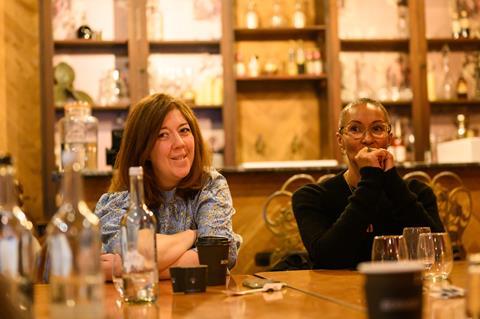
For Hughes, however, success at ITV is all about the numbers. “We are a commercial channel,” she says. “It is that brutal. I hate having to say that as a comedy person because you don’t want it to be the numbers – but the audience do the talking.”
Historically, many of the UK’s most-loved comedies have started quietly. Atalla says it often feels like shows “stumble to a second series”.
“It’s a war of attrition, where you’re banging your fist on the table to say, ‘We’ve got to get a second series. The numbers are low for the first series, but I know it’s a good show and if we get to series three, we might get traction and awards’. But getting there is really fucking hard.”
Thoday agrees broadcasters should commit to shows more fully to enable them to flourish. “I’ve seen hits come and go in comedy. They’re rarely commissioned in enough volume or for long enough,” he says. “It’s a long way from 12 episodes to 100 episodes, but they need to get to a point where it means something.”
Yellow Door managing director Lucy Lumsden points to US sitcom Friends, which ran for 10 series and remains one of Netflix’s most popular acquired shows.
“People watch Friends because they know exactly what it’s going to deliver, and there’s an appetite for that. We’re still on the hunt for a British version,” she says.
Linear prominence
Alongside an early commitment to multiple series, producers in the room also want more prominent linear slots.
Shows such as Stath Lets Flats and Only Fools And Horses are given as examples of a successful comedies that secured a second wind through repeats in the linear schedules – with the additional eyeballs allowing them to become major hits.
“The decline in linear is really hurting comedy,” Petrie says. “It’s that thing of people ‘catching an episode’ [and deciding to watch the rest].
“Something we’re trying to do with iPlayer is figure out which comedies attract similar viewers, so people will find them – there’s a real science to it.”
Lumsden agrees, adding: “Audiences are there, waiting to love those shows, but it’s about helping viewers find them.”
For the producers on the panel, linear prominence remains king, to the extent that Thoday and Mulville issue a challenge to the broadcasters: place scripted comedy in a primetime slot.
“Take that hour, fill it with comedy and make a big commitment to it, with bandwidth for different tones of comedy, and there will be a hit,” Mulville says.
“When are they going to cancel an episode of a soap and free it up for comedy?”
Jon Thoday
Thoday has a firm idea of where that schedule time could come from: “When are they going to cancel an episode of a soap and free it up for comedy? Because there’s a big family audience for comedy – buyers just need to free up the time.”
There are benefits for broadcasters too, in the long run, Mulville argues: “Old comedies have a very long life – much longer than drama.”
The impact of the streamers has been felt by all in the room. SVoDs have changed the way audiences consume content, but also how new creators approach comedy.
Streamers’ preference for bingeable shows doesn’t work for launching new comedies, Thoday says. “More traditional comedies, which are determined by story of the week and character, are harder to launch if you drop all the episodes at once,” he adds, since bingeing tends to be driven by the narrative arcs found in dramas.
“If you’re only doing [narrativedriven shows], you’re cutting off all these other things that used to be successful. There are lots of good, story-first comedies, but you’ve removed anything like Friends.”
“We need to keep our eye on the variety of tone,” agrees Lumsden. In recent years, she says, “there has been a vogue for issue-led comedy drama”, while younger audiences are turning to “less self-conscious” Australian comedies like Colin From Accounts, on which the group bestow high praise.
Petrie suggests this preference for issue-led comedy drama is coming from creatives. “If you look at BBC and C4 briefs, we have been asking for more light-hearted sitcoms, but there isn’t much of that type coming through,” he says.
“Part of it is that there is a generation of writers who have grown up watching Netflix and shows like Fleabag, and assume that’s what you have to write to get a comedy show [commissioned] now.”
But for Thoday, creators are simply reacting to the lie of the land – the key issue, for him, is that it’s easier to get narrative comedy funded than sketch shows or the more traditional sitcom.
“The breeding ground of live comedy is very wide, but television is very narrow,” he says. “It drives you to narrative and it draws you to writers and away from writer-performers, who have historically created new and interesting lines of comedy.”
“Covid knocked out a generation of sketch/character performers, and we’re really feeling that”
Charlie Perkins
C4’s Perkins says it’s important to cultivate a “variety of different shows”, outlining three priorities. She’s after a long-running sitcom, limited comedy dramas that would be drawn from a writer’s life, and ensemble shows.
“I’d love to find a long-running sitcom in that space,” she says, pointing out that comedy dramas tend be drawn from someone’s life so are often limited. “If you look at Ghosts, it’s all about gangs [of characters], and we’re looking for that now. Covid knocked out a generation of sketch and character performers, and we’re really feeling that.”
Hughes adds: “Over the years, a lot of hit comedies have come from projects at the lower-end tariffs – they were risks. We all need to be mindful of the fact that comedy is often an entry point for new talent on and off screen. We should all be looking at giving smaller indies more opportunities to break into comedy.”
Moody concurs, saying: “There’s got to be somewhere with a pipeline of new talent to get through, and then there’s got to be enough opportunity at the next level because otherwise the talent flight is so rapid.”
Atalla notes that only the BBC and C4 offer real avenues dedicated to new talent, which makes for “a small target to hit”.
Comparing comedy with its scripted counterpart, Evans adds that a unique aspect of comedy is that “we are always originating – it’s different to drama, which now seems to be focusing on IP”.
But, on an optimistic note, she says the comedy scene is quietly revolutionising itself in the digital space. “There’s a whole new world of comics that don’t have to go to Edinburgh, or even a TV company, to make their first project. People can access new voices in a way like never before.”
Despite the plethora of issues facing the genre, the group still find plenty of reasons to look on the bright side. When a comedy does land, they agree, it has the potential to be adored and continually revisited.
Thoday says streamers are gradually moving towards dropping weekly content rather than full series, which could “reopen the doors for sketch and character-led shows”.
Mulville notes: “Comedies are a bit like albums – they form a kind of visual soundtrack to your life. They have enormous love and long life.”
This emotional connection with the audience is the envy of every other genre, he says, and will ultimately help comedy to bounce back.
WHAT THE PANEL ARE WATCHING
Jon Thoday Operation Mincemeat in the West End; Colin From Accounts (BBC iPlayer)
Jimmy Mulville Colin From Accounts; (BBC iPlayer); Mr. Inbetween (Disney+)
Charlie Perkins Next generation of contemporaries in the live space; Ghosts (BBC iPlayer) – “a big family hit”
Nerys Evans Things You Should Have Done (BBC iPlayer); Deadloch (Amazon Prime Video)
Ash Atalla I Think You Should Leave (Netflix); Fallout (Amazon Prime Video) – “a big drama with a huge dose of humour in it”.
Lucy Lumsden Alma’s Not Normal (BBC iPlayer) – “holy grail for new talent and silliness”
Alex Moody Only Murders In The Building (Disney+); Mandy (BBC iPlayer)
Nana Hughes Things I Should Have Done (BBC iPlayer); Alma’s Not Normal (BBC iPlayer)
Jon Petrie The Curse (Paramount+) – “I found it so unsettling but I couldn’t stop watching it”






No comments yet