

Jack Heidler, audience development manager at Engage Digital Partners, looks at how newer competitions are able to draw new fanbases
For much of modern sport, history played a practical role in shaping attention. Familiar competitions, long-standing rivalries and established broadcast relationships created recognition and trust over time. That foundation still matters, particularly at moments of scale, but the environment around it now looks different. Newer brands without legacy are finding clearer routes to relevance by starting with how audiences behave today and building their offer around that reality. Their growth is often driven less by reputation and more by relevance earned in real time.
What sits behind this shift is not a rejection of tradition, but a change in how momentum is created. Brands that begin without inherited structures have more freedom to make decisions grounded in present-day behaviour. Format, tone and distribution can be shaped with a specific audience in mind, rather than adapted after the fact. That freedom often leads to sharper focus, faster learning and a clearer sense of purpose as the brand develops.
Audience understanding is shaping where momentum forms
Understanding the audience has become the central driver of growth. Fandom today stretches across watching, participating, sharing and creating, often within the same community. Football continues to anchor global attention, but its dominance no longer crowds out everything else. Participation-led and lifestyle-driven sports are taking up more space, particularly among younger audiences who value involvement alongside viewership and social connection.
The 2025 EY Sports Engagement Index reflects this pattern, showing football retaining its leading position while engagement grows fastest in activities built around participation and shared experience. That shift places greater emphasis on understanding why audiences engage, what keeps them coming back and how those motivations change over time. Brands that stay close to those signals tend to build relevance that extends beyond individual seasons or campaigns.
Building from scratch allows faster alignment with modern fandom
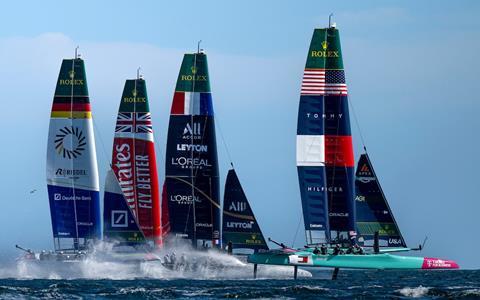
Starting from scratch makes it easier to act on those audience signals. SailGP offers a useful illustration. Designed as a global league from day one, it aligned performance data, visual identity and content output with contemporary consumption habits. Storytelling was built into the sport itself, rather than layered on later, creating coherence between what happens on the water and how fans experience it across platforms.
Other emerging organisations have followed a similar path in different contexts. The Professional Triathletes Organisation blended elite competition with mass participation and athlete ownership, creating a structure that resonates with communities as well as commercial partners. In each case, growth followed a clear understanding of who the sport was for and how those audiences preferred to engage, supported by formats designed to scale without losing clarity.
Formats, platforms and live experience are converging
Digital-first thinking plays an important role in this evolution, but not as a standalone tactic. Its impact is strongest when it shapes how a sport operates day to day. When digital formats influence pacing, storytelling and athlete involvement, iteration becomes faster and feedback more immediate. Creative decisions simplify when they are guided by real audience behaviour rather than delayed performance indicators.
Established sports are adapting to this reality as well. The PGA Tour Creator Classic shows how creator-led formats can sit comfortably alongside traditional competition structures. By integrating short-form storytelling and platform-native distribution into the tournament calendar, the initiative has driven meaningful engagement and commercial return, particularly among audiences consuming sport on demand and on their own terms.
The past year has also seen a wave of new sports IP enter the market, often backed by fresh capital and early curiosity. Initiatives such as the Snow League and the World Fencing League point to where investors and audiences are willing to experiment next. These launches serve as early signals rather than finished models, highlighting both the appetite for innovation and the importance of building sustainable foundations.
Live sport continues to anchor fandom when personality and promotion are part of the mix. The crowds drawn to darts at Alexandra Palace over the Christmas period underline the enduring pull of physical events that combine atmosphere, access and character. Broadcast and live experiences remain powerful, with digital channels extending their reach and longevity rather than replacing them.
Looking ahead, the strongest forces in sport are likely to be shaped by alignment rather than scale alone. Audience understanding, format design and distribution choices increasingly move together. Brands without legacy often move confidently in this direction because they begin with fewer assumptions, building relevance through clarity, consistency and sustained connection with fans.

Jack Heidler is audience development manager at Engage Digital Partners



No comments yet