Well done the government. The draft bill, apart from some eccentricities, moves the media business in
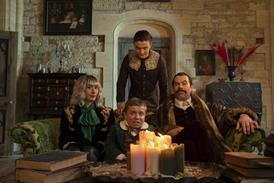
Well done the government. The draft bill, apart from some eccentricities, moves the media business in the right direction. The minutiae of stupid and unsustainable rules have been stripped from our ageing regulatory processes.And already I miss them. The trouble with campaigning for the end of regulation is that when you get it, the opportunities to metaphorically sit the secretary of state for TV in the corner with a dunce's hat on evaporate into thin air, or at least onto analogue spectrum.This is why, whilst the commercial industry is gradually slipping its mortal bonds, there should be more regulatory distinction between ITV, Channels 4 and 5 and the BBC. One of the underlying messages to the public is that the BBC should continue to be at the innovative end of the business with the remit of producing high-quality, universal and culturally impactful programming.Yet there is nothing in the draft bill which specifically underwrites this. And it will be particularly tricky to effect, given that the BBC's tidemark on its jacuzzi of cash is somewhat higher at the moment than its commercial rivals. So instead of innovation the BBC has perhaps a little too often reverted to being the fat magpie of the media. It guzzles rights from independent producers and digests them into returns which are ploughed back into programming that is too often less than inspiring.Spooks, this week, being the latest example. A balsawood dialogue was accompanied by some flat-pack performances. More MFI than MI5.The mooted prospect of the BBC being fined for substandard programmes is marginally thrilling. Unfortunately we will not, Big Brother-stylee, be able to vote for which shows to fine - to my mind this week the aforementioned Spooks and the comically overdone MacIntyre Investigates should have had tickets on their windscreens. Yet the audiences disagree. Which means, as usual, that I am right and 9 million other people are wrong.How then does one sharpen the BBC's appetite for freshness, given that it can currently afford to outbid the commercial market? One way, which I strongly favour, is to introduce a civil service type payscale for 'talent'.It already does this behind the camera - so why not in front of it? A transparent fee structure for performers, capped at say £250k a year, would encourage a public service ethos amongst celebs and luvvies and would ensure that the Beeb's buying power were curtailed in areas where it should be making stars rather than nicking them.Another, less radical proposal would be to re-examine the idea of independent producers being allowed to hang onto more of their rights. I am surprised in some ways that the government did not address this issue. I'm not sure it would necessarily combat the idea of formulaic television - it might even encourage it. But if the BBC were looking less at the ultimate fees it may take from a series with spin-offs and more at its immediate editorial and artistic values, it may raise its commissioning game beyond the next magazine publishing opportunity.