













Amid rising costs, narrowing audience demand and the rise of disinformation and AI, Broadcast brings together top documentary execs to discuss the genre’s future

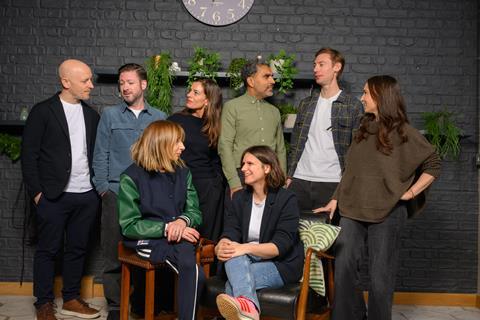
When several of the UK’s top documentary makers and commissioners gather on a chilly December morning in the heart of Soho to set the world to rights, they could be forgiven for being a bit glum.
Alongside the familiar industry-wide woes of soaring production costs and the disappearance of the middle of the market, the documentary market is facing its own specific challenges. There’s the rise of disinformation and the subsequent loss of trust in traditional media, which puts additional pressure on documentarians to ensure precision and accuracy (the discussion takes place just weeks after BBC director general Tim Davie and head of News Deborah Turness resigned over the editing of a speech by Donald Trump in the 2024 Panorama film Trump: A Second Chance?). Beyond that, there’s the high demand from audiences for celebrity-focused access docs and for retrospective stories from commissioners, possibly at the expense of other forms of storytelling. And then there’s the looming ethical considerations, innovations and threats that come with the advent of rapidly evolving AI technology.
Despite all of this, when the group sits down to chat, there’s a sense of cautious optimism in the air.
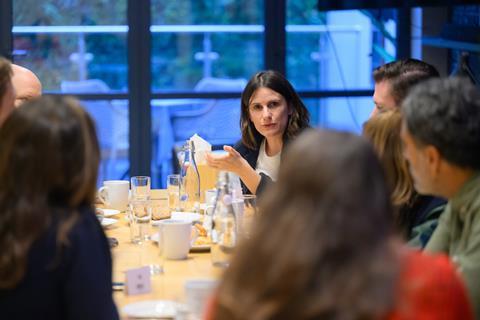
In broad terms, those assembled agree things are still “quite challenging”, from commissioning to budgeting to finding an audience.
Senior creative director at BBC Studios Documentary Unit Katharine Patrick, points out: “There is a flood of sellers but not enough buyers.”
And once a show is commissioned, says freelance director Erica Gornall, who is behind recent BBC2 doc Prisoner 951: The Hostages’ Story, money is still tight.
“In the past few years, I’ve had to go through every line of every budget trying to find extra funding and make things work for less, and sometimes it feels like the burden is on me as a freelancer to make a production work,” she says.
“The bar for getting a documentary over the line is higher”
Katharine Patrick
Patrick believes the continued drop-off of mid-range recurring documentaries such as Channel 4 and Blast! Films’ Secret Life of the Zoo, which came to an end after 10 seasons in 2021, means more producers are chasing either premium limited series or low-cost returnables.
“Ten of us will be going after the same story, which makes things much more challenging in terms of access,” says Patrick, who recently exec produced BBC3 doc Chloe Ayling: My Unbelievable Kidnapping. And rather than simply having access to one or two key figures in a story, she says, the expectation is that producers must have access to everyone involved.
“We are moving towards the American model, where all the access must be sewn up before we settle [a commission]. The bar for getting a documentary over the line is higher.”
And with continued debate around the practice of paying for access, which some feel alters the relationship between filmmaker and subjects while others suggest shows the contributions are valued, documentary makers are increasingly expected to pay huge fees to talent and contributors.

“It is really hard for indies to get premium docs away because the big players can essentially go round with a chequebook paying talent upfront to be part of a docuseries, and that’s really hard for mere mortal indies to compete with,” offers Workerbee chief executive Rick Murray, whose recent credits include Four Kings for Amazon Prime.
Channel 4’s head of documentaries Alisa Pomeroy ties this increased focus on access to the drop of observational, real-time filmmaking.
“Press officers in hospitals and police forces used to get 100 phone calls in a week – now those calls go to the person whose sister was murdered,” she observes.
During the pandemic, the popularity of documentaries among the literally captive audiences rocketed, and the docs made in this period, were, by necessity, largely retrospective. This form of storytelling has remained popular among commissioners, and Pomeroy acknowledges that many platforms are playing it safe, choosing narratives where the outcome is already known before anyone hits record.
“We must be braver about embracing observational filmmaking, which is more risky because we don’t know where the stories end and some are red herrings which don’t go anywhere,” she says. “Documentaries are meant to document, but they no longer do.”
But, she says, it’s not only commissioners who are leaning this way – part of the reason for the current dearth of long-running returnable series, is that “we don’t get pitched very many”.
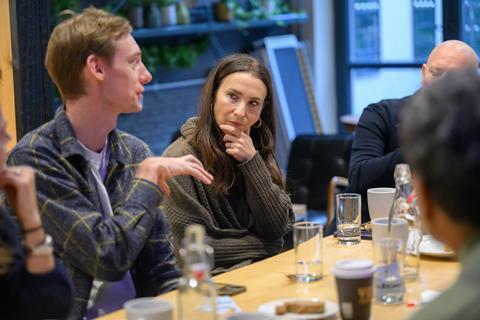
“Nobody is developing them, but there is huge opportunity for more,” she says. Instead, she says, development units have pivoted towards one-off stories, hence the calls to victims’ families over press offices.
The managing director of DSP Films Graeme McAulay also advocates for “high-stakes dramatic unfolding storytelling”, arguing that such documentaries underline factual telly’s vital purpose within UK society.
“Compared with a Netflix true crime limited series, which might feel so unbelievable and ‘over there’ and different from my life, series like BBC1’s Ambulance and Channel 4’s 24 Hours In Police Custody show things happening right at the end of the street,” he says. “The appeal is in seeing the extremes of human experience so close to my life.”
As Passion Pictures’ creative director Hamish Fergusson puts it: “People go to the streamers for ‘airport reads’ – but these big PSB brands tell Britain a story about itself and that is the most important thing they do. You can’t overestimate the value of being able to recognise your own nation on TV – especially now.”
Amazon MGM Studios’ unscripted development executive Harjeet Chhokar goes as far as to suggest these brands are “the best case for the survival of the PSBs”; not only do they provide an essential training ground for crew, but they heavily influence other shows such as Netflix smash Adolescence, which is heavily set in police interview rooms.

The age of the celebrity doc
Alongside premium true crime, celebrity access docs have exploded in popularity, with recent entrants on the market including Victoria Beckham and Skydance Television’s AKA Charlie Sheen (both for Netflix). Many have raised questions about the value and authenticity of such documentaries, particularly when the subjects are given a certain amount of creative control in return for access – for example, Victoria Beckham was made by Dorothy Street Pictures and husband David Beckham’s Studio 99, which also co-produced 2023’s Beckham, on which David himself was an exec producer).
Fergusson agrees it’s an issue but, he says: “The viewers keep us honest – they can smell branding and a puff piece, and so your doc has to be doing something more than the storytelling people already do on social media. You have to bring craft and skill.”
And he believes the recent boom of celebrity-focused docs could be coming to a close.

“There’s a pot [of potential subjects] that is slowly running out,” he says. “Once someone’s done this amazing bit of archive driven retrospective storytelling on a subject, that story has been done and you start to go through all the greats – the still-living musicians and the sports stars – and it is diminishing returns.”
ITV’s factual controller Jo Clinton-Davis says that for her, when it comes to access to any contributor “the motivation is the most important thing - I’m always going to interrogate why they want to work with a certain company on a certain channel to bring something new out of a story”.
But she agrees there is a level of “audience ennui” around celebrities doing documentaries, both as the subject and as the presenter, which makes it even more important that the issues the shows examine are authentically important and relevant to the personality in question.

“You have got to be careful about who they are and the vehicle for them,” she says. “In her series Getting Filthy Rich, Olivia Attwood is very immersed in the world of online adult entertainment which makes her the right person to expose it.”
Chhokar suggests there is an unwarranted level of snobbery surrounding celebrities tackling issues.
“People do slightly turn their nose up at celebrity-led docs,” he says, adding that documentary makers sometimes struggle to appreciate and inject humour into the stories they’re telling.
“There is a lot of space for fun factual – and Jeremy Clarkson [on Clarkson’s Farm] is a Trojan horse to talk about farming and the climate emergency and Molly Mae [on Workerbee’s Molly Mae: Behind It All] is a Trojan horse for mental health and motherhood. She shows that TV and online audiences can co-exist,” he says.
For Murray (an exec producer on the Molly Mae doc) the best documentaries must have a clear purpose – rather than just a big budget – behind them. This is the only way they can set themselves apart from a reality show, he says.
“It’s really important that we don’t just phone it in just because we’ve got a celebrity,” he says. “Done well, celebrity-fronted docs can introduce audiences to documentary and bring them back to TV from social media and YouTube.”
The digital opportunity
Documentaries are certainly not immune to the increased competition from digital and social platforms like YouTube and TikTok, but Pomeroy suggests that documentarians might have a secret weapon – their ability to gain access to high-level institutions and people, which YouTubers and TikTokers still wouldn’t get. This, she says, is where they can offer audiences something they can’t get elsewhere.
But, she says, the inverse is true. “When I started you could do lovely slice-of-life or window-on-the-world documentaries, but the itch that used to scratch has been taken over by social media. We always ask, ‘could this documentary exist on TikTok’?’ If the answer is ‘yes’, we don’t commission it.”
For Clinton-Davis, the rise of video-sharing platforms can offer opportunity. She’s increasingly embracing the integration of TikTok material into factual shows, as in ITV’s Social Media Murders strand, produced by various indies including Firecracker, Crackit, Knickerbockerglory and Angel Eye Media.
“Social media has given us a different way of doing crime documentaries,” she says, adding that often a trending topic online will “signal something in the zeitgeist that we want to harness and bring into the mainstream”.

With increasing production costs and demands on filmmakers to find creative ways to fund their projects, freelance director Gornall says that tapping into social media and embracing digital innovation offer opportunities of traditional TV producer to expand their stories’ reach – and potentially make the most of those stretched budgets.
“I’m cautiously optimistic because, more than ever, there is a drive to leverage a story by other means such as podcasts and YouTube,” she says, adding that such content can act as “a kind of gateway to watching longform”.
But, she says, if TV truly wants to engage with and get the most out of digital platforms, it needs to walk to the walk, adding that senior people working in TV can be “a bit proud” when it comes to social media.
“Why are people at the top not active on TikTok and Instagram?” she says. “It’s like making stuff for the telly then proudly saying ‘I don’t watch telly’. What we really need is broadcasters, production companies and creatives working together to share more on socials. We have got to practice what we preach.”
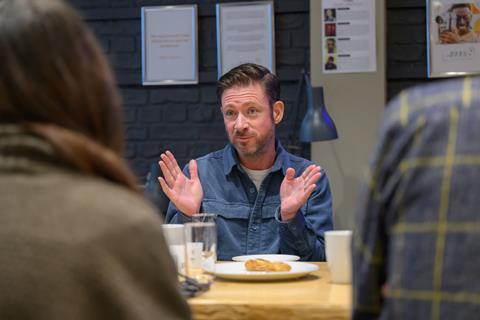
Murray agrees there are opportunities in the “huge” digital space.
“It’s on indies, not just broadcasters, to work out how this works,” he says. “We’re still chasing limited opportunities when there is a huge market that employs a lot of people which we haven’t worked out how to get into, be competitive in and make money from. It is possible, but we are still knocking on the same doors.”
McAulay offers a note of caution here, pointing out that it is hard to develop social-first factual content because there is “no obvious way” to turn it into cash.
“Instagram’s not paying anyone to make a documentary,” he says. But, he concedes: “As the PSBs start to embrace YouTube and social platforms a lot more, there is an opportunity for all of us to find an audience there.”
There is also some indication that homes for long-form and bitesize content are converging, according to Fergusson, who points to Netflix’s recent £14m deal with Gary Lineker’s podcast indie Goalhanger for The Rest Is Football’s daily show during the World Cup.
“The likes of Netflix are trying to experiment with more casual and opportunistic relationships, and going for shorter-form content but with proper craft skills,” he says.
Social media is also a critical part of a marketing package for more traditional TV, points out Patrick, who believes this must be considered at the development stage of a documentary, rather than as an afterthought.

“It should be part of how we win commissions, as is the case in America,” she says. “TikTok is how younger people access content and it’s not going away. We need to embrace it.”
Murray agrees: “TV can no longer just put out a documentary and get an audience without word of mouth or some serious strategy. It’s amazing how many shows are made that don’t have enough marketing money behind them.”
The AI Revolution
One of the effects of the rapid acceleration of generative AI in the past couple of years has been to throw doubt on the authenticity of video content. Once, video footage was seen as incontrovertible proof that something had happened. Now it must be questioned and scrutinised to establish not only whether the events depicted actually took place, but whether the people shown on screen ever truly existed.
But Murray and Fergusson suggest this collapse in trust could prove to be a boon for documentary producers because people will increasingly turn to them as guarantors of truthful and authentic material.
“People will watch a documentary on Channel 4 because they believe it to be real. There is a premium value in a messed-up world of mistruth,” Fergusson says. “In a reversal of recent trends, more power will be handed back to legacy media institutions. Major streamers and broadcasters will continue to be trusted as it becomes increasingly impossible to tell what is true on the internet.”
Overall, the group wants to embrace AI and the creative possibilities it offers in the factual TV space – although views are somewhat divided over the extent to and means by which this should happen, and the potential impact it could have. There is consensus that is should not be used for fact-checking, with Pomeroy insisting: “It is fallible, so we cannot let it replace human critical thinking.”
Patrick believes AI should primarily be used to bring a greater level of efficiency to production teams themselves. It could be used to cut down on mundane tasks like going through the rushes, as well as some editing tasks, she suggests.
“It will make teams more efficient because instead of working on one deck they can work on three decks at the same time,” he says.
“We should just be really honest and say that AI will winnow away jobs. It will take fewer weeks to edit material”
Hamish Fergusson
McAuley anticipates that AI will be increasingly implemented to create dramatic reconstructions which can enhance the viewer’s experience of a documentary – although he adds that such sequences should be clearly labelled as AI-generated.
But Fergusson and Chhokar worry that the technology will replace junior roles rather than be used to facilitate them.
“We should just be really honest and say that AI will winnow away jobs. It will take fewer weeks to edit material. Fewer people will be able to get through twice the amount of work in half the contract length,” says Fergusson.

Chhokar warns this could be detrimental to the skills pipeline: “We need people to start out in those lower-level jobs likes loggers, researchers or production coordinators.”
But Murray believes it will simply allow junior staff members to skip the years spent “doing mundane tasks like release forms” and “get into the creative game” quicker.
Ultimately, Clinton-Davis says: “We cannot be flat earthers or latter-day luddites. Society has to go along with every big technological change, from the printing press to the industrial revolution right up to the internet and the digital printing of newspapers – out of those movements people find sparks of creativity.”
The commissioner caveats that AI should be treated as an “adjunct”.
“We have to be really careful about how we harness it, not to replace us, but empower us to do different and sparky things,” she says.
Gornall believes specific production applications are the best way to embrace the technology, pointing to her recent use of AI to scrape away background noise of a piece of audio archive so that dialogue could be heard properly.
“It is not about the machine itself, it is about how it can be specifically leveraged for really positive outcomes, and we need to understand it as much as possible in order to leverage it,” she says.
Even given the many immediate concerns facing the genre, the mood among Broadcast’s assembled panel is upbeat. With a combination of hard-won expertise, an ability to gain and leverage access that others simply can’t get and a willingness to embrace the opportunities afforded by new platforms and technology, they believe the future of the genre is secure.






No comments yet