You’re Dead To Me co-creator’s battle over royalties highlights wider concerns

Podcast creators and producers are struggling to hold on to IP and get a fair deal for their work, experts in the medium have warned.
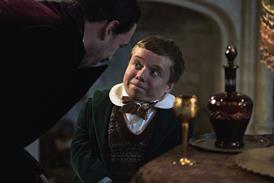
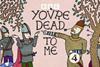
Dan Morelle, who co-created Greg Jenner’s BBC history podcast You’re Dead To Me, has spent around six months battling sports publisher The Athletic over money he claims he is owed by the company.
The Athletic took over the podcast in 2020, and it has run for five series to date.
Morelle stepped down from the show after its first run in 2019 to focus on building his own content studio, but he owns 10% of the podcast’s IP and claims he is owed more than £10k in royalties from The Athletic. He said the publisher has not paid him since October 2021.
“They declined to meet with me and my ignored my emails,” he said. “The Athletic only opened a line of communication once I started posting on social media about the situation, and then insisted that I give away my rights before they pay me the royalties they owe.”
A spokesman for The Athletic said: “We are aware of Mr Morelle’s claims and are actively working to resolve the matter with him.”
Two other prominent podcast experts, who wanted to remain anonymous, have revealed that within the past year the podcast industry has become increasingly “restrictive” for creators.
“Platforms seem to be getting much less generous because budgets aren’t what they were a few years ago,” said one producer.
“They generally want to take almost all the IP, or at least the lion’s share, especially when eyeing narrative series that could go on to become TV series. Buyouts are becoming increasingly popular, but are generally not lucrative for creators.”
The producer added that creators are more likely now to be offered none of the IP but a cut of any merchandise or books that might result from the podcast, or an exec producer credit on any TV content that is subsequently produced.
‘Wild West’
“It’s a bit Wild West out there,” they said.
A talent agent said the flow of podcast ideas and IP into TV is steadily growing, making owning IP increasingly important for indies.
The agent revealed several recent instances of creators struggling to hold on to their IP. One social media influencer who wanted to start a podcast went to three different companies, and eventually settled on an offer of 50% of the IP.
“When the company sent the contract through, they in fact wanted to hire my client and take 100% of the IP, meaning that at any point they could drop them and give the job to someone else.”
Another client had spent four years building their podcast to 20,000 downloads a week. Despite owning 100% of the IP, they were not making much money, so explored taking it elsewhere - only to find that other companies were demanding 50% of the IP and making no guarantees it would make any more money.
As well as blaming the budget squeeze, the producer said this is largely down to a boom in the number of TV companies and talent agencies starting up their own audio divisions.
“Companies are finding it harder than they thought it would be to make money and find distinctive stories, so they are having to spend a lot on promotion,” said the producer.
“Suddenly they don’t want to be sharing IP rights and profits with the creators and audio indies if they can avoid it. Everyone is much more serious about making profit from this business.”


No comments yet