

With promo campaigns now spanning dozens of formats, languages, platforms and versions, the machinery around the creative idea has grown unwieldy
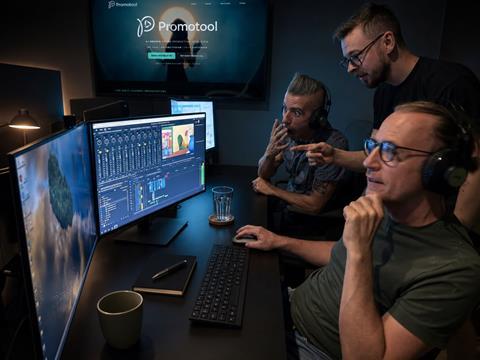
It’s been more than a quarter of a century since I first started cutting promos for HBO. Over the years, the equipment I’ve worked with has varied dramatically, but the creative task has remained surprisingly pure: you watched the programme, found the story, wrote the script, chose the moments and built something that made somebody want to watch.
Everything surrounding that process, however, has changed massively.
In 2000, when I first arrived at the state-of-the-art Viasat Broadcast Centre in the distinctly unglamorous West Drayton area of London, it could take weeks to get a promo broadcast-ready. Now producers can send a broadcast-quality master to the other side of the world in less time than it once took us to cue a DigiBeta tape.
In theory, that means promo creatives should have more time to work their magic. But the paradox is that although the technology has become vastly more powerful, creative teams now spend an increasing proportion of their time managing the production machinery around the creative idea.
A promo today rarely exists as a single 30-second television spot with a 15-second cutdown. The same campaign may require multiple durations, languages, territories, platforms, aspect ratios, compliance versions, endboards and social adaptations. It passes through producers, editors, graphics, audio, localisation, compliance, marketing and approval systems. Each new channel, format and technical standard – from SD to HD and then 4K, or 4:3 to 16:9 – has added another layer of complexity.
All of which means that, while the number of promo creatives has remained relatively stable, the production teams needed to support them have grown significantly. At one broadcaster I work with, nine coordinators now support 17 promo creatives. At the same time, budgets have fallen and expectations have risen.
Like most of us, I’ve been engaging with the ongoing debate about AI and creativity. So far machines have proven no substitute when it comes to making compelling promos. AI’s potential to redesign a production model that has accumulated a vast amount of manual work over the past 30 years, however, seemed huge.
Which is why I decided to do something about it.
Over time, that “something” turned into Promotool, a system designed to automate repetitive bits of the production process while leaving the creative decisions with humans.
The two tasks most obviously ripe for automation were reformatting master assets for the many platforms where people watch content and translating them into different languages. Once a hero cut has been approved, AI can produce the different durations, aspect ratios, language versions and market variations without turning each one into a miniature production.
But to me, the way AI can really free up promo creatives to do what they do best lies in its ability to navigate hours of footage.
Most editors develop their own system for remembering and locating a line or a moment from raw footage that they want to use, but it’s laborious and finding it again is time consuming.
Say you’re making a promo for a superhero series. You decide on a cut that sells the scale and jeopardy of the mission, but also want to show the toll it takes on the hero’s personal life. You think a moment of comic relief could also work well and recall a resigned head shake from a co-star that would land the joke perfectly – except you didn’t make a note of when it happened.
In the past, an editor would rely on memory, logs and hours of scrubbing through episodes to find every city-in-peril wide shot and strained exchange at home, before giving up on the head shake and making do with an eye roll because the deadline passed an hour ago and there are still 39 adaptations to get made.
Now, we’ve trained AI to analyse source material and make it searchable by parameters such as character, dialogue, emotion and type of shot. Suddenly the editor has a palette of suitable shots available in an instant, leaving them with far more time to put rough cuts together and even try out totally different openings, structures and hooks and see which is strongest.
If broadcasters use AI to remove repetitive work rather than simply produce more average promos faster, it can provide a practical defence against AI slop, by giving the wonderfully talented producers and editors of our industry more time and more scope to make the decisions that actually affect the audience.
Every major technology change I’ve experienced in promo production initially looked as though it might diminish the craft. Non-linear editing, digital asset management and file-based workflows changed who did what and how long it took. They did not remove the need for storytelling, judgement, taste or the ability to recognise the one moment that makes somebody want to watch.
AI will change the production model again. But if it does that by removing the manual work that has accumulated around the edit, it can give promo teams something increasingly rare: the time and freedom to be more ambitious. That is a much more useful superpower than pressing a button and asking a machine to be creative for us.

Attila Kristóf is chief product and strategy officer at Promotool.ai






No comments yet