

Founders Simon Kanjee and David Barrett tell Broadcast Tech about the facility-wide transformation of its Great Marlborough Street building
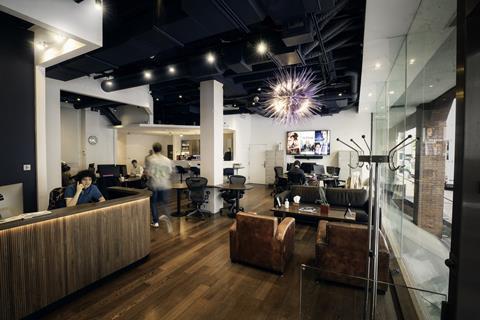
Farm Soho has undergone a facility-wide transformation at its Great Marlborough Street office. The building, which was formerly Grand Central, has been reconfigured, reequipped and refurbished.
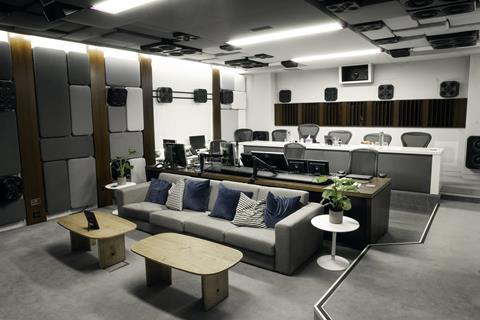
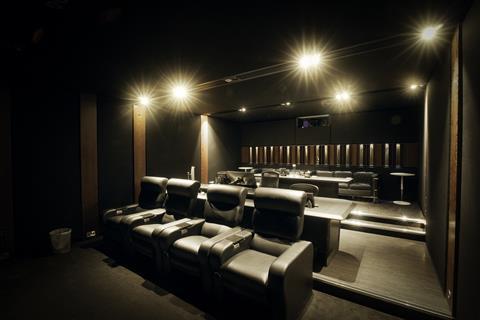
The facilities now centre around one Theatrical Dolby Atmos mixing stage and three HE Dolby Atmos mixing stages and four Baselight grading suites. These are pitched at high-end television, streaming and theatrical projects.
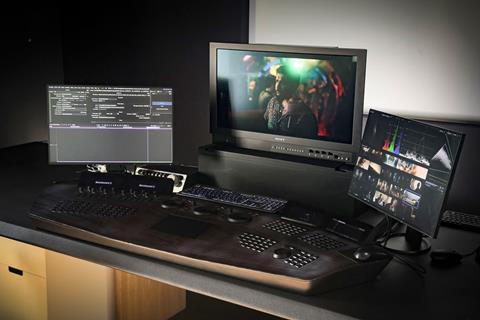
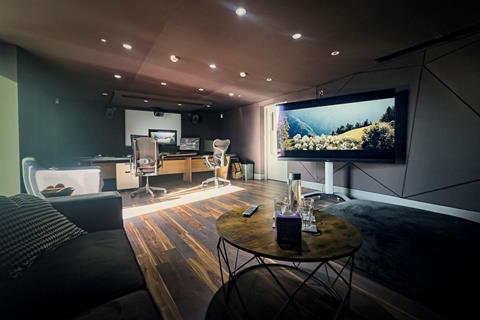
The post-production house has created three premier suite environments to appeal to these clients. The first is The Wardour Suite, which Farm Soho says blends, “Soho loft-style charm with a 4K HDR Baselight environment”.
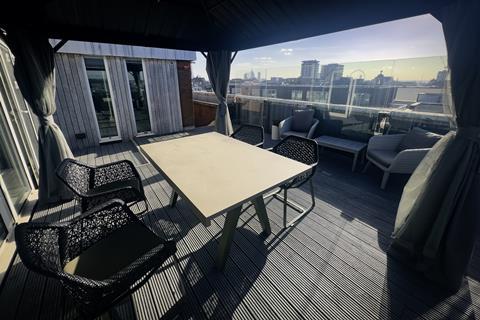
The room is optimised for premium episodic and feature work and includes a private roof terrace with “some of London’s most breathtaking views”.
The next premium room is The Carnaby Theatre, which features a Baselight advanced colour grading system, DCI 4K theatrical projection, and 5.1 review capabilities.
The Broadwick Suite is the facility’s third premium room, featuring a full theatrical Dolby Atmos license. Head of sound Gareth Bull recently used the room to mix Amazon’s series, Young Sherlock.
The Broadwick suite can “comfortably” seat up to 14 people, for cinematic reviews, and has housed up to 20 people.
Farm Soho’s owners acquired Grand Central in 2024 and Picture Shop’s London and Cardiff facilities in 2025.
As a result, Farm Soho’s staff is largely made up of former Grand Central staff and Picture Shop staff that have moved over from Picture Shop’s Lexington Street facility, which has now closed.
Key Farm Soho staff include re-recording mixer James Ridgway, whose recent credits include Black Mirror (Netflix) and The Death of Bunny Munro (Sky Atlantic).
Its sound editorial department is led by Raoul Brand (supervising sound editor) and Linda Brenon (supervising dialogue editor).
Farm Soho’s colourists include senior colourist Jodie Davidson, whose recent work includes Riot Women (BBC One), Under Salt Marsh (Sky) and The Moment, executive produced by Charli XCX.
Another of Farm Soho’s senior colourist is Sam Chynoweth, whose credits include Black Mirror (Netflix), Industry (HBO/BBC) and His Dark Materials (HBO/BBC).
On a tour of the building, Broadcast Tech talked to Farm Soho founders Simon Kanjee and David Barrett. Kanjee described Farm Soho as having a “premium, boutique environment”.
He told us: “We have the bottom two floors and the seventh floor of this building, all of which we’ve fully refurbished. There are now 63 people working here, and we moved all the kit over from Lexington Street too, aside from some of the speakers as we already had better speakers here.
“Between The Farm [Kanjee and Barrett’s second London building, on Newman Street] and Farm Soho, we have 150 staff in total, and a unified service and universal feel for the company.”
While there is some crossover in the client base between the two buildings, there is a general segmentation in clients, which is largely around scripted versus unscripted work.
Farm Soho is “a slightly different, more expensive office, with bigger rooms than Newman Street,” says Kanjee, and is aimed at providing finishing services for scripted content.
Meanwhile, Newman Street is predominantly for non-scripted work, although it does scripted comedy work, providing a full-service environment including offline suites.
Next, Barrett and Kanjee are looking to add more offline rooms to feed work into The Farm, which may involve the opening of a third building.
“There are currently 50 offline rooms in Newman Street, catering to comedy and non-scripted clients, but there is a need to add more offline, as some reality and entertainment shows can take up to 20 suites for a single production at any one time,” explains Kanjee.
“If it’s a new series, the client tends to want to be together and in the same building as the editors, but if it’s a streamer, the location tends to be less of a problem so we can then do more remote editing,” says Barrett.
“We inherited a fantastic team with The Farm and Lexington Street. They’ve been through some rough times but have stuck together and that has really brought the team together,” adds Kanjee. “We’ve added people we worked with before at Evolutions in production and sales, and are always looking for good people. We need more creatives than rooms, as a proportion can work remotely.”
Kanjee and Barrett are positive about the year ahead, after what is widely acknowledged as having been a turbulent few years for the industry. They say there’s a bit of a log jam in commissions that should come through over the coming months, and its drama facilities at Farm Soho are already starting to get booked “up to a year in advance.”
There’s the possibility another floor will become available in the Great Marlborough Street building this year too, which the company would be keen to expand into.
“Post is about people. You need a good team to win and keep winning work, and that’s what we have. I believe there will be more work coming through next year and the year should definitely be stronger than last year,” says Barrett.



No comments yet