

Cambridge-based VFX house produced 150 shots for Legendary production
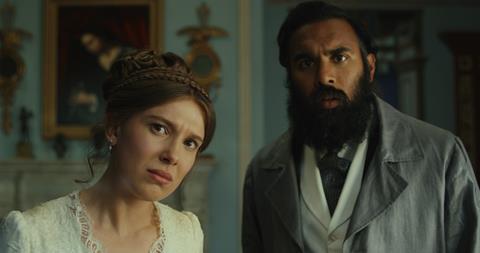
Vine FX produced 150 VFX shots for the third edition of Netflix’s Enola Holmes.
The Legendary-produced film, directed by Phil Barantini and written by Jack Thorne, follows Enola as adventure leads her to Malta, where her personal and professional ambitions collide in a case more treacherous than any she has faced before. Combining mystery, action, and intrigue, the story unfolds in a web of puzzles, hidden clues and dramatic set pieces as Enola searches for the truth.
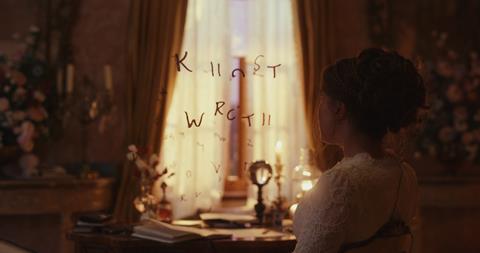
Production VFX supervisor Mike Ellis and the production team worked with the Vine FX team, which was led by VFX supervisor Ben Hicks and CG supervisor Tim Kilgour. Vine FX delivered a mixture of 2D, CG and invisible effects work across the feature. One of the studio’s most prominent sequences centred on Enola’s puzzle-solving process, where letters and symbols lift from a page and reform in the air as she works through a coded message. “There’s a brilliant scene where Enola visualises the problem and crafts her code. The letters reform on the page, then float up into the air where she rearranges them,” explains Hicks.
The sequence underwent an extensive look development phase as the creative direction evolved throughout production. “We worked very closely with production for this as the edit was still evolving as we went along,” adds Kilgour. “The concept started as liquid ink coming off the page, which later evolved into the idea of dried letters peeling away from the paper. This effect gave the sequence a much nicer design language, with these floating fragments that looked like dried ink lifting from the page.”
The developing edit and story requirements meant fl exibility was essential. “The words, letters and symbols were changing as the storyline developed,” Kilgour elaborates. “We had to create a system that was adaptable, allowing us to update the content while maintaining the overall look and animation style.” The team developed multiple design variations before arriving at the fi nal approach. “We wanted to provide as much creative scope as possible, as the production team fine-tuned exactly how they wanted the sequence to look. Once everything was finalised, we were able to apply the textures and create the animations that brought the scene to life. The result was a beautifully crafted final design that everyone was happy with,” states Hicks.
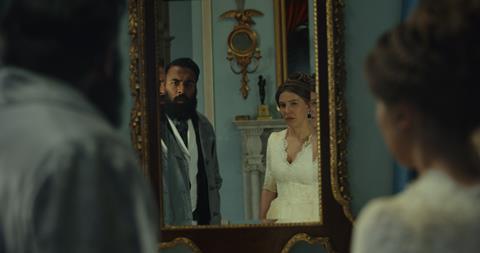
Another notable sequence involved a coded message hidden on a mirror, where Enola uncovers Morse code and translates its meaning as part of her investigation. “We went through a lot of iterations on how the Morse code would transform into letters, so it became another highly collaborative creative process,” Hicks says. To create the markings on the mirror, the team used real fingerprint references and developed a layered visual treatment that balanced readability with realism. “It was all about finding the right balance,” Kilgour continues. “We wanted it to feel like a genuine fi ngerprint smudge while still supporting the story point and remaining visually interesting.”

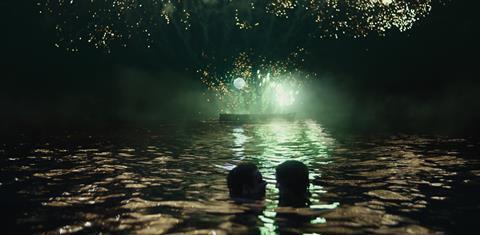
Vine FX also delivered a major action sequence involving a large-scale explosion within a mine environment. “The production had shot a practical explosion on set, but they wanted it to feel bigger and more dramatic,” explains Kilgour. “They provided us with LiDAR scans of the set, and we recreated the effect, extending the destruction and blowing apart sections of the structure while matching what had been captured on camera.”
The sequence combined practical photography with CG enhancements, helping to maintain continuity across the wider action scene. “Because we had such good reference from the practical shoot from the HDRIs and LiDAR data, it made the process much more straightforward,” Kilgour notes. “The client had prepared everything exceptionally well.”
Additional effects work included other details like muzzle fl ashes, bullet impacts and environmental enhancements leading into the explosion. “In shots like this, these smaller effects are what really help tie everything together,” adds Hicks.
Beyond the high action sequences, a significant portion of Vine FX’s work focused on invisible effects and environmental enhancements designed to support the film’s period setting. The team completed extensive clean-up and de-modernisation work throughout the Malta-shot locations, removing contemporary elements and helping transform the environments into Victorian-era settings. “A significant amount of complex cleanup of modern Malta was needed before the creative work could even begin,” explains creative director Simon Carr.
“Cables, modern structures and various present-day elements all had to be removed to create period-correct cityscape work. Some of that prep work was actually quite complex because of the amount of parallax involved, but it all needed to be removed in order for the shots to feel historically convincing.”
The challenge to achieve historical authenticity continued with further environmental work, including replacing carpets with sand in key sequences, enhancing backgrounds with mountains and trees, and extending coastal vistas. “In one sequence, we created sandy textures to replace a large area of carpet that had been laid down for the shoot. We extended the sand across the surrounding paving areas to make everything feel more soft and natural,” says Hicks.
Here, digital matte paintings played a key role in refining the plate environments. “There were quite a few different angles in the sequence, so we had to build multiple digital matte paintings and make sure the sand felt consistent throughout. We integrated the sand naturally into the environment so it felt like it had always been there rather than something that had been added afterwards,” he finishes.
The studio’s work also encompassed window replacements and bluescreen composites, including the views beyond Sherlock Holmes’ office in Victorian London, helping to recreate further convincing period settings.
Throughout production, Vine FX worked closely alongside the filmmakers as the project evolved, adapting to changing edits and creative direction. “This show was much more collaborative than most,” explains executive VFX producer Kaitlyn Beattie.“We had to stay flexible, as the reels were still being actively edited while we worked.”
The dynamic workflow encouraged strong collaboration across departments, with production coordinator Aidan Free helping to keep the project running smoothly as creative decisions were updated. “Everybody worked together to find the best way to deliver,” noted Free. “Even when challenges arose, each department was really committed to doing their best and driving the show forward successfully.”
Enola Holmes 3 is available to watch on Netflix now.






No comments yet