

Broadcast Sport speaks to several companies working with content creators and other influencers in sport
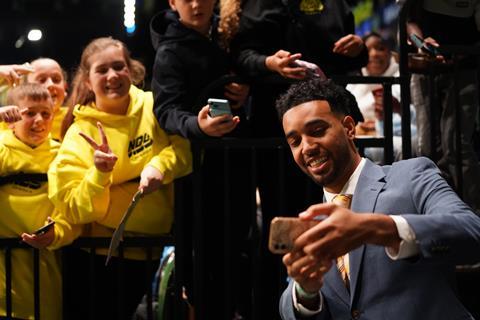
The existing and still growing popularity of content creators with younger audiences makes it very tempting for production companies, broadcasters and rights holders to try and integrate them across almost all of their content.
However, this can go wrong too, with audiences of all ages likely to turn off if the resulting content feels forced or like it’s ticking a box. Broadcast Sport spoke to several companies across Europe which are looking to build their sport content around content creators.
Harry Hesp is marketing director at Baller League, a competition with editions in the UK and Germany, and plans for a US version, which sees content creators, sport stars, and other celebrities such as Idris Elba “own” football teams made of real footballers that play in a league format.
For Hesp this separation between the sport and the creators is important, and viewers would be less interested were the sport not professionalised. “The authenticity is the biggest part. You have to play to their strengths,” he said. “The celebs will bring people to Baller League but we keep them here with the football.
“You can see this with charity matches. The quality is low so it doesn’t work when they’re more regular.”
This meant that Baller League selected for footballing ability when selecting its players, turning down some former reality TV stars from its thousands of UK applicants.
Lode De Boo, head of development at Dutch production company and Banijay label Southfields, agrees. Southfields has launched its own football club FC Failliet/Finesse, in partnership with creators Ilias Vietto, Aimane Charbon and Kleine John, and while the trio are currently involved in the sporting side too, this is likely to change if, as planned, the club moves up through the Dutch league system.
“The influencers need to be credible as sports people,” De Boo explained. “We really wanted to try to find some influencers who are credible enough to play football.”
FC Failliet’s matches are currently shown through its YouTube channel, with cameras following the team behind-the-scenes for further content, and while losing, “is not that bad because it’s also content,” De Boo explained, wins do get more views. He even repeated Hesp’s charity match point without prompting, noting, “If you lose a charity match no one cares, but we want the fans to care about the team so they become fans of the club and not individuals.”
Transferring the audiences of individual creators to a team or competition isn’t easy, but has to be the aim, especially in De Boo’s case. “We are trying to develop so that that we don’t need those three influencers in all of the content,” he said. “Because if we get promoted in two years they are not good enough to play at that level.”
This leads to some differences to Baller League, with Southfields wanting players who at least have a desire to grow an online following. “You want good players, but you also want players who are good on camera,” De Boo revealed. “We want the players to want to be influencers.”
For Christian Nienaber, managing director at Banijay Media Germany, bringing influencers into the sport itself is very much part of the plan. The company launched The Ultimate Hype earlier this year, which saw professional bouts between boxers, as well as reality TV stars and content creators, face each other in boxing, bare knuckle boxing, slap fights, wrestling, and more. Shown on RTL, the event was a success and there are now plans to build on it with further competitions of the same kind.
Nienaber believes the line between sport and influencers is being blurred, and the future could see that continue. “The border is disappearing because if you take a look at Edmon [Avagyan, a boxer and content creator who headlined Ultimate Hype], especially with Ringlife [his channel], he’s a professional boxer, but at the same time he’s an influencer.”
For Nienaber, “Every person who’s doing professional sports should promote themselves more on social media,” with it meaning more career opportunities both inside and outside of the sport they compete in.
However, even in the more entertainment-focused bouts, it wasn’t just people facing each other to get views across social media. The integrity of the sport itself still played a part. All the non-professional contestants were given extensive training as part of the event, to the extent that Nienaber revealed some are now thinking about trying to take the sport seriously as a career option.
Across all three productions, this is the case, and may be one of the lessons to be learned. While content creators and influencers can bring new audiences to sport, it is the sport itself that will keep them there.



No comments yet