

Whisper chief technology officer Richard Lancaster analyses what could be next in production
Whisper’s reputation in the market was a significant pull factor when I joined last March from Prime Video. Its mantra that ‘entertainment is everything’ allied to productions such as the 2022 Women’s Euros, Paris 2024 Paralympics, Roland-Garros, and the 2025 Women’s Rugby World Cup aim to always place creativity and storytelling at the heart of the content.
As important as that core belief is to Whisper, equally fundamental is premium technical delivery at any scale. No one cares how beautiful the shot is or how artfully the context of the highest sporting drama is conveyed if the quality is off, the latency too long, or pictures are glitching.
Whisper is known for delivering traditional sport broadcast events like the five hours plus Alcaraz-Sinner Roland-Garros final, but increasingly we have to meet the needs of innovative sports entertainment crossover propositions like Kings League, and service multiple concurrent broadcast, digital and social feeds - think live influencer reactions, audience participation and fan engagement.
The challenges of live sport in this era of diverse audience needs, instant social feedback loops, significant investment and soft power focus are more demanding than ever. Flexibility, innovation and, ultimately, delivery are all critical.
The investment in and growth of Whisper Cymru and our remote production facility, the Cymru Broadcast Centre has been game-changing for our capacity to deliver multiple events at once, across the sporting calendar and on a global scale.
The robust technical capabilities of remote production are providing the foundations that ensures the work we deliver is reliable and of outstanding technical quality.
However, compared to 10 years ago there are now many different ways to make a production: onsite/surface remote, full-remote, traditional gallery or one-box solution, and, of course, cloud. Part of the role for Whisper’s tech team is to help find the right solution for any project, considering not only cost and environmental impact, but also how well suited a solution is to the production requirements of the client.
We engage with some brilliant companies delivering broadcast equipment, audiovisual and lighting systems, and connectivity across the globe, working on events as diverse as PFL across Europe, Kings League in Riyadh, and cricket in New Zealand with crews from one to 400. We try to create the best possible environment for them to help drive innovation through smart thinking and problem solving as well as technology.
Clearly, innovation over the last 10 years has leapt forward too. There is no one single solution, but it allows us to be far more dynamic in our approach to productions, offering each production its own unique workflows to deliver the best possible product.
The ongoing evolution of the broadcast sector is providing exciting opportunities, especially with new forms of connectivity. This can free us from the shackles of traditional satellite and fibre and use improved codecs, which provide greater flexibility to innovate creatively, safe in the knowledge that delivery will continue to be the highest quality.
There’s also the advance of AI - particularly in post, but we’ll soon see it increasingly in live production. Like a lot of discussion around AI in other areas, it’s how it will help people achieve more technically and creatively that excites us. The premium on human-led content that uses the capabilities of AI to push the boundaries is where we see Whisper’s future. It’s like data - the important thing is how you use it to augment your storytelling.
With all the changes in technology - be it the surge in COTS/IP technology, HDR, or the use of vMix and similar solutions for alt feeds, if not full programme feeds - we need to be mindful of what we are asking of the engineering talent behind the equipment.
Keeping up with the engineering behind the technology is a full-time job in itself, so choosing the right people for the job is a key to success. That means getting the training right, not only for future talent but for incumbents too. How can we push the envelope while maintaining resilience. Another issue this helps us address is IP security. There have been points of weakness across the outside broadcast sector in the past, but by educating teams and using technology for intrusion protection and detection we are creating a more robust content environment for clients.
To that end, future talent is so important for all of us - it allows the industry to keep growing and developing, while providing the fresh perspectives that challenge us to do more. One of the most satisfying things in my role is seeing other team members grow, face new challenges, questioning and learning, and ultimately helping us all raise the quality of delivery further. Our Whisper Academy is proving to be a successful pipeline across disciplines.
Ultimately though, and this is the beauty of the industry we work in, every production is different, and with that comes a variety of challenges. And while remote production is a strong and critical tool in our kit, it’s just one part of our offer across a variety of technical solutions. And onsite is still hugely valuable to covering events large and small.
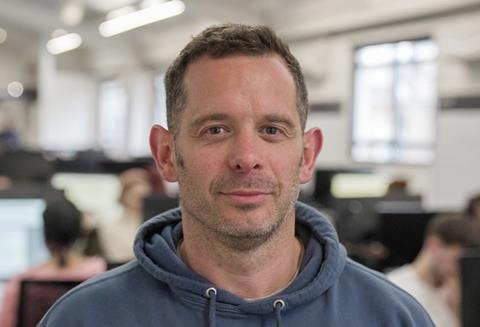
Richard Lancaster is chief technology officer at Whisper




No comments yet