

Noah Media and Insight Film discuss the making of their FA Cup documentary for TNT Sports

The TNT Sports documentary FA Cup: The People’s Story, which is available to stream on Discovery+, tells the story of the FA Cup through the people who lived it.
It’s directed by Emmy-award-winning Richard Milway and spans nearly 60 years, focusing on five FA Cup Finals, each revealing how the competition has reflected the hopes, struggles and changes of the nation.
The story begins in 1966 with the Everton v Sheffield Wednesday final, as Everton’s Mike Trebilcock becomes the first black player to score in a FA Cup Final.
The narrative then shifts to a time of industrial unrest in the country as Sunderland register an underdog victory against Leeds United in 1973.
The film also revisits the emotional 1989 final between Liverpool and Everton, played shortly after the Hillsborough disaster. Furthermore, it charts the rise of the women’s game through the first Women’s FA Cup Final at Wembley between Chelsea and Notts County.
FA Cup: The People’s Story concludes with the 2025 final, as Crystal Palace shock Manchester City to win the first trophy in their history.
Below, the filmmakers, from Noah Media and Insight Film, discuss how the film came together, how it was produced, and why it stands out in a crowded market of sports docs.
Richard Milway, director, FA Cup: The People’s Story
Before production began, we already knew the themes we wanted to focus on for each chapter. That meant we could work closely with archive libraries and dig deep into what they had. I wasn’t aware of the brilliant Meanwhile Back in Sunderland documentary that was made on the day of the 1973 final, and this was a brilliantly rich source.
Editor Paul Foster and I wanted footage that not only illustrated these themes but also made the viewer feel like they were there. The first three chapters particularly (1966, 1973 and 1989) act almost like time capsules, so we wanted the viewer to really get a sense of the era. We also wanted footage that was relevant to the contributors, and their personal photos and home footage was invaluable. Photos were a great way of holding on a moment captured in time
We wanted contributors who had deep connections to their club, were there at the final and who had something specific that happened to them on the day. Keeping the theme of the FA Cup as ‘the great leveller’, we wanted this to cover as wide a group as possible, be it fans both unknown and well known, players and owners. To each of them, the success of their club was equally special.
We did speak with the daughters of Sunderland manager Bob Stokoe and Eddie Cavanagh, the Everton fan and pitch invader in 1966. Neither had been at the respective finals, but both Bob and Eddie had such interesting and deep connections to their clubs that we wanted to hear from those closest to them.
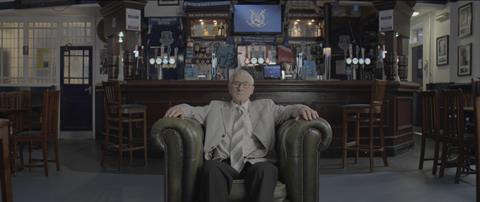
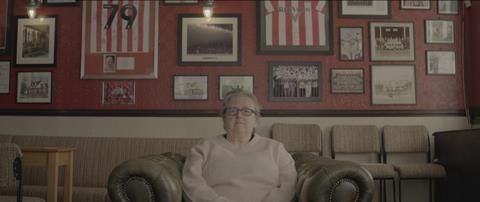
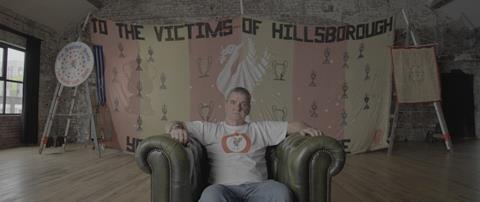
The Chesterfield armchair is something quintessentially English. It’s traditional and hugely well known - much like the FA Cup itself. It also acted as a way of showing that each contributor was as important as the next, be it John Aldridge or George Ford.
We wanted the interviews in locations relevant to the contributor or club, and as if the audience was in the room with them. DOP Andrew Butler kept the lighting very natural and managed to both make them feel intimate and epic at the same time. It was worth lugging the chair up and down the country.
Using commentary and news reports were important to use to underline and develop the points being made by the contributors.The key was then to get an understanding of each person and why they were relevant to the story, so they weren’t just acting as someone talking us through the match. We had time to get a sense of how and why they had fallen in love with their club and what the FA Cup Final win meant to them personally and the club in general. What really came through was a sense of shared experience and familial bonds.
There isn’t a central protagonist in The People’s Story, with each contributor as valid and as important as the next. That’s perhaps not something we have seen too often in recent sports documentaries, and it was great to illustrate their stories with both football and cultural archive.
Hugh Davies, executive producer for Insight Film
Over at Insight, we’d recently made a BAFTA and Emmy-nominated feature documentary for Netflix called Apollo 13: Survival. It got us thinking about other historical stories where large amounts of footage might exist, which could be utilised creatively to enrich our understanding of past events.
Sport was an obvious terrain to consider, though quite saturated already, so it felt important to conceive of an original vantage point. Together with our partners at Noah Media, we landed on the idea of The People’s Story – an approach that seeks to move the focus away from on-field participants and onto the everyday sports fan.
With Insight’s award-winning journalistic background and Noah’s experience in premium sports storytelling, it felt like a strong combination to move the project forward.
With TNT landing the rights to the FA Cup, there was an opportunity to make a film celebrating the history of the tournament and luckily for us – they felt that The People’s Story was the best way to do that. From the smallest non-league clubs to the titans of English football, the whole nation finds reflection in the FA Cup. This film echoes the grassroots spirit of the tournament by unearthing the people’s perspective – unheard stories of fans and spectators. Together with our partners at Noah Media and TNT Sports, we’re thrilled to offer viewers this rich and fresh take on one of the great institutions of the beautiful game.
More often than not, sports documentaries centre solely on the players, managers and on-field participants. By shifting the focus to include the people’s perspective, we are able to explore the impact of sport on our broader culture. Sport can hold up a mirror to our society and by tracing its influence on communities and the lives of spectators, we can learn a lot about what brings us together and what tears us apart. We feel very excited about the possibilities for future iterations of this format.
Richard Makinson, executive producer for Noah Media Group
From Noah’s perspective, it was clear early on that both ourselves and Insight wanted this project to take a fresh approach to sports documentary storytelling, and unearthing unheard first person narratives behind classic moments in sport history felt like it could provide the chance for us to do something new and different together.
The People’s Story actually started life as a look back at the 1966 World Cup, charting the social and cultural times that the tournament played out against. But with TNT Sports becoming the home of the FA Cup, we developed the idea to work as a celebration of the rich history of the competition and the way that history often perfectly mirrors the times we’re living through.
At a time when sports documentaries have become formulaic, we believed audiences would appreciate the first person emotional testimony of those who lived through the cup’s history, and how it reflects the hopes, struggles and changes of the nation itself. Both ourselves and Insight wanted the main idea driving the film to be a celebration of the competition while grounding it in lived experience, honouring the people who have given the FA Cup its meaning across generations.
Tom Boswell, executive producer for TNT Sports
The film actually started as a concept called The World Cup: The People’s Story, given the fascinating social backdrop to various World Cups. However when TNT Sport confirmed broadcast rights to the FA Cup, we thought the idea would also work well as a more local concept with the competition such a rich source of British history.
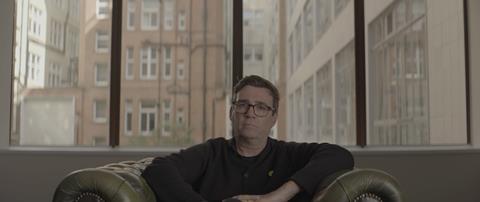
The idea behind the People’s Story was the notion of the FA Cup being ‘a great leveller’. Whether you’re Andy Burnham, Steve Parish, John Aldridge, Alex Greenwood, George Orr or John Joynt. Your memories are just as valid and just as important. And that sits well with one of our big focuses of creating content that resonates with sports fans.
Archive is key to The People’s Story. I feel there has been a shift to access documentaries over the past couple of years, so a good, strong archive documentary is something I feel a lot of fans appreciate. The FA Cup always evokes feelings of great nostalgia so a return to that style after some of our recent documentaries felt like a refreshing change.



No comments yet