










“The real joy is in remembering how brilliantly Only Fools was written and how fondly the cast recall their time working on it”
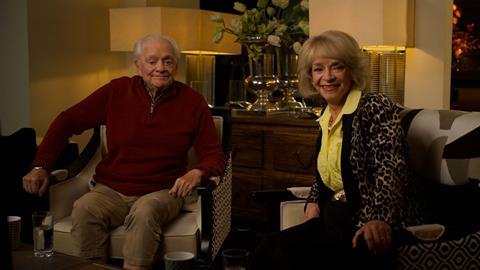
“Tessa Peake-Jones recalls the excitement of receiving the script for a new episode. “You would think, ‘Ah, another winner. This is like Shakespeare,’” says the actress, who played Raquel. And, in sitcom terms, she couldn’t be more right. This documentary unearths previously unseen material, but the real joy is in remembering how brilliantly Only Fools was written and how fondly the cast recall their time working on it. The unseen footage and out-takes are unearthed by Richard Latto, a former BBC producer and comedy archive specialist. Scenes were cut simply because the amount filmed couldn’t be squeezed into the requisite 50 minutes, and something had to be lost in the edit. All 64 episodes of Only Fools were written by one man, John Sullivan, which seems remarkable now in this age of comedy writers’ rooms.”
Anita Singh, Telegraph
“Only Fools is a comedy miracle, a show that has lost none of its power to make us belly-laugh, though the world it depicts has vanished more completely than anyone could have believed possible. It seems strange that many of the cast, including Sue Holderness (who played the vacuous Marlene) and Gwyneth Strong (posh Cassandra, wife of the eternal dipstick Rodney), are still instantly recognisable, when the south London streets, pubs and markets of the 1980s have changed beyond imagination.”
Christopher Stevens, Daily Maill
“I have never taken ketamine, and having heard young people describe the catastrophic bladder damage that can ensue from abusing it in Stacey Dooley: Down the K Hole (BBC3), I am certain I never will. One said it was like having permanent cystitis, a condition I unfortunately know plenty about. Nothing could persuade me to take a drug that makes it feel as if you are passing car battery acid 24 hours a day. And that’s at the lesser end of ketamine’s delightful agony scale. If anyone watches this documentary and still thinks the cheap party drug “vitamin K” is worth it, then honestly, one despairs.”
Carol Midgley, The Times
“Dooley spends four months embedded in Acorn Recovery Projects, a rehab centre in Stockport. It is not really made clear what “embedded” means. She appears to turn up in the mornings, rather than live there full-time. And there isn’t a great sense in the interviews with addicts and their families that she is any closer to them than she would be under normal circumstances. Nor, during her reflections after every interaction – usually leaning against a wall in the nearest corridor and sighing – does she come up with any greater insights than she usually does. Dooley’s speciality is empathy and, afterwards, either repackaging what she has just been told, or giving voice to the feelings – sadness, frustration, resignation – she can count on the audience sharing. Which is fine, as far as it goes. But as the programme – indeed, as her career as a documentary maker – continues, you do start to wish she could parlay her established bona fides into something just a bit more rigorous and move us all on from our shared understandings.”
Lucy Mangan, The Guardian
The New Stanford Prison Experiment, Netflix
“The streaming giant’s decision to rerun the controversial experiment as a reality show was met with howls of moral outrage when it was first announced, but in truth the six-part series that’s made it to air is relatively tame by the standards of contemporary television. In a world of Mr Beast challenges and naked survival shows, a little light prison role play doesn’t have the same potential to shock. It’s also clear that the producers have gone to great lengths to ensure the wellbeing of their participants, and to stop their version of the Prison Experiment from veering into psychologically troubling territory. Everyone involved is free to leave at any time by uttering a safe word (”Pineapple”), an option that several people exercise throughout the course of the show. While that’s undoubtedly good on ethical grounds, it does also act to defuse any potentially adversarial situations well before they reach a boiling point.”
Kevin E G Perry, The Independent
“None of it is real, and nobody thinks it is. The show doesn’t create any moments where the contestants suspend their disbelief – as in The Traitors, where the faithfuls sometimes start genuinely seeing the traitors as duplicitous villains. There is no game to win, no goal to work towards and, apart from the unspoken potential reward of a media career in every reality show, no prize. There’s nothing incentivising anyone to continue. More than one participant realises this and simply walks off the show. What is interesting – not enough to make The New Stanford Prison Experiment worth nearly six hours of your time, but it’s something – is how reality TV contestants, with their unusually high self-regard and their tendency to use a lot of loud, confident words to say very little, behave when they know what and where they are.”
Jack Seale, The Telegraph




No comments yet