








“The most immersive, authentic, naturalistic medical drama I have seen”
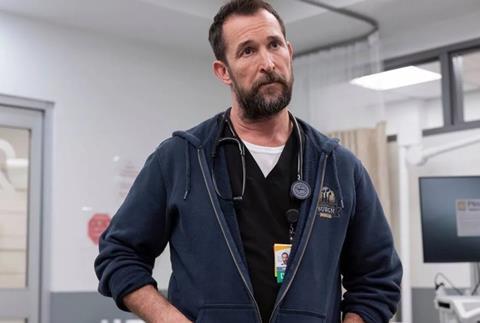
The Pitt, HBO Max
“The Pitt is written and created by R Scott Gemmill and John Wells, both veterans of ER. It is hard to see it as anything other than a continuation of that series 20 years on, and that’s a profoundly good thing. It means that the show’s captains know exactly what they’re doing — they filmed a live, real-time episode of ER as far back as 1997. Add in Noah Wyle, who having played John Carter as an eager med student in ER also knows how this works, and you have a drama that is confidently chaotic from its first frame. In the context of modern television what’s good about The Pitt is what it takes away. The actors genuinely look more and more tired as the show goes on, because it was filmed in chronological order, just like a hospital shift runs in chronological order, and so they are tired. The cameras follow the performers, not the other way round, so there is no staging or blocking for effect.”
Benji Wilson, Telegraph
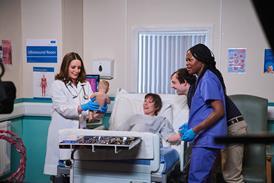
“I love medical dramas. Holby City, Casualty, ER — I’m there. Bodies, House and This Is Going to Hurt? All great. But The Pitt is the most immersive, authentic, naturalistic medical drama I have seen. Watching it feels like being dropped into the emergency department in real time with all its blood, gore and chaotic urgency. Each episode covers one hour and each season covers one 15-hour shift. It takes supreme confidence to drill down into this level of minutiae. It could get boring, yet never does. I’m not surprised it has been commended by the medical professionals for its accuracy.”
Carol Midgley, The Times
“Each episode covers an hour of a single shift (the first covers 7-8am as Robby arrives, takes the measure of what has come in overnight and meets the batch of new interns that are going to help or hinder for the next 15 hours). There are bursts of activity – a gunshot wound, a woman who was pushed or slipped under a subway train – and occasional gory injuries (the opener has a “degloved” foot, the second episode a “floating face”. (If you are planning to Google these phrases to see if you can cope with watching, simply don’t. Either nothing ever bothers you and you don’t need to, or some things do and these undoubtedly will. You’re welcome.) It doesn’t, however, have the relentlessly frenetic pace of ER. It has more confidence than that, and seems to recognise that when you are working in so many issues of the moment a relatively traditional storytelling format is a good basis from which to proceed.”
Lucy Mangan, The Guardian
“The bride-to-be in horror series Something Very Bad is Going to Happen (Netflix) has a feeling that her nuptials won’t go well, and you can see why. A baby abandoned by the roadside, a disembowelled fox crawling with maggots, a peeping tom in a toilet cubicle, a frozen custard shop founded by a serial killer – and they’re just the things she encounters on the drive to the wedding venue. Wait until she gets there. If this sounds a bit much, it’s because the show, created by Haley Z Boston and executive produced by Stranger Things creators the Duffer Brothers, isn’t being 100 per cent serious. It’s macabre and unsettling and filled with people dying in a particularly alarming way (if you faint at the sight of blood, give this a miss), but there’s a knowingness to it all, a gleeful smorgasbord of genre tropes. The real horror, it tells us, would be realising that you’ve married the wrong person.”
Anita Singh, Telegraph
“You’re really dragged through the mill alongside the protagonists — from revelations in the snow-covered woodland home where the mysterious “Sorry Man” haunts people’s dreams to frenetic exchanges between increasingly unhinged family members and carefully constructed flashbacks resembling found footage. You’ll have to watch to the end to discover whether true love — or indeed, anyone involved — survives the longest and weirdest hen do in history. But one thing I can confirm: the title of the show is accurate.”
Tim Glanfield, The Times
My Garden Of A Thousand Bees, BBC4
“This 50-minute film first aired on U.S. public service channel PBS, and has been on Sky Nature. But for the majority of UK viewers, this BBC4 slot was a first opportunity to marvel at the footage. Martin explained his video techniques without pretension or getting bogged down in jargon. The camera, with its lens no bigger than the one in a smartphone, was so sensitive that even blinking or the beating of his heart could make it shake. The clarity and magnification he achieved was mesmerising enough to make you hold your breath. One sequence of honey bees mating revealed a piece of astonishing behaviour. As the male clamped his legs around the female’s body, his hairy forelegs were a blur. By slowing down the film, Martin discovered the insect was stroking his mate’s antennae. It looked almost like a caress.”
Christopher Stevens, Daily Mail
“There is something pleasantly bee-like about Dohrn’s award-winning film, too. A leisurely thing, it drifts woozily around the photographer’s garden, picking up facts here and there and storing them like pollen in little pouches on the backs of its thighs. Not too many facts, mind. This is no place for statistics or percentages. The photographer’s narrative bag is an altogether looser affair, with as many shrugs and ellipses as there are firm specifics on, say, the climate crisis: “All over the world, bees are declining” is all we get on the doom-boffin front. Consequently, Dohrn – an affable, wistful sort who wears a range of crumpled action-shorts and calls us “mate” – often appears as awestruck and bewildered by his hairy quarry as we do.”
Sarah Dempster, The Guardian


No comments yet