

Global streamers pulled back on commissions across the region but a more sustainable production level is emerging
After almost a decade of outsized success and a production boom, the Nordic television industry is navigating a sharp correction, balancing reduced commissioning and investment against enduring strengths in storytelling, distribution, and audience demand.
For much of the streaming era, the Nordics looked like television’s most efficient content machine. A region of barely 28 million people consistently generated travelling drama, punch-above-their-weight streamers, and influence on commissioning trends across Europe.
Nordic noir became an international brand. Local platforms expanded aggressively. International buyers circled Copenhagen, Stockholm, and Oslo in search of the next breakout series.
It peaked around 2022, and the correction came quickly. Within two years, Viaplay Group slashed scripted shows following an overextended international push, as commissioning volumes across the region fell. Throughout the region, the pattern was largely the same, with a drop in streaming investments and a more cautious market, according to the Danish Producers’ Association.
Production companies adjusted to a more unpredictable market with reduced permanent staff and favouring project-based contracts.
“Production output in 2022 was exceptionally high - close to a bubble - so the drop that followed had consequences for production companies and their employees,” Rasmus Andersen, head of research & projects at the Danish Producers’ Association, told Nordisk Film & TV Fond.
Consequences & correction
Between 2024 and 2025, Nordic commissioning declined sharply, according to research from Ampere Analysis, which was initially presented at the ‘What’s new in the Nordics?’ webinar.
“Unscripted commissions fell 21% and scripted by 29% from 2024 to 2025”, said the firm’s senior analyst, Sam Khoury.
However, the impact on TV genres was uneven. The biggest drop was in the unscripted children and family genre, falling 75%, underscoring the pressure from social video platforms such as YouTube.

“Conversely, the genre that the Nordics are best known for - scripted crime and thriller - only dropped 13%. Documentaries, also a Nordic favourite, fell a moderate 14%,” Khoury said.
Swedish media analyst Mediavision also reports that global streaming services are pulling back on local production. In 2025, the number of new Nordic titles released by global players declined by about 20% compared with 2024, continuing a downward trend seen in recent years.
“The pull-back from global players is reshaping competitive dynamics in the Nordics,” added Mediavision’s principal analyst, Fredrik Liljeqvist.
Yet while commissioning has slowed, audience demand for streaming itself continues to grow - increasingly through cheaper ad-supported models. Mediavision’s latest market update shows that the Nordic streaming market now exceeds 27 million paid subscriptions, an increase of roughly 3.5 million since spring 2025.
Most of this growth has been driven by hybrid subscription models (HVOD), which combine lower prices with advertising.
“Ad-supported streaming is no longer a niche offering, it has become the primary growth engine of the Nordic streaming market,” said Liljeqvist. All Nordic countries have recorded strong growth in HVOD adoption, with Sweden seeing the sharpest increase. “The Nordic streaming market is entering a more mature and price-sensitive phase,” the analyst concluded.
Outlook for a comeback
The squeeze has already impacted many working in the production sector across the Nordics, and looking ahead to 2027 and 2028, the outlook remains uncertain, despite hopes for a revival of the region’s output.
Market opportunities do exist, albeit for distributors, according to Ampere, which believes sales of the region’s much vaunted crime shows will tick up.
“Despite the downturn in commissioning activity, the Nordic TV industry might find comfort in healthy distribution opportunities,” said khoury. “Almost half of the Nordic top 100 most portable titles were in the crime and thriller space in 2025, the exact genre that the Nordics excel in.”
Even a moderate rebound at pan-Nordic streamer Viaplay would boost volumes. Viaplay shares rose 6% in March after reports that Canal+ and PPF - which hold stakes of almost 30% each - were considering taking the Nordic streaming business private. The stock had already gained 50% over the previous three months as the company continued recovering from its near-collapse in 2023.
If Viaplay leaves the Nasdaq Stockholm, the company could gain greater operational flexibility and potentially revive investment in original content, particularly scripted programming. Additional investment from PPF and Canal+, which owns stakes in streamers such as Asia’s Viu and is now behind South African pay operator Multichoice, could further reshape Viaplay in different ways.
“Viaplay could allocate more funds to programming in its Nordic home markets, but Canal+ could also use its control to drive programming efficiencies across its international footprint and apply those to Viaplay’s markets,” Matt Tríckett, senior analyst at Ampere Analysis, told Broadcast International. “In that case, the situation would remain largely unchanged.” Viaplay declined to comment.
Global quartet drive investment
International TV investments in Nordic scripted and non-scripted TV have to date largely come from Netflix, Amazon Prime Video, and Warner Bros. Discovery.
Netflix has been the top international investor, with a SEK3bn (£238m) investment in Sweden alone over the last four years. The streamer remains a dominant force, though its strategy appears increasingly disciplined, as outlined by Jenny Stjernströmer Björk, vice president of Nordic Content, who is focused on character-driven dramas and comedies while steering away from more costly genres such as sci-fi and fantasy.
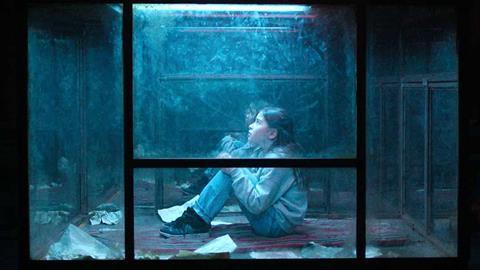
Prime Video, meanwhile, is looking to reinvent popular genres with a distinct Nordic feel. The streamer recently launched Snake Killer and the dystopian insomnia thriller Awake.

Warner Bros. Discovery’s HBO Max is back in the Nordics and will commission two scripted series per year in Sweden and two in Denmark, with mid-range budgets. HBO Max’s big shows deliver strong viewership figures, but local content is always stronger, according to Pil Gundelach Brandstrup, general vice president of original production networks & streaming at WBD Nordics.
The industry could also look to more recent arrival SkyShowtime, which entered the Nordic streaming market late in 2022 as a pan-European joint venture between Comcast/NBCUniversal and Paramount. The Nordics were its first launch territory, and the service entered an already crowded and competitive market dominated by established global players and strong regional broadcasters.
Building on its market entry two to three years ago, the streamer began emphasising local European originals - particularly Nordic crime and documentary storytelling - as central to its long-term growth strategy.
By the end of 2025, the streamer had delivered 30 SkyShowtime Originals across markets (helped by a deal that saw it pick up dramas from Viaplay), followed by five SkyShowtime Originals that premiered in the first half of 2026. More titles will be announced later this year, SkyShowtime told Broadcast International, including originals such as Where the Sun Always Shines (Där Solen Alltid Skiner), Veronika S1 – S3, Schmeichel, upcoming series The Trio (Trion), National Homicide Unit (Riksmord), and a recently announced first-ever animated series, Hidden Islands, from Madeleine Bernadotte and Karini Gustafson-Teixeira.
“The Trio is unlike anything else we’ve commissioned and is exactly the kind of fresh storytelling we’re proud to champion,” said Kai Finke, chief content officer at SkyShowtime. Yet the streamer’s future remains unclear, with Paramount Skydance in the midst of tying up its acquisition of HBO Max owner Warner Bros. Discovery.
Big merger, good or bad news?
Clearly, the deal is likely to disrupt production across the Nordic region as it will elsewhere, but the exact market consequences remain unclear.
The scale of the combination would inevitably affect how television content is commissioned, financed, and distributed in smaller markets like the Nordics. Instead of Nordic executives approving regional productions, more projects could be evaluated through global corporate structures in the US. Mid-budget dramas and culturally specific series could become more vulnerable, some insiders have noted.
At the same time, the merger might create advantages for selected productions. Nordic series chosen for development may receive larger budgets, stronger marketing support, and access to worldwide distribution through a combined streaming platform.
And while commissioning by international streamers has lost momentum, local public broadcasters and streamers are trying to maintain their scripted output, despite raising production costs.
Sweden’s public broadcaster, SVT, is focusing on risk-taking to drive originality, citing the success of the genre-bending series Blood Cruise. Meanwhile, Swedish TV4 is reshaping its publishing strategy by planning TV series such as The Sandhamn Murders as monthly ‘event’ releases. The commercial broadcaster also plays a central role in the Scandi Alliance alongside TV 2 Norway and TV 2 Denmark.
Norway’s public broadcaster, NRK, emphasises its unique role in connecting people in an increasingly fragmented society, exemplified by the launch of the highly realistic hospital drama Still Breathing. By partnering with Prime Video on projects such as the World War II drama Rinnan, TV 2 in Norway aims to raise its creative ambitions while managing shrinking budgets.
In Finland, YLE recently delivered a homegrown success with the skiing-rivalry drama Guts. Facing the challenge of a declining young audience, Denmark’s public broadcaster, DR, is pursuing what it describes as a “double mission”: remaining both entertaining and socially relevant.
The Nordic production peak of 2022 might have been a bubble that will not return, but a more realistic sector is now emerging.





No comments yet