

Producers are rethinking their strategies and finding creative ways to exploit their IP
Try telling a frustrated producer that the seismic changes the industry is grappling with actually afford a whole host of new opportunities. Recently, a contact told me that their project had been swallowed in a “financing hell hole”, when an all-but greenlit show was pulled at the last minute after some senior executive reshuffling.
That kind of unsettling experience is amplified by a host of macro factors: budgets are being squeezed (again), buyers are consolidating, new platforms and creatives are emerging, and David Ellison is taking over the world.
And yet, among all these challenges, there is also the prospect of new revenue streams, a deeper and more direct relationship with viewers, and ways of working that simply didn’t exist a few years ago.
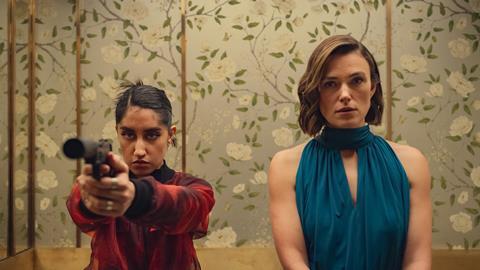
Jane Featherstone, chief creative officer at Waiting For The Out and Black Doves producer Sister Group, offered a glimpse of the new possibilities at the Royal Television Society London Convention last month.
Hers is a company used to top-tier streamer tariffs and on-screen talent of the calibre of Kiera Knightly, yet it is exploring other options.
“As the big streamers move to the mainstream and become more like networks, the talent, creators and authors will bounce out of that and find a new space on YouTube. We will follow them and we’re on a twin-track now. We love doing the premium stuff, but we’re exploring what the digital space looks like.”
Will the latter ever level up though? Will the biggest and best drama always be the preserve of platforms with gatekeepers, who must be convinced by producers to hand over the funds? Or can direct-to-consumer (DTC) provide a meaningful alternative?
Featherstone believes it can, over time. “At the moment, DTC is something we’re running alongside, it’s a place of innovation, experimentation and finding talent. But I do think, eventually, premium content will end up on YouTube, when the really great [established] talent jumps there.”
These opportunities for creating new content are also being supplemented by additional ways of monetising existing IP.
“Wider growth opportunities are increasingly taking place away from the TV in online games, clothing, the theatre, and even the pub”
Another UK luminary, Jane Turton, is three months into her tenure at Banijay Entertainment, and the strategy she has laid out for making shows – and money – in the future looks less like TV as we know it and more like well-rounded entrepreneurialism (see Interview, p8).
Banijay’s acquisition of All3Media has created a production behemoth that will deliver tens of thousands of hours of shows to broadcasters and streamers globally for years to come. But the wider growth opportunities are increasingly taking place away from the TV.
They can be found in online games, in clothing, in the theatre, and even in the pub, where two Peaky Blinders-branded beers are soon to be served (Garrison, a crisp, refreshing lager, alongside a tangerine and citrus-noted number named Shelby Signature).
Most producers are going to find it tricky to monetise a TV show by launching branded beers. But the overall strategy, of thinking creatively about how IP can be more readily exploited, is going to be key – especially if the funding on offer from traditional or newly consolidated buyers has less scope for profitability.
It requires a mindset shift to consider the multifaceted world of platforms and how a more direct relationship with viewers can be developed and grown.
As Featherstone noted: “Talent is like water, they will find the shortest way to the audience past all other obstacles. Our job is to make sure we’re on top of where audiences are.”
Producers’ access to the audience has never been greater, and thinking in this manner may well be the new route to prosperity.
- Richard Middleton is the editor of Broadcast International






No comments yet