

Imports have soared over the past 12 months but locally developed shows are beginning to emerge in places
Risk-aversion might be rife at present, but it didn’t stop Spain’s RTVE from kicking off its 2026/2027 season by launching a brand new format – although it wasn’t a domestic idea. Instead, the public broadcaster turned to LA and Sydney-based Eureka Studios for El Túnel, marking the paper format’s first greenlight.
This turn of events shouldn’t come as much of a surprise. Spain’s production industry may be strong in drama, but it is weak in entertainment, and putting RTVE’s recent paper format foray to one side, there has tended to be little appetite for risk.
Add to that the fact that multinational groups such as Banijay, Fremantle, Warner Bros Discovery, ITV Studios and BBC Studios dominate the domestic format market, and it is little wonder that it is tricky to find entertainment formats made in Spain.
“Our aim is to become the most-watched channel this season,” said Sergio Calderón, director of TV at RTVE, as he unveiled the shows slated for the coming season. La 1, its main channel, holds the second position on ratings, right after Atresmedia’s Antena 3.
Both networks are waging an increasingly competitive battle, and international formats are the weapons of choice. Fremantle’s Hitster and Talpa Studios’ The House Of Hide And Seek are among new shows that RTVE will air this season, joining a growing list of adaptations that include Banijay’s Dog House, Race Across The World, MasterChef and Sort Your Life Out; Talpa’s The Floor and Trivial Pursuit; and NBC Universal’s Top Chef VIP: Just Desserts.
“We are open to paper formats because international sales of adaptation rights is an attractive business opportunity”
Carmen Ferreiro, Atresmedia
Since Calderón took charge in December 2024, the public broadcaster has been battling for audience, and entertainment is key. Inspirational and amusing takes are particularly in demand, as well as shows focused on family audiences, all of which align with the public-service mission of RTVE.
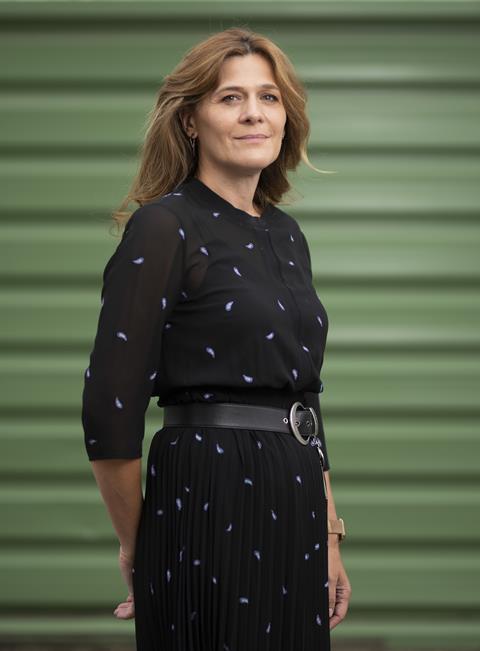
Private group Atresmedia is feeling the pressure. “Competition to acquire adaptation rights is higher,” says Carmen Ferreiro, head of entertainment at the national broadcaster. Its main channel, Antena 3, airs dozens of international formats, such as The Voice, Quiz With Balls and The Masked Singer.
“There are more players looking for distinctive content, formats are distributed more rapidly and, sometimes, negotiations are for worldwide rights or volume deals. It means we have to be faster at discovering opportunities and making decisions,” adds Ferreiro.
ITV Studios’ Parents Evening, Seefood TV’s The Box, Talpa’s Caught In The Middle and Primitive’s 99 To Beat will be part of Antena 3’s schedule this season, while rival Telecinco, owned by Mediaset España, is also in the format fight. It’s line-up includes BBC Studios’ reality dating show The Honesty Box and Fremantle’s Got Talent: Fantasy League, alongside First Dates, The Price Is Right, Temptation Island and Married At First Sight, as well as more Survivor.
Opportunistic thinking
Ferreiro says Atresmedia is open to paper formats “because international sales of adaptation rights is an attractive business opportunity”, although there is nothing in the works in the short term.
“For us, it is not so important that the format has already been tested,” she says, but the exec has an extensive wishlist when looking for an entertainment format: a powerful idea; clear rules; ability to generate conversation, show and emotions; immediate and lasting engagement; broad audience appeal; and an ability to evolve in coming seasons.
Daily gameshow Pasapalabra and primetime talent format Tu Cara Me Suena, one of the few national developments - sold to more than 40 countries - meet those expectations, according to Ferreiro, but the latest national proposals haven’t been so seductive.
Yet there are locally developed shows emerging and a handful are now making their way into the format catalogues of international companies.

“Investing in paper formats should be strategic for any broadcaster, but especially for public operators from a cultural point of view in order to boost certain values,” says Guillem Carol, chief executive of Incís TV. The Barcelona-based indie is shooting the second season of La Gran Cita (The Big Date), a successful dating show produced for 3Cat, the streaming platform of the Catalonian public broadcaster.
La Gran Cita passed 1 million views in less than three weeks and 44% of its viewers are under 35 years old.
“We knew there was a business opportunity with 3Cat, so we developed an ambitious dating show focused on younger audiences, based on pan-European values and reflecting society the way it is,” says Tono Hernández, executive director of Incís TV.
It means that the participants are not “the typical cisgender people we see in every foreign format. We wanted to add the diversity of genres. It was not easy but we achieved it.”
In La Gran Cita, an AI tool matches couples from a pool of 100 people, but participants’ feelings and emotions have the last word.
In a landmark agreement for the Catalonian industry, BBCS acquired worldwide rights and is taking the format to Mipcom as a highlight of its line-up. Incís TV will benefit from potential adaptations, since the company shares the IP rights with the broadcaster. “This business model allows us to invest in more developments,” says Carol.
Adventure reality show La Travessa has followed a similar path. Produced by local indie Aguacate & Calabaza Films, it is also available via 3Cat. After three editions, the format launched a celebrity version this season, while the company has been able to invest in production of its first scripted series. The shared-IP model has worked its magic.
But most Spanish networks retain rights. “That is another reason why producers don’t feel motivated to invest time and money in developing formats from scratch, even more so when there is no guarantee that they will get a greenlight,” says Javier Martínez, a veteran in the entertainment format industry and now director of originals at Spanish documentary firm YouFirst Originals.
During his time at Madrid-based Phileas Productions, gameshow Don’t Say It, Bring It was adapted in the UK, Germany, Switzerland, the Middle East and Canada. But never in Spain.

Some of the multinational groups operating in Spain have their own development teams that pitch original ideas to platforms and networks, but greenlights are rare. “Sometimes the delivery schedule is very tight and there is no time to test paper formats, it’s more agile to produce on a hub,” says one Spanish consultant who wants to remain anonymous.
“We need an ecosystem to boost existing Spanish talent, something like the UK’s Terms of Trade, which allows independent producers to retain IP when working for public broadcasters,” adds Martínez.
Development incentives
An unscripted tax incentive would also help, in the same way credits have bolstered the work of the country’s scripted producers. Ireland has recently introduced exactly that and against a backdrop of increasing inflation and downsized advertising incomes, it would be a welcome move in Spain.
According to local consultancy InfoAdex, ad incomes decreased by 2.8% on linear free TV channels in the country during the first half of 2026, heaping yet more pressure on an ecosystem dominated by tighter budgets and conservative commissions from the networks.
Any discussion to implement incentives will have to wait, however, with a general election taking place in Spain in 2027. Soon, any institutional decision will be paralysed.
But what about streaming platforms? For the most part, they seem to be done testing paper formats in Spain. Netflix’s Love Never Lies and Deep Fake Love, HBO’s Time Zone and, more recently, Prime Video’s Esto No Es Un Dating didn’t manage to score a renewal.
“Our aim is to develop our own ideas in order to create IPs and build our own identity”
Garbiñe Abasolo, Thinketers
Despite this unfavourable landscape, players such as 3Cat are providing an environment for local ideas and there’s an increasing propensity to tap into digital and YouTube. Local indie Thinketers has seen two of its paper formats reach screens in 2026, but IP ownership is also a focus.
“We are a hybrid company – an agency and a production company – so we are aware of the digital trends and we’re trying to bring them to TV,” says chief executive Garbiñe Abasolo. After producing Mommy Knows Best for Atresmedia in 2024, “our aim is to develop our own ideas in order to create IPs and build our own identity. It’s a long-term business.”
Indeed, it took two years for the company to see its ambitions for Captcha come to fruition. La 2, the second channel of RTVE, aired the transmedia gameshow in March. Thinketers’ other paper format now on air is speed-dating show Spoiler Amor, available on Primeran, the youth-skewing streamer of Basque Country public broadcaster ETB.
Abasolo says that landing business abroad has always been part of Thinketers’ strategy and the indie recently struck a deal with Germany’s Seven.One Studios to take Captcha to Mipcom. It underlines that for nimble producers with an open mindset, the world might just be opening up.






No comments yet