

Jake Thomas, general manager, UK, at Snap Inc, looks at what the Champions League final paywall means for online sport content
According to sports specialist Simon Inglis, over a dozen versions of ‘football’ are played around the world. Whether it’s Gaelic football in Ireland or ‘gridiron’ in the US, one thing the sport has always relied on is the collective experience. There’s even been rigorous scientific research about the impact football has on building social identity, both for players and for fans.
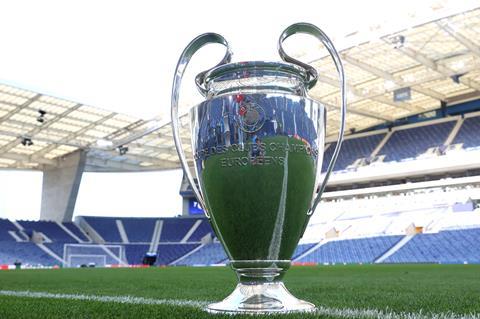
The UEFA Champions League final between Arsenal and Paris Saint-Germain on Saturday was the perfect example of this. Even if it hadn’t concluded with a dramatic penalty miss, it was a game that would draw millions of people into the same conversation at the same time.
That is why TNT Sports’ last-minute decision to scrap free-to-air coverage of the match felt monumental beyond the world of football rights. It sparked controversy in the media and prompted the Prime Minister, a keen Arsenal supporter, to write a letter to TNT Sports ‘urging’ the broadcaster to reconsider.
It also raises an important question for broadcasters, brands and digital platforms alike. What will happen if fewer people can watch the moment live?
The answer is not that interest disappears. The collective sporting experience is still happening, but it is happening differently. At Snapchat, we see the shift from broadcasting to messaging in private spaces more acutely than most.
Sport is no longer experienced in one place
For many sports fans, fandom is no longer defined purely by sitting ‘in living rooms and pubs’ in front of a TV for 90 minutes, as Starmer describes it.
Instead, viewing experiences are shaped by creators breaking down controversial moves on stories before pundits have finished discussing them on TV, clips of the match added to highlights and private moments between family and friends in the chat where memes are shared and wins are predicted.
Gen Z’s growing interest in conversations surrounding the match is further validated by the findings of a new survey by Snap and YouGov that found that 54% of Gen Z in the UK are likely to film themselves celebrating if their team scores a goal so they can send it to friends and family in a group chat or on social platforms. It’s not only proof that the traditional idea of “watching together” has evolved, but also that Gen Z’s involvement with sports goes far beyond simply scrolling through public feeds. It’s through Gen Z’s shared reactions with their immediate community that they are becoming part of the sports story itself.
The conversation around the match is becoming just as important
Digital platforms have become the virtual stadium crowd around live sport. They are where fans gather before, during and after the game to celebrate and react together.
This matters because sport has always been bigger than the match itself. The shared experience and community are what make it culturally powerful.
For broadcasters, there is an opportunity to reassess how value is measured. It is no longer just about how many people watch live, but how far moments travel beyond the broadcast and into private messages and online cultural conversation. That requires different engagement strategies. Short-form content, creator partnerships and mobile-first storytelling are now a central part of the viewing experience, like our 2025 collaboration with the NFL bringing Snap stars to the Super Bowl to record their experiences and share it on Stories and Spotlight.
The new measure of engagement
Audiences can spot forced sports brand campaigns instantly, and they usually react badly when it’s done wrong. Instead we need to understand how fans actually behave during live events and creating content that complements those behaviours rather than interrupting them.
The Champions League Final will still generate huge global conversation this year. The difference is that even more people will experience that moment through joining the online social interaction rather than just the broadcast itself.
Community has always been the driving force behind major sporting moments. Facilitating that community through technology that can bring people together is the best way to create lasting moments for sports fans today.

Jake Thomas is general manager, UK, at Snap Inc



No comments yet