




The veteran TV presenter on the funniest moments on That’s Life!, the story she’s proudest of and the state of consumer journalism today
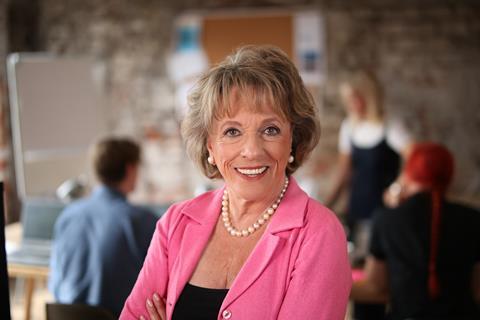
When did you first decide you wanted to work in journalism and TV more specifically?
My father was an electrical engineer and became the head of engineering lines and designs at the BBC, so we had a television very early, as soon as we could when the Second World War ended. TV had been banned during the war, but radio was vital, so broadcasting was a reserved occupation, and my father (who knew and respected Reith well) was actually working in Broadcasting House during the war when a bomb fell on it.
We got our first TV set in 1946, but my parents banished it to the hall – it wasn’t allowed in the living room because they said it killed the art of conversation (they weren’t wrong, although Heaven knows what they would think of today’s tablets and phones). So that did mean as a family we spent a long time sitting in the hall watching it – and the newspaper boy who delivered our evening paper spent ages peering through the letter box looking at it too.
I started early as an enthusiastic viewer, from the age of six I was a fan of TV icons like Muffin the Mule with Anette Mills, and Andy Pandy. And as I grew up I began to realize how terrific TV was at providing entertainment and information and reaching huge audiences.
So early on I had an ambition to work in television, specifically to tell factual stories in an entertaining way, because that’s what I thought was most worthwhile, and enjoyed watching as a teenager.
What impact has That’s Life! had on the TV industry?
“Lifers” have certainly made a great impact. We imported some very talented programme-makers into the industry. Some senior executives’ first jobs in tv were with That’s Life!. Our magazine format offered the team the chance to work on every possible kind of story, from the hilarious to the heart-breaking. One week a researcher might investigate a letter describing the death of a child who fell to his death from a taxi door with no lock (black cabs now have built-in locks due to his parents telling their story on That’s Life!). Another week a letter would provoke a pet consumer test with ten dogs running riot in our studio.
Our mix of items sometimes bewildered critics, but the viewers enjoyed them. People often tell me now that it was the only programme their parents allowed them to stay up and watch: “We’d eat sandwiches and watch in our pyjamas.”
The children enjoyed it for the mischief, their parents valued it for the information. And because we reached so many viewers, our team knew our stories could change things for the better, make cars and playgrounds safer, for example.
So we were able to recruit the best talent to join us, and some stayed with us for years before they moved on to greater heights elsewhere, and we still reminisce about the fun we had and the difference our stories could make. Many are industry icons, from Sir Peter Bazalgette of ITV, to Alice Beer on This Morning, Chris Choi on ITN, Helen Tumbridge of The Chase and in many, many tv production companies across the industry “Lifers” are making their own impact (One recruit, Shaun Woodward, who was the researcher on our campaign about transplants, not only went on to become the editor of the programme, but left the BBC, went into politics, and became Secretary of State for Northern Ireland).
All our stories and films were based on real people. Indeed, we “Lifers” sometimes claim to have invented reality television, because for 21 years real people provided us with the best jokes and our most important stories.
That had not always been acceptable. My first job as a television researcher was in the current affairs group in the BBC where bosses like the dragon-lady Grace Wyndham Goldie wanted only experts in her programmes, she distrusted ordinary people’s lived experience, demanding “on what authority” they were telling their story.
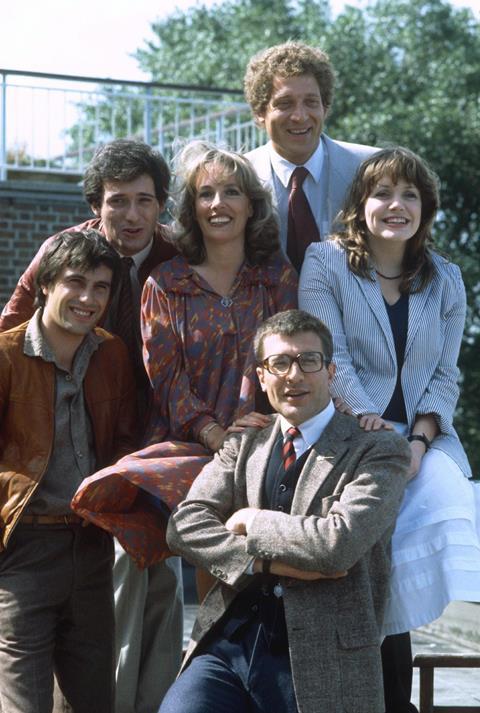
But then I moved as a trainee director to the features department run by Desmond Wilcox, who had been a journalist on Hugh Cudlipp’s Daily Mirror and when he moved to the BBC created the award-winning documentary series Man Alive. Desmond based all his journalism on first-hand evidence, the experience of people in situations that needed exposing, like racism, or child cruelty, or appalling housing. The power of his journalism was recognized with Desmond’s life-time achievement award for documentaries from the Grierson Trust.
That’s Life! was created in Wilcox’s features department and we were trained by him to use the first-hand experiences and the talents of ordinary people as the basis of our show.
We discovered some amazing contributors. On one vox pop I bumped into 86 year old Annie Mizen, in the street market in the North End Road in Hammersmith. She was witty, naughty, and although she said she was “not a drinker”, when I offered her the chance to tell the difference between whisky and brandy, she gulped down a glass of each and sang a song to me, “Whisky makes you frisky, but brandy makes you randy”. She became an instant star, by the end of that series our vox pops didn’t feel complete without her, and she was opening fetes and giving autographs. Thus proving the X-factor has nothing to do with Botox or red-carpet glamour but is based upon sheer natural charisma.
Outstanding film directors (including Adam Curtis and Bill Nicholson) made the terrific little films which ended each show. They filmed talented animals, (talking dogs, footballing dogs, piano-playing dogs, counting horses, ping-pong playing cats), gifted toddlers, or members of the public filmed on hidden cameras and bursting into song in our campaign to “Get Britain Singing.” We roamed the country finding local events, lawn-mower races for example, and builders who created “The Red Barrows”. Luckily we live in one of the most eccentric nations in the world, many of the talents we discovered are now immortalized on the internet.
Our reporters graduated from us to become experts and presenters throughout the industry, Adrian Mills for instance became a travel journalist, and Bill Buckley, the outstanding cook and radio presenter. We had singers including Victoria Wood, Jake Thackray and Richard Stilgoe who all wrote and performed songs for us. We ran a contest called Search for a Star, the top prize being a contract with an unknown record producer called Simon Cowell. Our studio events included a farmer who could play melodies on his cow clusters, a man who tap-danced with his false teeth, children who could contort their tongues, twins who rapped out tunes on each other’s skulls, and more, so we could perhaps claim to have provided a template for Britain’s Got Talent.
Most of our serious items were also contributed by the audience, we received up to 15,000 letters a week from them, plus hundreds of phone calls. Thanks to them we showed how transplants save lives, how playgrounds surfaced with concrete or tarmac are terribly dangerous, how seat belts in cars can save children’s lives, we campaigned for the need to record on tape the statements which are made in police stations, we explained the way DNA can establish identity. And some of our most moving items inspired spin-off programmes, for instance highlighting for the first time the fact that stillborn babies must be remembered, at a time when hospitals and families routinely tried to pretend the baby had never existed. And we exposed a myriad of scams and swindles all of which came from a letters or phone calls from our viewers, including the notorious Peter Foster. We exposed him for making millions from selling fake slimming cures, and he once told me: “Esther Rantzen, I am your worst nightmare.” Indeed.
So maybe we have had an impact in proving the power of the individual story, an “ordinary” person in extraordinary circumstances. And the fun real people can provide. So I have never thought “reality TV” was a pejorative term. But if we “Lifers” claim the credit for proving how popular and effective it can be, watching reality series today I realize we should also take some of the blame for their worst excesses. In my defence, I don’t think we ever humiliated the viewers who contributed to our show. Though I’m not sure all our parsnips were thrilled to be exposed.
Do you think a show like that could be made today? Do you see any obvious ‘heirs’ to the show?
No. Not on television or radio, because today’s commissioners wouldn’t want a format with our huge range of stories, and with a studio audience to give it a sparkle. I do think Joe Lycett has some of our edge and mischief in the pranks he creates to highlight dodgy practices. And of course Rip Off Britain and Watchdog, The One Show does sterling work investigating cons and scams. But could they carry stories of child abuse, as we did? Or stillbirth? I think not.
And the audiences are now so fragmented. The reason we wielded such a huge clout was that our ratings were immense, twenty-two million and a half at the peak. MPs, Ministers, even Prime Ministers watched us because they knew so many of their voters were watching us, too.
I realize there are influencers today with millions of followers, but I suspect none has the range of viewers we had, with all the members of a family watching us together. Today’s influencers each seem to speak to their own cohort.
What were the hallmarks of a good story or a good campaign for you?
We had two criteria to start an investigation. Either the story was so serious, some were literally life and death, that although cases were rare it was important to report them. Or the problems were less serious, faulty washing machines say, or mis-sold double glazing, but they affected so many people it was important to report them, too. The hallmark of a good story was if it caught the public imagination and changed things for the better.
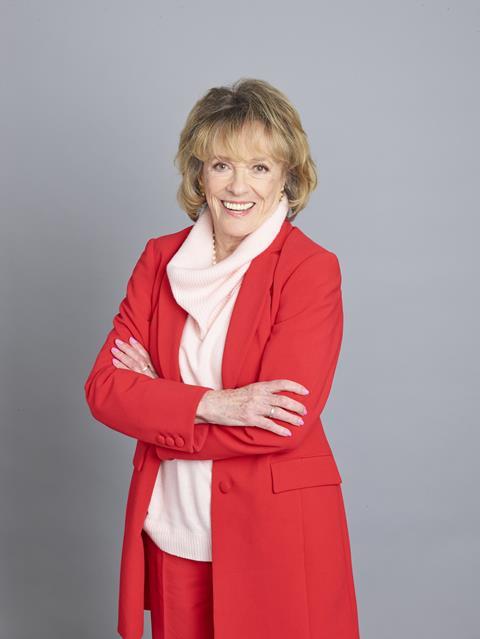
BBC research department once told us that viewers retained the information we gave them because the question and answer format helped them absorb it. Very challenging as journalism, but very important providing a platform for individual voices, and as a way of effecting positive change.
And our aim was not only to ask questions, but to suggest answers where we could. On several occasions we were contacted by MP’s who had been lucky in the ballot for Private Members’ Bills, and needed a worthwhile subject, which our viewers were able to provide. And we returned week after week to some of our strongest campaigns because the viewers provided follow-ups with fresh information.
An example of a rare case but a crucial campaign started with a phone call from Debbie Hardwick, a young mother who had just been told her two-year-old toddler Ben was dying of liver disease, and his only hope would be a liver transplant. At that time organ donation had virtually stopped in Britain due to a Panorama which implied that organs had been taken from patients who were not dead. The medical profession had protested that [UK] tests were more rigorous than the American tests which Panorama criticized, but the damage was done.
We knew that if we found a donor by broadcasting Ben’s story we might save his life. When we filmed him, he was so enchanting and his mother Debbie was so eloquent that he became a national story across the media, a donor was found, and organ transplants started once again.
Laughter sometimes helped to endear a story to us and our viewers, especially when they involved huge companies like British Gas. I loved scripting a story of a lady who was harassed for months with gas bills. However often she tried to explain why she hadn’t paid, the gas bills kept coming, and the demands got more and more threatening. In the end they said they would come and cut her off. The climax of the item was when they arrived in her kitchen, looked at her, looked at each other and said, “You’ve got no gas”. Ah the joy.
(I remember writing that. I was very heavily pregnant, it was ten at night, I had just finished scripting when the research arrived and I just couldn’t resist it. So after about another half an hour I typed the words “You’ve got no gas”, laughed and slid off my chair onto the floor to rest. I lay there, then opened my eyes to see a horrified security man peering around the door, obviously wondering if he should get a kettle and some brown paper, as midwives used to advise. I got up and explained I was fine, not in labour, just laughing.)
Then there was the newly built housing estate, where a resident was horrified that some of her neighbours had identical front door keys. Our researcher Norma Shepherd (who specialized in these stories, she had investigated the You’ve Got No Gas one as well) walked around the estate with a couple of keys while I was crawling over a map of it spread out on our office carpet, and as I worked out which key should fit what other doors, she tried them in real life, at one stage walking in on a lady on the phone in her hall, and alarming her greatly. Turns out it’s quite common for housing estate developers only to use half a dozen different keys. Who knew?
Even our light-hearted items had a serious point, and were, we hoped, a deterrent, like for instance our Jobsworth Hat Award, which added a useful new term to the English dictionary.
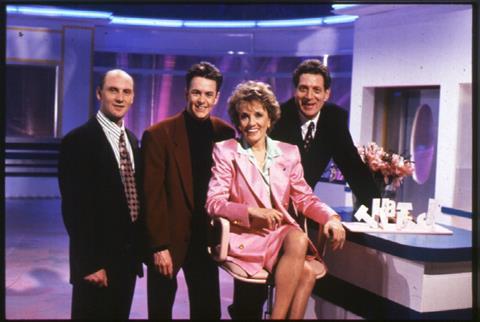
I know we were a mongrel programme, I know we were odd with our mix of topics, and our studio audiences. But that did enable us to tell a powerful story like the wonderful Sir Nicholas Winton, who saved more than six hundred Czech Jewish children from the Holocaust and now has a feature film based on him. I don’t think any other programme could have created the moment when the whole studio audience stood up to show him the number of lives he and his team had saved. That moment has now been viewed by over forty million viewers on the internet.
Mimi, the stuffed cat, described by the glorious Les Dawson to me as the funniest thing he’d seen on television is immortalized on the internet, too.
Where is investigative and public interest-driven journalism happening today? What’s your perception of how well it’s doing?
The formidable team of Angie Rippon, Gloria Hunniford and Julia Somerville, reporters like Alice Beer and Chris Choi, and investigators like Joe Lycett and Matt Allwright are all doing super stuff protecting consumers. Scam Interceptors is an excellent new way of highlighting internet swindles and preventing people from losing very large sums of money. Panorama does important investigations, although I find their style sometimes aggressive or overly dramatic. Tonight on ITV also does well. But is television over all doing well enough? Given the huge amounts of on-line fraud and fake news, I think not quite. And how disappointing that the person fronting up the Beeb’s disinformation investigations has herself falsified details on her CV.
That’s Life! featured a lot of prominent women and you yourself broke through glass ceilings. What impact did that have on the show and what do you think are the biggest challenges for women in TV journalism today?
Perhaps having so many women on the team meant we could tell different kinds of story. I’ve always thought that women bring their whole lives with them into their work, certainly I did. We talked about subjects most other programmes ignored, like physical and mental health, and protecting children. Most of the men controlling tv at the time thought those subjects were too emotional, and they preferred to make programmes based on issues rather than people. Perhaps it’s sexist of me to make that distinction.
For me, the biggest challenge for many women now is exactly what it was in my time, how to do it all, to be a good programme-maker, and a good wife and mother at the same time. Impossible.
Then there’s the Me-too problem, sexual harassment. But that doesn’t of course only apply to women, men can be targeted too. And it can happen anywhere where powerful bosses make it impossible for their victims to whistle-blow. In the film industry, in medicine, in industry, anywhere. I don’t know what the answer is. CCTV? Bodycams? I don’t know.
Women are proving every day that they can handle any subject. Back in the dawn of time when I started working as a presenter in the late sixties, I spent some time as a reporter on Nationwide. The editor asked what stories I would like to report. I said I’d like to go to Northern Ireland and report on the troubles. He said: “The problem is Esther, what would you wear?” I was speechless. I wonder what Kate Adie would have said. Or Ann Leslie. Or Lyse Doucette.
What is the thing you’re proudest of from your career?
I’m delighted when people remember the programmes with pleasure. I’m thrilled when “Lifers” tell me that working on the show was the happiest time in their careers.
In addition to That’s Life!, and other programmes I’ve been lucky enough to make like The Big Time and Hearts of Gold and How to Have a Good Death, I’m quite proud of the fact that the team I captained on The Chase won £60,000 for our charities. Patsy Kensit gave her share to Childline and I gave mine to The Silver Line, but I really can’t claim credit for that win because the whole team were responsible (and Lifer Helen Tumbridge who is the executive producer of The Chase didn’t feed any of the answers to me.)
And I feel incredibly lucky to have been at the right time in the right place to be able to launch both Childline and The Silver Line on television. So I don’t feel proud, I achieved nothing on my own, always together with a fabulous team, but I do feel amazingly lucky.
Which specific story are you proudest of?
I think one of the toughest stories we ever told was when we exposed Crookham Court, a boarding school for boys which was owned by a multi-millionaire paedophile, Philip Cadman, who employed a number of other paedophile teachers. He kept the school fees low enough to be covered by a MoD grant for service families, and it was specifically advertised to attract parents serving abroad, or families of boys with special needs. Both of which made the children more vulnerable and meant the abuse was more difficult for them to disclose.
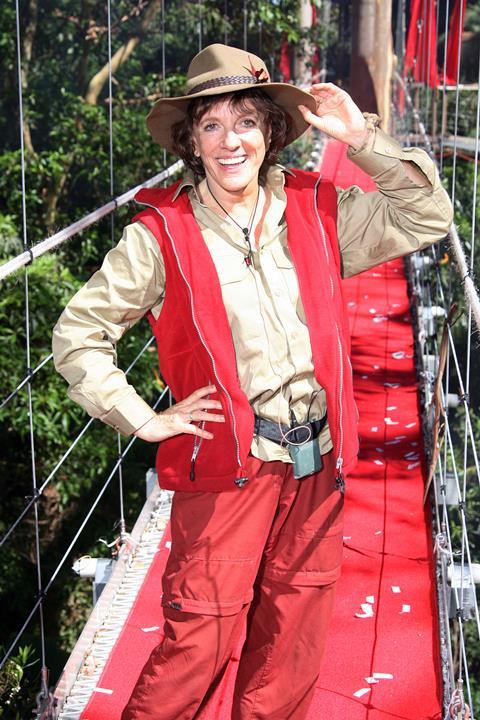
One of the boys Cadman abused wrote a letter to me at Childline, who passed it to me at That’s Life! to investigate. It took months. Our researcher Richard Woolfe (later himself to have a glittering career as a controller of several different TV channels) managed somehow to investigate the story while also assisting his wife to have their first baby. Who says women have special challenges, juggling their work-life balance? (I think I said that, so I was, as I feared, being sexist).
Early on, we discovered that another child had already disclosed abuse at the school, that boy’s father was a police officer so the police had already tried to investigate but no other child had disclosed to them, so they couldn’t proceed with the case. Not only that, but the police told me they couldn’t go back and try again because they could have been accused of harassment. So we had to start from scratch.
One of the teachers helped us by identifying boys at risk. We decided unlike the police who had conducted their interviews inside the school, we should take each child out of Crookham Court to talk to them on neutral premises, which meant I had to speak to all the parents individually to ask their permission and explain why. Very difficult conversations.
Our lawyer said we would need five boys to disclose before we could transmit (five seems to be a magic number, the documentary exposing Savile also had five cases). I was invited by the head teacher (who was not a paedophile) to visit the school with Childline’s director of services to talk to the boys about the fact that abuse is never a child’s fault. I remember saying that being abused was like falling into a huge cowpat – you come out thinking you are dirty and disgusting and smell horrible, but it just takes one bath and you are all pink and fresh and sweet-smelling again, and that talking about sexual abuse was like having a bath. At the end of my talk, we handed out Childline leaflets, and the boys took them and leaped away with them, we found out later, to plaster Cadman’s flat with them.
We found five cases and named three teachers. The day after we transmitted, I had a phone call from a mother who said one of the three we had named was still teaching, and that he was the best teacher her son ever had, so it couldn’t be true (An expert, ex-probation officer Ray Wyre, once told me: “Monsters don’t get near children, nice men do.”). A month later all three teachers were arrested. The one the mother had defended to me made a phone call from the police station to his own mother telling her to destroy his diaries, but the police got there first and found 111 cases of sexual abuse described there, together with the amounts of money he paid each boy.
In the trial I had to give evidence, because the defence was that I had put the idea into the boys’ heads. It was a really daunting experience, and literally gave me nightmares because if they had been acquitted, the school would have stayed open, children would still have been abused and nobody could have gone in to investigate again. As it was, they were all convicted, the school was closed and no longer exists.
An abiding memory is talking (after I had given evidence) to paedophiles sitting in the public area of Reading Crown Court, who complained to me that it was a very boring trial without enough detail.
Strangely enough, years later I discovered that one of the original founders of the school, Roy Cotton, had been a student of ordination when he sexually abused a choirboy. He admitted it, and the Church of England authorities suggested as in that case he wasn’t quite ready to be a priest, why didn’t he do something else. Like teach. So he helped set up Crookham Court, then left under a cloud, went back to the church and said he was now ready to become a priest, so he was fast-tracked by the then-Bishop of Portsmouth into the church and went on to abuse boys for many years. Clearly jobs in teaching, children’s homes and the church are attractive to paedophiles because they offer unaccountable access to children. However, we have to remember that most child abuse takes place in homes, and in families.
On a recent hospital visit I was approached by a fellow patient in a corridor who said how glad he was that we did our item about Crookham Court. I assumed he knew a child who had suffered there, but he said when he was in prison he had met Philip Cadman, and that he was excellent company. If you can help somebody…
Anything you regret or would do differently?
Plenty.
What advice would you offer journalists starting out in the TV industry?
Enjoy. It’s totally absorbing and can be exhausting, but it is extremely satisfying when it hits the mark. But beware of getting too close to your subject. The most dangerous phrase a journalist can use is “This has become a personal crusade”. That way you may dismiss or ignore a crucial piece of evidence because looks as if it could undermine your story. The truth is far more important than any story.
What are you hoping people will take away from the book?
Of course there are plenty of topics I would like someone to take up and campaign about, such as the life-long damage caused by ballet, or rugby, or the fashion for pedigree dogs, or ageism. And there are plenty of subjects I express views about which I hope may provoke or amuse. And I include anecdotes which I think are revealing about people in public life. But above all I want readers to enjoy it, and perhaps be prompted to write their own A-Z of survival.
Anything else you want to add?
It’s said that journalism is the first rough draft of history. Nothing rivals a contemporaneous eye-witness report. It gives future generations a vivid glimpse of the way major events have hit humanity. Like Pliny the Younger’s description of the destruction of Pompeii, or Richard Dimbleby reporting from Belsen. They manage to be passionate, and yet objective.
But conspiracy theories have always, sadly, pretended to be journalism. Look at the antisemitic tropes which have flourished for hundreds of years, often with tragic results. So we need to patrol the boundaries between true journalism and rumour.
And recently the public has been hit by a tsunami of fake news, some of it promulgated, alas, by partisan journalists, often working for state-controlled media. So we need to keep our scepticism alive and alert. And to make sure there are enough trained journalists and independent news outlets to provide platforms for crucial voices that may otherwise be drowned out, such as women, and opposition politicians, and consumers.




No comments yet