

Indie filmmaker Perry Bhandal, who released AI-generated feature Okay, It’s Time To Go, offers a frank and detailed account of what AI filmmaking actually involves
Three years ago, while I contemplated having to pull together a six-figure budget for the opening act of what went on to become feature film Okay, It’s Time To Go, I stumbled upon what seemed to be a new means of production.
My previous features, Interview with a Hitman and The Last Boy, were made conventionally, each shot in just 18 days.
I loved working with cast and crew, but those schedules were unforgiving. Locations could fall through, performances still had to be captured and, sometimes, luck determined whether you got the coverage.
Now I can practise the craft I’ve spent years learning with an independence and precision that I could previously only have imagined. The interesting thing is how little the underlying discipline has changed.
The screenplay, casting and performances
I write my screenplays entirely myself. I love wrestling with plot, character, dialogue and pacing. After several drafts and feedback from people I trust, I might use an AI model as a critical sounding board. You have to push it to be properly critical rather than complimentary. Sometimes an observation I disagree with can provoke a better idea. A bit like having a script editor.
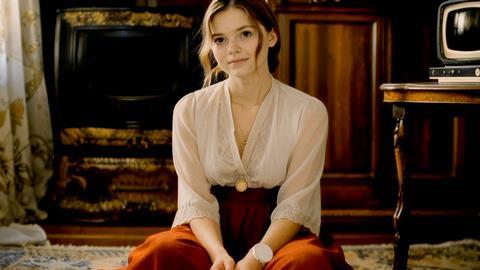
Then comes casting. Conventionally, a casting director would suggest actors based on my character descriptions. Now I create the people I’ve imagined and refine each one until I recognise the person I wrote.
Finding their voices is just as important. A character’s appearance and voice together establish who they are. I audition voices not just for how they sound but for whether I can direct them. Can they express the emotional range the screenplay demands? If they can’t, they’re not right for the role.
Once I’ve assembled my cast, I produce a complete spoken version of the screenplay, my equivalent of a table reading. I listen, rewrite and rework. Eventually I can hear the rhythm of the entire film, how the characters interact and where the drama needs attention.
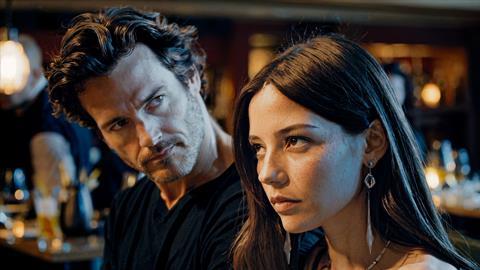
Directing generative performers is surprisingly similar to directing human actors. Sometimes they give you exactly what you’re looking for. Other times you have to coax, cajole and occasionally even trick them into delivering the performance you want.
What’s fascinating is the subtlety you can achieve – a fleeting expression, a hesitation, the slightest shift in emotion. Sometimes I find myself getting performances I doubt I could have drawn from a human actor, at least not without tearing my hair out and derailing the production.
On a conventional set, every extra take means a crew waiting and a schedule ticking away. Here I can keep going until the hesitation or flicker of doubt is exactly what I wrote.
The performances were a turning point with Okay, It’s Time To Go, my completed 111-minute dystopian science-fiction thriller. The earliest visual tests were raw, yet there were moments I was genuinely moved by them. That convinced me to persevere.
I’ve now cast five of my best performers from Okay, It’s Time To Go in different roles in my next feature, CAIN. I’ve ended up with something like a repertory company.
Locations, frames and rushes
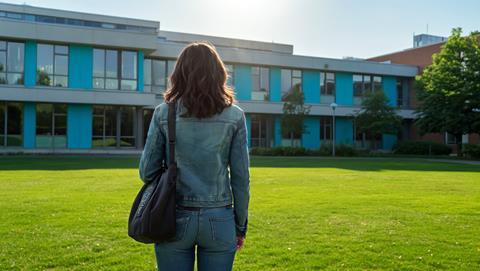
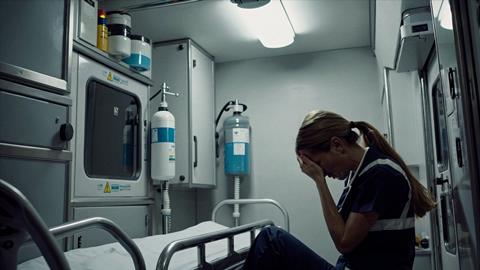
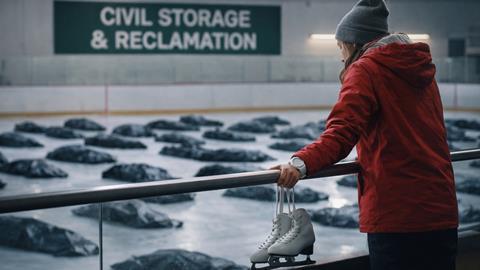
I have complete freedom to build the locations I’ve imagined rather than compromise on approximations. Okay, It’s Time To Go is set in a world disturbed by AltarCorp’s StopWatch, a device that allows its wearer to end their life at the press of a button.
With so much possible, I could have populated that world with fantastical futuristic buildings. Instead, recognisable hospitals, homes and offices make the world more unsettling. The choice must always serve the story.
Once I’ve established a location, I approach each scene much as I would on a physical set. Characters, props, blocking, composition and a clear idea of what the audience should see.
I compose everything within the frame before calling action. The difference is that I can reconsider and refine those decisions without running the clock.
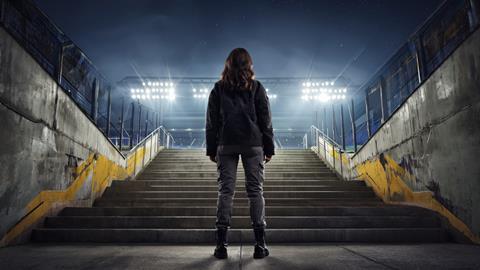
I’m often asked which models I use. To me, that’s rather like asking a cinematographer which camera they’re using. A cinematographer learns lenses, lighting, filters and the peculiarities of cameras; I learn the capabilities and limitations of my tools.
I don’t build a film around a model, I choose the model that serves the film. The important questions are why I chose that framing, what a performance communicates and what I want the audience to feel.
And there are limitations. On CAIN, I changed a location because the technology couldn’t realise it convincingly. That amused me as I’d dealt with locations falling through on conventional productions too.
When it comes to generating rushes, there are methods where you supply multiple references in one go and ask for a complicated sequence (the industry certainly seems headed in this direction) and see what comes back.
I’m not saying that’s a wrong way to work, it simply isn’t mine. For me, it would be like giving a crew a general idea, disappearing for lunch and returning to see what they’d made.
I want control over every shot. I’m drawn to filmmaking where meaning is created through juxtaposition. For me, the film is made in the cut. There has to be deliberation in building character, tension and emotion, scene by scene, over its entire running time.
Editing and finishing
I assemble the rushes in a conventional non-linear edit. And when I need additional coverage, I generate it. No expensive reshoots.
Sound design, grading, mixing and finishing remain familiar disciplines. The music for Okay, It’s Time To Go was generatively created – my job was to choose the compositions that served the story and place them where they belonged. That freedom to explore musical possibilities is wonderful.
The freedom to make films
The real liberation is the disappearance of development inertia. In conventional independent filmmaking, a finished screenplay might wait years for financing, casting and production arrangements. I can finish a screenplay on Monday and begin production on Tuesday.
That doesn’t mean the work is effortless or free. My principal investment is my time. CAIN, which I intend to release in summer 2027, will represent roughly a year of work. If I charged commercially for that time, the cost would be substantial. But I’m making my own films, and I enjoy the process enormously. I can give a scene the attention it deserves rather than settle because the clock has run out.
I want audiences to forget how the film was made. I don’t want them admiring a tech demo, I want them absorbed in the characters, the story and what the film has to say.
And when the film is finished, I don’t hand it to someone else and hope it finds an audience. Having experienced conventional distribution twice, I built Kirlian Pictures’ own platform to release my films directly. I’m no longer divorced from my audience – people can watch the work as I intended and tell me what they think.
I haven’t abandoned conventional filmmaking. I’m using new tools to practice it on my own terms. I get to make the films I want to make, and present them directly to the people who want to see them. For a filmmaker, that’s an extraordinary freedom.
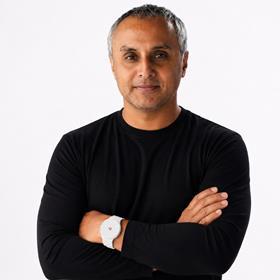
Perry Bhandal is a filmmaker and founder of Kirlian Pictures






No comments yet