

With AI reshaping every stage of the production pipeline, MyWorld’s Mark Leaver makes the case for structured innovation sandboxes
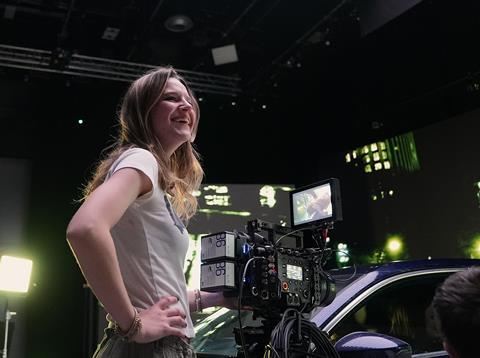
AI and emerging production technologies are opening new possibilities for the creative industries, but their rapid development raises complex questions about workflow, authorship, ethics, and regulation. For studios, producers and creators, the challenge is no longer whether to engage with these tools, it’s how to experiment with them responsibly, while preserving the craft and artistry at the heart of their storytelling.
Experimentation takes time, infrastructure, and access to high-quality production environments. Particularly in our creative industries, there can be a significant gap in how an AI concept works in principle, versus how it functions, and more crucially, is adopted on set or in the post-production suite. New tools have to be tested in real-world studio environments to understand not only whether they solve a genuine production problem, but also whether crews trust them and can integrate them into existing workflows. Tech for tech’s sake rarely survives contact with a busy production schedule.
For startups developing AI workflows for creative production, the barriers are particularly high. Building and testing these systems can require specialist hardware, research expertise, and access to studios that are beyond the reach of many early-stage companies. As a result, promising ideas can struggle to move from prototype to practical deployment.
This is where the concept of an innovation sandbox and real-world testing becomes important. At MyWorld, we’ve adapted the concept for creative industries. Rather than experimenting in isolation, an open R&D environment has been established, with partnerships between creative organisations, technology companies, and academic researchers to share knowledge and test concepts in real production contexts. The aim is not simply to showcase technology, it’s to understand how new tools affect the creative process, the production team, and the final piece of work.
The model also has an important funding dimension. Early-stage companies often seek investment before key technical and commercial risks have been addressed, making it more difficult for investors to be convinced of the validity and longevity of the idea. In the six years of the programme’s duration, there are countless examples of companies starting with incredible ideas, testing their IP, exploring production use cases, and developing links with academic research partners. That creates a far clearer pathway to market and makes them more attractive to investors and industry partners alike.
MyWorld is a £70m six-year regional R&D and funding programme focused on enabling the West of England’s creative economy to anticipate and innovate in the future of production, distribution and experience. Funded by the UKRI’s Strength in Places Programme, it connects research, production, and cutting-edge technologies across AI, immersive media, and filmmaking, into a single funding pipeline.
In virtual production, one example is Reno, a short film created with VFX company Lux Aeterna. The project used the virtual production stage at our dedicated production facility, The Sheds, not only to achieve its distinctive visual style, but also to explore how AI can be integrated into VFX workflows in a practical and responsible way, helping the team test new approaches while maintaining creative control. The work has since contributed to the development of an ethical AI toolkit.
In AI advances for audio, Black Goblin has pivoted to a tech business after identifying inefficiencies in audio workflows. MyWorld facilitated collaboration with BBC R&D to support the development of Thol, an AI-driven sound design suite, which aims to optimise sound design by automating the generation of high-quality sound effects from visual content. For businesses making the transition from creative studio to tech company, that access to expertise and production feedback becomes a catalyst and keeps the drive to push innovation a key priority, alongside meeting daily client deadlines.
The creative industries are entering into a period in which AI adoption will be shaped as much by practical workflow decisions as by headline-grabbing demonstrations. Broadcasters, studios, and independent producers need environments where they can trial tools, identify risks early and establish best practice before technologies become embedded across the sector.
Despite the name, an AI sandbox is not a playground (although we have thoroughly enjoyed the amazing projects we’ve worked with), it gives creators a place to ask difficult questions: Does this improve the workflow? Does it protect authorship? Does it save time without reducing quality? Can it be used transparently and ethically? These questions are much easier to answer in a collaborative R&D environment than in isolation or in the middle of a commissioned production.
AI will undoubtedly change filmmaking and content creation. The opportunity now is to shape how those technologies are used, rather than allowing workflows and commercial pressures to shape the industry by default. By creating spaces where ideas can be tested, challenged and refined, the creative industries can adopt AI in a way that supports innovation while protecting the skills, judgement and creativity that audiences ultimately value most.
Mark Leaver is head of business partnerships and inward investment, MyWorld



No comments yet