

The MediaCityUK facilities delivered post-production and VFX on the eight-part Netflix thriller produced by Nicola Shindler’s Quay Street Productions
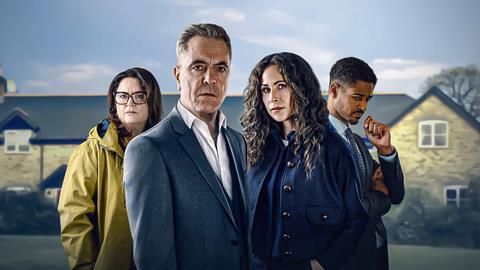
Dock10 at MediaCityUK has completed post-production on its seventh Harlan Coben project, Run Away, produced by Nicola Shindler’s Quay Street Productions and Harlan Coben’s Final Twist Productions.
VFX work on the production was completed by Space Digital, also based in MediaCity.
The series filmed across the north west of England and premiered on Netflix on 1 January 2026.
The 12-month project saw the Dock10 post team managing a complex schedule to deliver all eight episodes ahead of the Netflix release date. Editors worked both on-site in MediaCity and remotely.
Jon Nunn, commercial manager at Dock10 said: “Every Harlan Coben series we work on presents unique challenges and creative opportunities. Having our full post production ecosystem based here in MediaCity allows us to bring together editing, grading, sound and VFX teams in one connected environment. That combination of world-class facilities, secure infrastructure and hugely experienced people means we can collaborate closely with producers and creatives and deliver to the very highest international broadcast standards.”
Senior colourist Jamie Parry led the grading of the series, working closely with the series’ directors of photography. He spent approximately 35 days using Baselight, with a Sony Grade 1 monitor.
Senior editor Sam Butler managed the online editing in DaVinci Resolve. He worked over 40 days on the finishing of the series.
The audio finishing, overseen by Patrick Morris and his team, delivered an immersive Dolby Atmos mix that required more than 270 days of sound design, tracklay, and audio mixing to meet Netflix’s standards.
Post-production workflows were coordinated by Dock10’s Kellie Sanders and Liz Hird, working across the in-house talent, production team, and Space Digital.
Space Digital delivered over 450 VFX shots for Run Away.
Effects included bullet hits, muzzle flashes and digital injuries, as well as more “invisible” effects.
“What we’re able to do in VFX now is to change characters costumes or one location for another or change night into day and vice versa so that scenes can be reordered or repurposed to get the most efficient narrative structure,” said Kerrie Fitzgerald, senior VFX producer at Space Digital.
A key creative challenge on the series was de-aging the lead characters, Simon Green and Ingrid (James Nesbit and Minnie Driver), as part of the story’s return to earlier moments in their relationship.
“Harlan Coben thrillers are always a fast-moving set of VFX challenges, laser-focused on fine-tuning the story and the unique aesthetic. Run Away is no exception and we’re proud as ever to be one of the secret ingredients that make these shows so popular around the world,” said Matt Wood, VFX supervisor at Space Digital.
“Quay Street shows are always a great and fast-moving challenge. There’s no VFX showboating – everything we do is about serving and enhancing the pace and clarity of the story, the performances, the tone and the aesthetic.”
In addition to character work, Space Digital created motion graphics sequences depicting events ‘going viral’, handled day-for-night and night-for-day transitions, and delivered detailed digital enhancements to locations, including period detail and extensions to the production’s hero house.
Emily Brauders, post production executive at Quay Street Productions, said: “The work delivered by the Space VFX team on Run Away is brilliant and, as always, to such a high standard. We had some technical challenges to overcome, and as always, Space nailed it. Their dedication, creativity and technical expertise brought a stunning visual quality to the series, and it was a genuine pleasure working with the team again.”



No comments yet