

Alibaba Cloud is partnering with Olympic Broadcasting Services and the IOC to deliver advanced cloud and AI broadcasting technologies
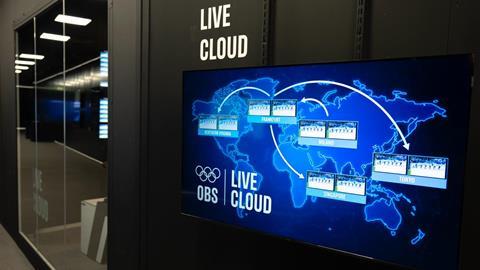
Alibaba Cloud is partnering with Olympic Broadcasting Services (OBS) and the International Olympic Committee (IOC) to provide cloud and AI innovations for the Olympic and Paralympic Winter Games Milano Cortina 2026.
Building on deployments at Tokyo 2020, Beijing 2022 and Paris 2024, the collaboration marks another step in the IOC’s transition toward cloud-based, AI-enabled broadcasting.
Dr. Feifei Li, senior vice president of Alibaba Cloud intelligence group, president of international business, said: “Each Olympic Games presents unique challenges in scale, geography, and complexity. For Milano Cortina 2026, we are applying cloud and AI capabilities to make broadcasts more dynamic, workflows more efficient, and Olympic moments more accessible to audiences around the world.”
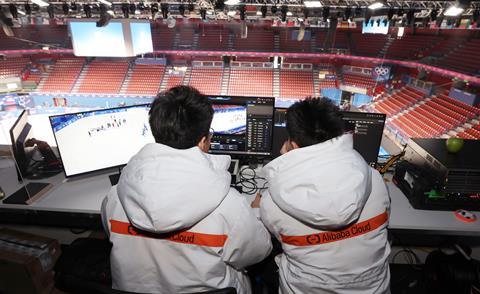
For Milano Cortina 2026, Alibaba Cloud is introducing upgraded real-time 360-degree replay systems that deliver immersive replays with fluid camera movement and stroboscopic visual effects.
The replays are powered by an AI algorithm that separates athletes from complex backgrounds such as snow and ice. It enables three-dimensional reconstructions of key moments in 15-20 seconds, which is fast enough for live broadcast use.
The system will be deployed across 17 sports and disciplines, including ice hockey, freestyle skiing, figure skating, and ski jumping.
In addition to the BulletTime effects first introduced at Beijing 2022 to provide frame-freeze and slow-motion views, the platform also features a new Spacetime Slices capability that visualises multiple phases of an athlete’s movement in a single composite image, allowing viewers to better understand technique and performance.
OBS is also currently in the early development phase of the Automatic Media Description (AMD) System powered by Alibaba’s Qwen advanced large language model. The system automatically identifies athletes and key moments, generates event descriptions, and tags video assets within seconds, significantly reducing manual processing time.
Using natural-language queries, such as, “Find the figure skating gold medal performance,” the OBS teams can retrieve this information almost instantly. The system improves searchability, and enables OBS teams to more easily find, develop and distribute Olympic stories across platforms.
Meanwhile, cloud-based broadcasting will be ramped up at the Winter Olympics. The Live Cloud platform will support 39 broadcasters, delivering 428 live video feeds, including 26 UHD streams, along with 72 audio feeds.
By replacing traditional satellite links and dedicated transmission lines, cloud-based delivery reduces cost, setup time, and technical complexity, while improving flexibility and resilience.
For the first time, the OBS Olympic Video Player (OVP) will deliver high-definition live streams using Alibaba Cloud’s infrastructure, enabling smaller broadcasters to access professional-grade broadcast capabilities without heavy upfront investment.
Yiannis Exarchos, CEO, Olympic Broadcasting Services, said: “Alibaba Cloud provides the foundation that makes large-scale AI possible, making our operations more efficient and unlocking new opportunities to enhance viewers’ experience and deepen their understanding of the sport and athletes’ performances on the world’s biggest stage.”
Milano Cortina 2026 will also see the largest volume of ready-to-use digital assets in Olympic history.
More than 5,000 short-form pieces, including behind-the-scenes footage, highlights, and emotional reactions, will be distributed through OBS Content+, a cloud-based platform powered by Alibaba Cloud.
The platform’s discovery tool enables teams worldwide to locate, edit, and publish content efficiently, regardless of location.
Furthermore, the IOC has introduced its first large-language-model-based system in Olympic history, powered by Alibaba’s Qwen models.
The initiative, known as Olympic AI Assistants is embedded on olympics.com, providing multilingual conversational support, real-time event information, enabling fans to access official Olympic Games content through a chat-based interface.
The same Qwen-powered technology is being deployed at the Olympic Museum in Lausanne, where visitors will have access to personalised AI audio guides that enhance the museum experience.
Alibaba Cloud is also enhancing Sports AI, a cloud-based media archiving solution first introduced at the Paris 2024 Games. The upgraded solution includes AI tagging, video search, and conversational search, making the Olympics archive instantly searchable and more accessible.
Managing more than eight petabytes of historical Olympic media, the system utilises Alibaba Cloud’s proprietary AI algorithms to automate tagging, categorisation, and multimodal search across decades of content.
New conversational search capabilities, powered by Alibaba’s Qwen, enables users to retrieve specific clips using simple spoken or written commands.
Ilario Corna, chief technology and information officer, International Olympic Committee, said: “Milano Cortina 2026 marks a defining moment in the integration of AI into the Olympic Movement. Alibaba Cloud has been incredible in putting these leading capabilities to work in very practical, helpful ways—not only enhancing the everyday experience for our fans through first use of LLM technologies at the Olympics, but building intelligent systems such as Sports AI that will preserve historic Olympic moments for generations to come.”






No comments yet