


DAMsmart NZ has rescued the 2003 World Netball Championships from 49 mould-ravaged, tropical-climate-damaged Beta SP tapes
Australia’s Silver Trak Digital and its archive division, DAMsmart NZ, have digitised and restored the archive recordings of the 2003 World Netball Championships in Kingston, Jamaica.
The recordings have been restored to broadcast quality, preserving a significant chapter of World Cup netball history that was at risk of being lost.
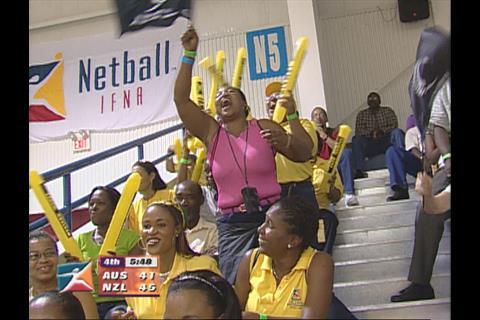
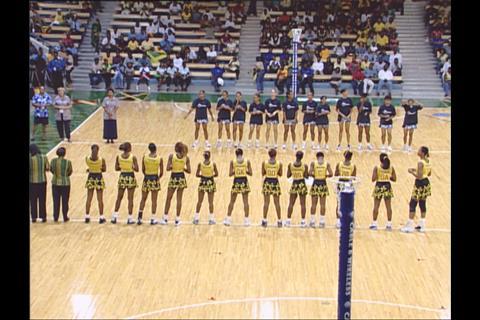
Held at the National Indoor Stadium in Kingston from 10-20 July 2003, the 2003 World Netball Championships saw 24 teams play 100 matches over 11 days, culminating in New Zealand’s Silver Ferns defeating Australia 49 to 47. Jamaica finished third. The tournament was recorded by Television Jamaica (TVJ) on NTSC Beta SP, the broadcast standard of the era in the Americas.
At the end of the tournament the broadcaster, Television Jamaica, donated the videotapes to Netball Jamaica due to limited storage capacity.
The tapes were boxed and stored at Netball Jamaica’s team headquarters, the Marva Bernard Chalet in Kingston. They remained there for more than two decades without air conditioning in a tropical climate, resulting in extensive mould growth and on most tapes, severe sticky-shed syndrome. This is a condition in which the binder layer degrades and causes the tape to stick to itself and the playback head.
Broadcast Sport’s sister brand Broadcast Tech is running the free-to-attend Archive Forum at Everyman Broadgate, London on Thursday 1 Otcober. To book your place at the event, visit https://www.broadcasttechevents.co.uk/archive-forum
Of the 49 tapes restored, 12 had snapped.
There had been previous attempts to digitise the tapes, but these had only limited success and time was running out to save the rapidly deteriorating footage.
The tapes were shipped to DAMsmart NZ in a last-ditch effort to preserve the recordings, after the company had previously completed similar archival preservation work for Netball New Zealand.
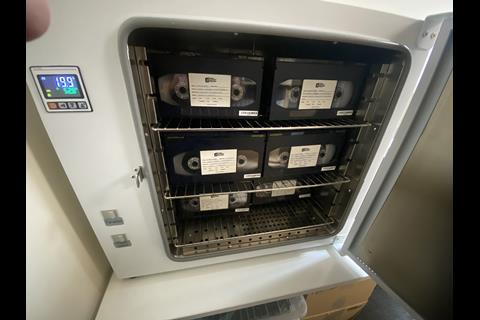
The digitisation and restoration process required each tape to be extensively baked at a precisely controlled temperature, hot enough to kill the mould and soften the hardened glue within the binder, but not so hot as to cause further damage to the already fragile carrier.
After the initial baking process, DAMsmart’s technicians took additional manual steps, applying a range of techniques to ensure the tapes could be successfully loaded and played back for digitisation. Then, during digitisation, the content was encoded into PAL.
Once complete, the resulting files were run through an automated quality control process before a human operator manually checked them again, ensuring the recovered vision met broadcast-grade standards.
David Elder, general manager of Silver Trak Digital NZ, said: “This was a project that genuinely sat on the edge of what is recoverable. 22 years in a tropical environment without climate control, with mould and sticky-tape syndrome across most of the collection and a dozen tapes already snapped, is about as challenging as archive work gets. Fortunately, DAMsmart NZ has been doing this work for many years and we have the people, the processes and the patience to bring something like this back.
“To deliver the complete vision record of a World Championship that was thought to be irretrievable is exactly the kind of result we always strive to deliver. The DAMsmart NZ team did an exceptional job and we are very proud of it.”



No comments yet