
Rising commercial tensions in the attention economy highlight how lines of engagement in the creator economy are blurring
Why do you subscribe to Netflix? For prestige dramas? Oscar-winning movies? Or perhaps true-crime documentaries about psychopaths? Whatever the answer, chances are it isn’t to watch YouTubers – because you can find them on that platform for free. On your smart TV, no less.
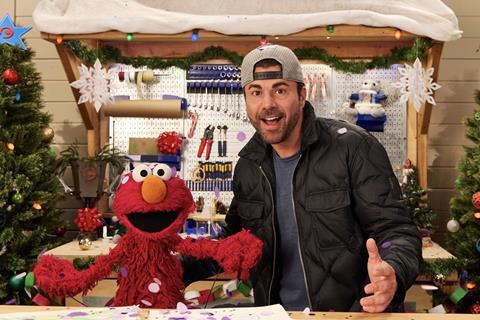
Yet in 2026, Netflix has been investing heavily in digital-native talent. Month by month, the streamer has been hoovering up creators and programming from an ecosystem that Netflix co-chief executive Ted Sarandos last year referred to as a “farm league” (a training tier). Mark Rober, Ms. Rachel, Nick DiGiovanni, Mythical Entertainment, Jordan and Salish Matter, the Stokes Twins and the Sidemen are among those to have struck deals, while Kevin Langue became the latest high-profi le arrival in September.
Taken individually, the deals might look like Netflix simply shopping for talent wherever it can find an audience. Collectively, they point to something more signifi cant: the dividing line between the creator economy and premium streaming is blurring.
And that changes the media landscape significantly. People are no longer asking whether YouTube creators can make the leap to Netflix, but what Netflix and creators really want from each other – and where that leaves YouTube.
‘Farm league’ winning out
Paul Telner, head of programming at New York-based creator agency Viral Nation, isn’t having the farm league analogy. YouTubers, he argues, are “actually the pros”, particularly when creators combine substantial subscriber bases with strong per-video engagement.
For Telner, whose company’s roster drove north of 85 billion social views in 2025, the change in Hollywood’s attitude is overdue. He says studios spent years treating social media as an adjunct to their core business: the “digital extension” that might appear towards the end of a pitch deck. “YouTube is the most-watched platform on the planet by tonnes. So how can streamers ignore that?”
For Netflix, creators off er a relatively low-risk route to younger viewers: YouTube has already tested which talent, ideas and formats resonate before the streamer commits premium budgets. But the attraction is not simply their subscriber numbers. Telner argues that successful creators have proved themselves as storytellers, developing formats, characters and audience relationships over many years.
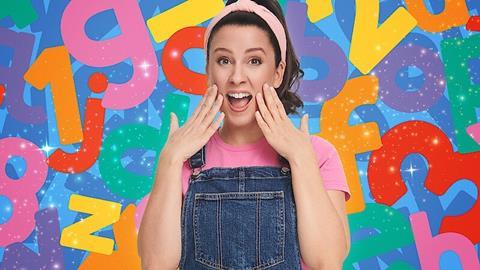
There is already evidence that the approach can travel. In Netflix’s own viewing report for the first half of 2026, Ms. Rachel was its most-watched kids’ title with 69 million views across two seasons. Mark Rober’s CrunchLabs generated 36 million views across four seasons, while Salish & Jordan Matter reached 29 million views across two.
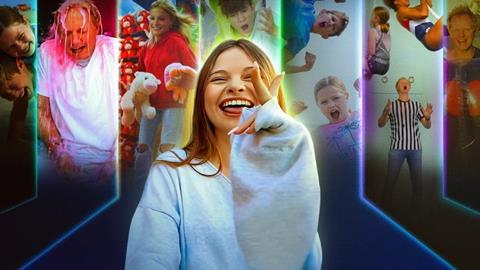
The agreements tend to go considerably further than simply commissioning a show. Speaking on The Colin And Samir Show shortly after the deal was announced, Jordan Matter described the pact with the streamer as a three-year “talent deal”, envisaging three to four shows. “We did not come to Netflix with a show at all,” he said, explaining that the streamer approached them as talent and that the two sides are now developing ideas together. Matter also stressed the importance of retaining creative control, with both sides needing to agree on the projects that ultimately go forward.
Telner sees library plus original as an important part of the Netflix template: repackage proven content for streaming, then pair it with programming that audiences cannot already watch free elsewhere. It is this point of distinction that makes it viable for the streamer to include creators as part of its subscriber off ering.
But the agreement with Langue – whose YouTube series The Kevin Langue Show claims almost 5.5 million subscribers – suggests the model does not always require exclusivity, either. New programming can appear on Netflix and YouTube simultaneously, making the streamer another distribution window for an existing creator business rather than necessarily the creator’s new home.
Netflix’s willingness to share shows is significant, says creator economy entrepreneur and investor Tobias Hoss, the former chief business officer at European digital agency Lunar X, because it underlines creators’ bargaining strength. They increasingly control IP as well as audience and, attracted by creative control and ownership, no longer necessarily regard YouTube as a stepping stone to television.
But if creators have audiences, production operations and profitable businesses on YouTube, there is an obvious question: why do they need Netflix?
There is still some status attached to making the streamer jump. “I think there’s a bit of clout to it,” suggests Telner. Creators find themselves alongside established Hollywood stars and comedians while simultaneously possessing viewing numbers that many mainstream celebrities would struggle to replicate online, he observes.
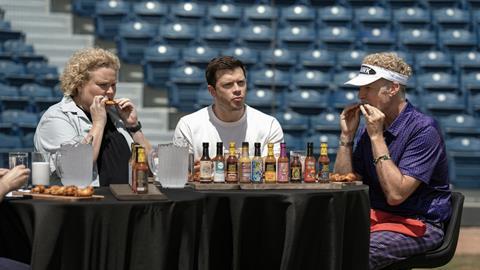
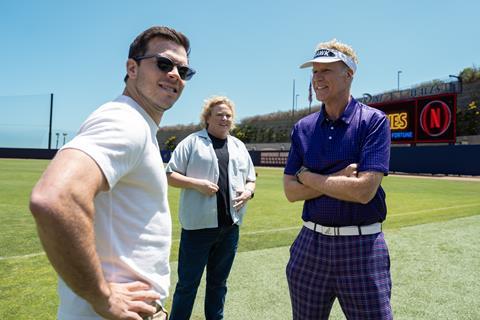
A neat illustration was offered by Sarandos during a recent earnings call. Discussing a Netflix original for Hot Ones – which started on YouTube – filmed at the Kentucky Derby to promote Will Ferrell series The Hawk, the streamer’s co-founder described the special as an intersection between its “core” programming, its expansion into exclusive creator content and live sport.
Financial opportunities
While streamers retain a lure from a status point of view, Hernan Lopez, founder of media and tech consultancy Owl & Co, points out they also offer greater financial returns. “If Netflix doesn’t prevent creators from continuing to operate on YouTube in the way they have, [then a streamer deal] gives them another revenue opportunity and another level of recognition.” That helps, when YouTube typically retains 45% of net revenues from creators’ long-form content.
There is also a second model: “A creator might want to do something that is more ambitious, or just difficult to finance without a commitment,” Lopez says. “Netflix gives them the ability to create something they couldn’t finance on their own.”
Netflix is not alone in reaching into the creator economy. Ampere Analysis executive director Guy Bisson sees the same shift spreading across the streaming and FAST sectors, suggesting this is more than a bilateral tussle between Netflix and YouTube.
Amazon Prime Video has MrBeast’s Beast Games, Samsung TV Plus is building a creator proposition, and Tubi has commissioned US originals from UK creator studio Wall of Entertainment, while Disney+ and Hulu launched Pocket.watch’s Rabbit Hole this summer.
“Every major streamer is co-opting creators,” says Bisson. Traditional services, he argues, need both the kinds of content younger audiences consume and the personalities they spend time with on YouTube, TikTok and social media.
This dovetails with the shifting priorities of streaming, which – as Bisson explains – have moved from an overriding focus on customer acquisition towards retention and engagement. That means giving existing subscribers more reasons to spend time inside a service while, increasingly, creating opportunities for advertisers. “Everything they’re doing is about keeping the customers they have,” he says.
Lopez reaches a similar conclusion, but places creator content within Netflix’s wider evolution into a broader entertainment platform. “They look at podcasts and creators as two sides of a similar extension strategy,” he says. “It’s not only about expanding watch time; it’s about getting people to come to Netflix more often and to think of Netflix through different lenses.”
He adds: “I think it’s more of a retention strategy. The language they’ve used speaks about increasing viewership during the day and on mobile. I don’t hear them say, ‘We got more subscribers’.”
Disney is another looking to expand its offering, with chief executive Josh D’Amaro outlining a plan earlier this summer to develop Disney+ into “the digital centrepiece of The Walt Disney Company” by creating a “comprehensive membership ecosystem”.
Just what the new-look platform will offer is being largely kept under wraps, but D’Amaro said it would offer “high-value, always-on benefits with our storytelling”, enabling Disney to “reach more fans, deepen engagement and increase subscriber retention”.
All this poses an intriguing question: what next for YouTube? Lopez argues that the Google-owned platform has been in a class of its own as a marketing, distribution and revenue engine. But other partners can now offer creators reach, advertiser salience, creative freedom and/or financial advances, increasing their negotiating choice.
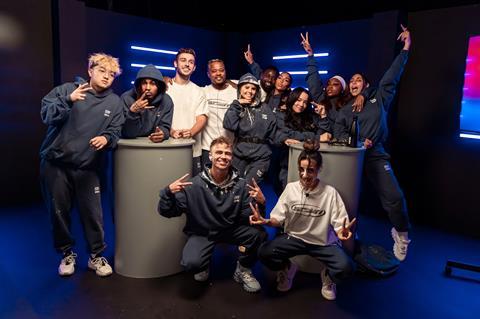
Cowshed Collective, which worked with the Sidemen on reality show Inside for Netflix, is gearing up around that multiplatform opportunity. Chief executive and co-founder George Cowin says it has blurred the distinction between developing for YouTube, brands and TV because the same idea may now have several destinations – a “little YouTube show” can potentially become “a massive reality show” on Netflix.
But gearing up for the opportunity does not fundamentally change how Cowshed has to develop projects. Major streamers still tend to do creator deals with the biggest names, leaving less proven IP with the familiar problem of demonstrating demand first. “Our model is still to test ideas on social, develop formats, build an audience around creators, work with brands and take that data to a commissioner,” says Cowin.
Cowshed is also developing YouTube reality projects combining outside production finance with brand support. The aim is to prove an audience and recoup some investment through ads and sponsorship, with a second season, format sale or streamer acquisition as the longer-term prize.
The traffic also runs the other way. LA-based producer Ample Entertainment is building a direct-to-consumer operation through Ample Originals. Chief executive Ari Mark says the move is partly a response to shrinking orders and the difficulty of sustaining a production business built on volume. But its deeper motivation is ownership.
For more than a decade, Ample has created unscripted IP and secured network financing in exchange for surrendering much of its long-term participation in that content. “If you’re creating something and you don’t get to be part of that creation for its life, it’s a bad feeling,” says Mark. “I’ve reached that point where, whether it’s on YouTube or elsewhere, I need to figure out a way to be part of an IP.”
Leveraging the community
Ample is testing original investigations, companion programming extending television IP, and talent-led channels built around existing social audiences. Mark regards it as a long-play game, but says building a direct community could eventually strengthen Ample’s hand with streamers. “There’s definitely potential to leverage a community and say, ‘This community is hungry, this community is important.’ You need the analytics to back it up, but I think it 100% makes a difference.”
So could creators eventually turn their backs on YouTube altogether? Lopez can imagine that calculation for some podcasters or mid-level talent, but the prevailing view is that the biggest creators have too much invested there.
Bisson regards the idea that established creators might abandon the platform for exclusive Netflix deals as extremely unlikely at present. “That would be a very high-risk move,” he says.
“I can’t see any creators abandoning YouTube.” “The smart creators, the ones that really understand their audience, don’t forget their fans,” says Telner. If a Netflix programme ends, they still have millions of viewers elsewhere – and fans who watch a premium show are “going right back” to the native platform for the creator’s constant stream of new material and interaction.
“For most content creators, YouTube is still the foundation, because that’s where the community building happens”
Tobias Hoss, investor
Hoss reaches much the same conclusion from a business perspective. “For most of them, even the big ones like the Sidemen, YouTube is still the foundation, because that’s basically where the community building happens,” he says. Would the Sidemen, for example, have been able to launch their own subscription offering, Side+, without YouTube’s rocket fuel? The past 50 years of media history suggests not.
Expansion onto other platforms is therefore diversification rather than migration, Hoss says. “These creators are media companies. They recognise they need to diversify revenues and be present on different platforms.”
Crucially, the audience can move with them: “The stickiness is not with the platforms anymore. The stickiness is with the creator you care about, and the kind of parasocial relationship you’ve developed with them over the years,” says Hoss.
Netflix can provide money, distribution and global profile, but it doesn’t automatically inherit the audience relationship. Fans may arrive for an exclusive series and then return to YouTube for the next upload. The test is whether streamer support for creator content can deliver the retention Netflix wants.
What is becoming clearer is that the converging world arounds creators is leading to commercial tensions between two of the world’s biggest streaming platforms.
Bloomberg reported in August that the Google-owned YouTube is discussing multimillion-dollar incentives with leading creators in return for keeping programming exclusive to its platform for specified periods. Proposals are said to include direct programme financing and access to revenue from major brand partnerships. YouTube has also reportedly warned that creators simultaneously distributing programmes on Netflix could receive less support from its marketing, events and brand campaigns.
Netflix, meanwhile, has reportedly asked creators to deliver programmes days ahead of release and, in some cases, remove existing brand sponsorships from videos – reportedly so it can bolster its own advertising revenues by selling that inventory. Such requirements cut across both the fast-turnaround production model and commercial relationships on which creator businesses have been built.
For creators, the calculation is not merely how much Netflix will pay, but whether that revenue and exposure outweigh disruption to the platform on which their businesses were established. YouTube is also making itself look more like TV. Its Stations initiative offers larger creator businesses some of the lean-back characteristics of a FAST channel without requiring them to move their programming or audience elsewhere.
Platform convergence
The wider picture is therefore one of convergence. Lopez argues that the old distinction – Netflix and its peers offering premium film and TV series with YouTube dominating creator video – is becoming much harder to draw. YouTube now combines the world’s largest catalogue of creator content with premium programming, sport and TV-like viewing, creating what he calls “a new kind of player”.
Bisson reaches a similar conclusion. Smart TVs have put Netflix and YouTube on the same screen, while traditional content owners are seeking audiences on the Google platform, and creator businesses are looking across multiple forms of distribution. “Everything is coming together,” he says. “The economics and attitudes have to evolve.”
Which brings the argument back to Sarandos’s “farm league” analogy, an implication that success on YouTube is preparation for something bigger – that the destination is ultimately Netflix, Hollywood or television. Increasingly, evidence suggests a different paradigm: Netflix isn’t offering creators a promotion out of YouTube, because its creators have already proved they can succeed without it.






No comments yet