
Former Nat Geo and Nutopia exec Geoff Daniels on partnerships, funding and navigating Trump’s politics
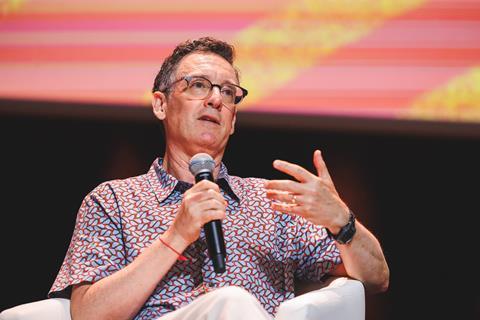
Public broadcaster PBS is becoming “much more nimble” in the way it is working with international partners, following the slashing of its budget by the US government last year.
Donald Trump’s executive order 12 months ago effectively ended federal funding for PBS, slashing around 15% of its budget and causing what senior vice president of global developments Geoff Daniels described as “a really hard hit”.
The former Nat Geo and Nutopia exec, who joined the organisation in November 2024, admitted during a panel at Sunny Side of the Doc in La Rochelle that PBS had gone through “the five stages of grief” following the decision.
“We were trying to really figure out what it meant for the system, for our stations, for our strands, for the national organisation,” Daniels said.
PBS is supported primarily by donations from foundations and members of the public, whose reaction he described as “absolutely incredible”.
“We knew that there would be a moment when we were in the news and an existential threat was present, but what we’ve seen over the last year is that the sustained giving from individuals was amazing.”
Daniels added that the support from family fundraisers, “large gift donations” from philanthropists and cash injections from foundations had shifted the broadcaster’s strategy and made it “less restricted” in the way in which it is working with global partners.
Funding models are now more bespoke and the broadcaster is also working in tandem with sales arm PBS Distribution to support programming, with a focus now back on content rather than survival.
“The first six months [since the cuts] was really just triage and figuring out what the shape of things was to be, but now what I see is a more stable base that is giving us the ability to move forward in ways that will allow us to make a transition and transform what PBS can be.”
Daniels added that the organisation “might have a little bit less money than we did - but we still have more than you think.”
He continued: “We have different ways to fund shows now, we’re becoming much more nimble, much more entrepreneurial in the way in which we work with producers up front to pro-actively look at the needs of a project and then begin to custom tailor, in partnership with them, what a funding model could be.
“That’s from early stage R&D through to late-stage gap funding.”
Navigating Trump’s America
PBS still faces pressure from the US administration, led by a president who has been an outspoken critic of PBS since the start of his second term.
But Daniels said there was little point in the US media industry trying to adapt to his whims.
“It is a very nuanced conversation because everyone is running their own calculus on that and looking at what the administration is or isn’t doing, what they’re paying attention to at any given moment, which is constantly shifting. You can be always chasing that and over-calibrating, and worrying about politics of what this or that administration is doing or favouring .
“Obviously for PBS, what happened to us in the decision regarding funding was incredibly difficult. But we are independent media and we have to preserve the integrity of that - we speak through our programming to all America.
“So even though there may be moments where you might be tempted to think about the equation and your calculus of some imagined future or immediate threat, for us, the focus is on preserving that trust and independence.
“We’re really thinking about how we can use our content to represent the fabric of America and working with partners around the world in ways that are meaningful and important.
“Anything else about the politics of it all just drives me crazy, I am so over all of that. If we start chasing that then I think we become what some people might be trying to back us into.
“It’s a fool’s errand, so you stay true to your values and mission, and march forward.”





No comments yet