


Gerrit Kemming on how Quintus Studios is getting unscripted IP produced, onto screens and providing returns
The good old days. Commissioners had money and wanted to spend it. For really ambitious projects, a co-production between two, or even three, broadcasters was necessary, but it seemed like no idea was too big to be realised.
Those days seem to be mostly over.
But the good news is, the demand for brilliant content is unbroken. What’s changed are the rules for making it work financially for everyone involved.
At Quintus, that journey always starts with data. Ours comes from our own audience. We can see what people are watching on our channels and use that information when deciding what to develop, where to put our own money and how a project might work across television and digital. It doesn’t guarantee an audience, of course, but it can increase the likelihood that a programme finds one.
Across the Quintus Channel Network, we operate more than 35 channels on platforms including YouTube, Facebook and Snapchat, reaching almost 19 million subscribers and hundreds of millions of viewers each year. We can see how factual content performs and use that information when developing projects and talking to producers or broadcasters and streamers about new ideas.
Follow the audience
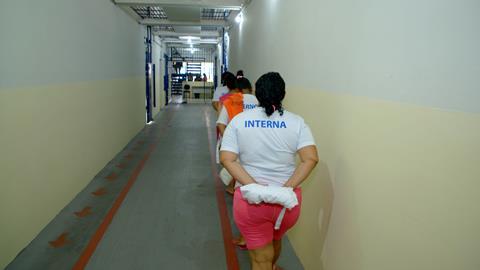
Prison programming has worked well for us for years, both on our own channels and through distribution. Behind Bars is a good example: previous seasons have sold across Europe, Latin America, Canada and Australia, while also generating views, engagement and revenues on our AVOD network and other digital platforms.
Our own channels let us look beyond whether something works to what people are actually responding to. With prison programming, we noticed audiences weren’t only interested in how tough life behind bars can be, there was also strong interest in what was actually happening inside.
That became the starting point for How To Make Money Behind Bars, which we developed with producer Jessica Mitchell. The series explores the strange, bold and creative ways inmates in South American prisons make money, legally and otherwise, using first-hand accounts and secretly filmed mobile footage. It’s now a three-part series for ZDFinfo.
Putting our own money in
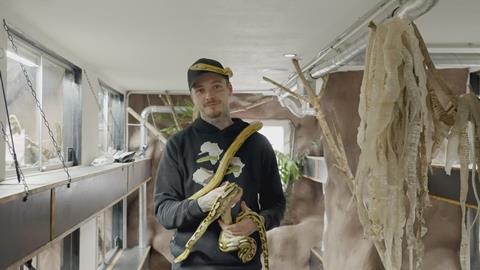
The same approach can work differently from project to project. With Danger Play, we started with a pilot. We fully funded it ourselves, testing the genre on our channels and its potential in the distribution market before developing the rest of the series.
Let´s be honest, data can only take you so far. At some point, there also has to be a willingness to put your own money behind an idea. By the time we take a project like this to market, we have a finished pilot and performance data from the Quintus Channel Network. Together, they make a pretty good sales pitch.
The resulting six-part series, produced with Adventure Alliance Films, follows people whose jobs involve extreme physical risk. Vice TV pre-bought the series for the US, English-speaking Caribbean, Australia and New Zealand, while we commissioned it for our AVOD network and retained the IP and worldwide distribution rights.
Keeping production lean
Danger Play and How To Make Money Behind Bars also reflect another part of the equation: keeping production lean. We work with a small internal production unit and a network of filmmakers and mini-indies around the world who know our model and can work flexibly across television and digital.
That flexibility also means the same access can produce different, tailor-made versions for different platforms alongside one another. And I don’t just mean making one television programme and then cutting it into different lengths.
Once the door is open, the story behind it is like a matrix. It can be approached from different perspectives and told in different versions and directions. Where it makes sense, that might mean a television production alongside a more creator-driven, authentic version for digital, alongside another film which picks out only one part of the full story and elaborates on it in a focus style.
The versions can be produced alongside one another for their respective platforms while drawing on the same underlying story and access, giving us different versions of the same story that can each be exploited and monetised.
Finding finance
Which brings us back to financing. If one party funding 100% upfront is increasingly the exception, we need multiple financing and revenue streams.
Depending on the project, that can mean a pre-sale to a broadcaster or streamer, monetisation through the Quintus Channel Network, and linear and digital ready-made distribution. Different versions can also generate different revenue streams across our own and 3rd party networks. And all of this running simultaneously.
So we’re thinking about all of this early: what the data tells us about the potential audience, whether we’re willing to invest ourselves, how leanly and efficiently we can produce it, whether the same story and access can work in different versions, and which financing and revenue streams might make sense.
It’s more complicated than finding one buyer to write one cheque. But it also means thinking differently about a project from the outset: who its audience is, where it can live, how it can be financed and what it needs to cost.
There is no single model that works for every project anymore. The job is figuring out the right one for each.
Gerrit Kemming is chief exec of Quintus Studios






No comments yet