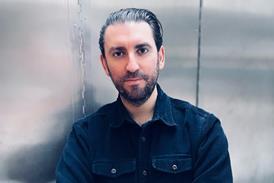
US producer/distributor Reveille head Ben Silverman, the man behind the US remake of The Office, explains his philosophy for success, how to pitch to the networks and why he rates UK creativity.
Ben Silverman, executive producer and chief executive of US-based independent production and distribution company Reveille, works to three "simple core philosophies" - one: only do what you like, two: always be nice to everybody, and three: don't be scared to be rejected. The second comes in particularly useful when he's zooming around the world, shooting the breeze with cab drivers, and getting the cultural low-down on what programmes might work where. "I travel the world. I work 24 hours a day. I communicate with everyone," he says. "Any city I go to I ask the driver of the first taxi I step into what's on television, what they're watching. I don't wait until I read about it in a report. We're built on sourcing amazing creativity from alternative places." It's a technique that has stood the 35-year-old in good stead. As head of a company that exploits worldwide intellectual property rights via scripted and alternative TV formats, he's behind the US remake of BBC hit comedy The Office for NBC. He's also developed several UK shows for the US: Channel 4 medical drama No Angels for The WB; BBC1 legal drama Judge John Deed for NBC; as well as C4 comedy Black Books for CBS. He's the co-creator and executive producer of NBC's reality show The Biggest Loser and Blow Out on Bravo; other projects include MTV's Date My Mom and FX series 30 Days, created and hosted by Super Size Me's Morgan Spurlock, which explores what life-changing experiences are possible within a month. Reveille, launched in March 2002, is a company which believes in localised production and global distribution. Its international group has completed over 50 format deals in more than 30 countries. In February this year, the former NBC Universal-owned company bought all the rights to its product line-up, so it's now tasting the opportunities - and stresses - of independence. Perfectly groomed and a bit jet-lagged, Silverman is irrepressibly enthusiastic about the industry and his place in it. And he talks. A lot. "I think if you look at 30 Days, which is a show that C4 has picked up in the UK (to air on More4); to have the eye to find Morgan, and know that his show would translate to TV, and then to have a production of that show on in Germany before our version in America; and to have identified Ricky Gervais, Stephen Merchant and The Office ahead of the game, let alone what I did as an agent between representing Cracker and putting together the deal on Who Wants to be A Millionaire?; there's kind of a consistent track record that builds up, so that I don't have to yell as much that these are good ideas. But I do still have to convince people, which is amazing to me." He's still going. "You know, it's like: 'Hey, guys, I've brought more number one hits into this marketplace than anyone and you're questioning me about whether the docu-soap will work? Believe me, the docu-soap will work!' I don't take no for an answer." If that sounds arrogant on paper, it's far from how Silverman appears in real life. Although full of self-belief, he is charming rather than conceited. And when he believes in something he won't stop until he can bring the right elements to that project. That might mean getting Amy Heckerling (director of Clueless) for No Angels. Or bringing in Michael Chernuchin (Law and Order) to help adapt Judge John Deed for the US market, or Jeff Fisher (The Simple Life) to develop a show - set in an "overly happily corporate-themed restaurant" - called Shenanigans. Many of these relationships are down to Silverman's networking prowess - "I've always been nice to everybody so it's always come back." His contact-building career encompasses time at William Morris Agency - where he engineered the sales of shows such as Weakest Link - a stint as vice-president for New World/Marvel Entertainment, where he developed sitcoms, and posts at CBS and Warner Bros. He also had a handy celeb-filled Manhattan childhood hanging out with the likes of actors Matthew Perry and Martha Plimpton. His mother worked at the BBC for a time, running its co-pro unit in New York, "which is how I knew so much about the UK market". So does he have any tips for breaking into the US market? "There are so many different routes in. The easiest way is to create a programme of merit. What's really damaging and what a lot of UK companies do is to just send a tape to a US network. If I had just sent No Angels to the American networks it would have never sold. But you go in with Amy Heckerling and an American point of view, or on a reality show you go in with the right production entity or the right creative element or right business element, and it sells." Local production is important, he says, because he's trying to reach a big broadcast audience. As they are, most UK shows would be too narrow and domestic for the US market. "I think as the world becomes more homogenised we'll see more and more finished episodes travelling across borders, but at the end of the day you like your chips, we like our burgers and you're going to prefer something that feels like you, that has your accent." As for future trends, Silverman thinks genres are increasingly going to merge. The industry is constantly looking for the next wave within a genre, he explains, but there's no question that reality TV is here for the long haul because it's much less expensive to produce and it consistently delivers ratings. The Office: An American Workplace is a great example of the merger of reality and comedy, he says. But didn't it have lacklustre ratings? "You could have put a burning fire on Thursday night and then moved it to Tuesday night and it would have gone down 44% just because of the available audience. The thing I'm most happy about is the amazing critical response and from the right places." And since it's getting a second series on NBC this autumn he hasn't got too much to worry about there. Silverman loves the UK, one of his biggest markets in terms of sales. He's worked with World Productions, Princess, Maverick, the BBC and Shine, to name a few. Does he want to work with more UK producers? "Absolutely." He gives a lot of credit to the BBC for the UK's programming creativity. "The BBC is like a subsidised graduate school for the industry. I love the element of consciousness that comes from having a public broadcaster train all these people so you get a show like Jamie's School Dinners. That kind of philosophy intrigues me." So we're back to nice again. Does he have a moral agenda? "Absolutely. If I wasn't doing this I would be in diplomacy." He insists he's not about crusader television though. "Audiences are never going to watch unless they are being entertained. But the idea that you can have a consciousness with it is great." FACT FILE Home: Between LA and New York School: Columbia Grammar and Prep, Manhattan University: Tufts, Boston First TV job: Intern at Warner Bros Career high: When Millionaire debuted in America Career low: Coupling's failure Extravagance: The good life.
No comments yet