

Broadcast Tech speaks to co-CEO Nick Price and chair Mark Benson about the new AI-powered VFX house
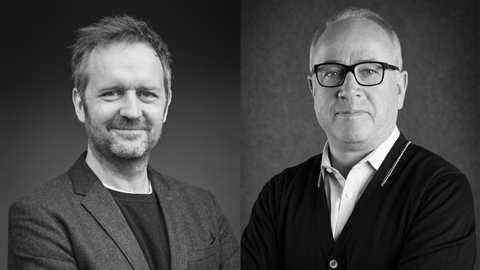
“I was sitting down with Carl [Lyttle], one of my founders at Nmatic, and Nico [Cotta, founder and CEO of Alibi Studios]. Carl has a little cottage in a village in Italy. Nico lives in another village in France. They are about six miles away from each other across the border, straight across in the next valley.”
From this quite analogue beginning came the name for The Next Valley, a new VFX house created by Alibi Studios and nmatic.ai that promises to use AI to change the way VFX is done.
Co-CEO of The Next Valley and founder and CEO of nmatic.ai, Nick Price, who said the above, believes that AI is set to become a key component of VFX, and thus began the journey to The Next Valley. He predicted to Broadcast Tech, “In a few years’ time, people won’t be talking about AI like they do today, as though it’s something other or threatening. People will start to think of AI much more like a VFX tool.”
He added, “It is at least up to 60% faster. It’s also much more cost-efficient without the drop-off in quality, and we think that is a seismic change across production.”
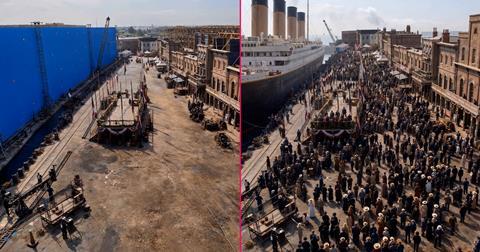
He was speaking alongside Mark Benson, chair of The Next Valley and Alibi Studios, who noted, “The opportunity is for the evolution of the creative process to be sped up and therefore very much more efficient, so that artists, creative directors and partners who are collaborating are spending the largest amount of time on the finish, quality and output of the images themselves, across whatever platform that might be.”
However, this change won’t be immediate, Price warned, with a lot of work to be done to work out the best way to integrate AI in to VFX workflows, “AI still lacks some of the control you have in CG. It’s improving, but it isn’t yet as precise or pixel-perfect. The opportunity is to bring the speed of AI together with the discipline of VFX and CG workflows.”
For The Next Valley this will see use of third-party tools as well as creating bespoke builds in AI integration platform Comfy AI, which can change at the drop of a hat. Price revealed, “Prior to The Next Valley, we worked on a six-episode project where the tools changed so much that, by the end, what you could do was completely different from what was possible at the beginning. That’s one of the challenges with AI. Eventually, the technology will plateau, but for now we spend a lot of time trialling new tools.”
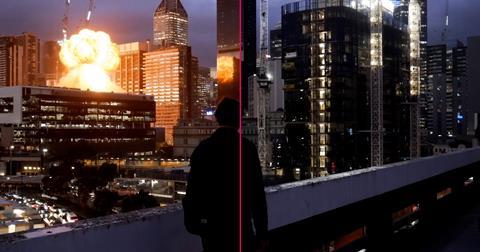
The Next Valley has been jointly created by Price’s nmatic.ai and Benson’s Alibi Studios, but is a separate entity to the pair. It has already been winning projects as a standalone facility, and in time, Price, “would fully expect The Next Valley to start to build up its own dedicated teams. We started working together six months ago. Today, we’re across the UK, France, Canada, South Africa and Asia.”
He added, “The traditional VFX workflows largely come from Alibi Studios, while AI, photography and live-action expertise comes from nmatic.ai. Together, they form The Next Valley,” while Benson says, “Both businesses will continue to trade as they do today. This is a formal acknowledgment of the collaboration between the two and having an identity that represents that proposition.”
As mentioned, one of the possible benefits of AI is that it could speed up VFX and potentially make it cheaper, but that it isn’t everything. Price said, “We don’t see this as a technology that’s simply an accountant’s dream for cutting costs. We believe the best results come from people with craft skills using it. The question is: what can it amplify? What new possibilities can it unlock?
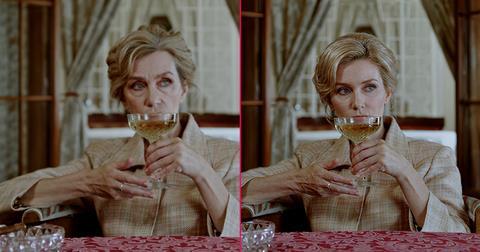
“What about all those films that can suddenly get made because of this technology? What about all those new forms of art and creativity that will emerge because of it? What about all the ideas that were explored because of it? Those things aren’t really thought about. They’re just quietly happening at the moment.”
Benson agreed, “In experiential as well, that whole kind of interactivity, you can see how it could open up stuff there that wasn’t possible before, or if it was possible, it was so expensive it was prohibitive.”
Price expects this impact to come in at the lower end of the market, at least at first. “Maybe independent and mid-budget films will adopt the technology first because it can make such a difference. If you’ve only got £5 million or £10 million, rather than the hundreds of millions available to major studio productions, AI can make projects possible. It might mean you can afford a particular actor, create a more ambitious look or simply make the whole production viable.”

While The Next Valley is clearly embracing the potential of AI in VFX, Price and Benson are still aware of potential issues, namely in ethics and entering the industry. Price said, “One of the risks with AI is making sure the next generation still learns the craft, rather than skipping straight to, ‘I’ve got an AI tool.’ We believe you still need to understand lighting, framing and all those creative fundamentals. The weakest AI work comes when people skip those foundations and expect the technology to do everything. We always start with the craft.”
The bigger task might be convincing people to use the tech. “Ethics is very high on my agenda. How do you look after people? How do you train the next generation? How do you reassure those who are worried that this isn’t the end, but potentially the beginning of a different way of working?” Price said, adding, “There’s greater acceptance, although there’s still a lot of misunderstanding and fear, which you have to respect.
“You can’t simply tell people they’re wrong. If someone doesn’t want to use AI, you have to respect that. But I do think attitudes are changing, and in five years’ time we’ll look back and recognise benefits that people weren’t really talking about.”
Images: The Next Valley






No comments yet