

Mongoose’s Harvey Taylor looks at making branded content that aims to make a difference
Driven by shifting expectations from fans, athletes and the wider sporting ecosystem, purpose-led partnerships are becoming a powerful force reshaping sport.
This year’s Sport Industry Report shows 72% of fans believe sport carries a greater social responsibility than other industries. That tells you purpose isn’t something you can simply layer on top of a sponsorship anymore. It’s part of how partnerships are judged from the start.
And fans are far less forgiving of anything that feels surface level. A logo on a shirt or a short-term campaign tied to a cause will be dismissed as purpose-washing in an instant. If it doesn’t feel embedded in the culture of the sport, it risks being dismissed as noise.
Why purpose is the starting point
Having originally centred around brand reach and exposure, sports partnerships have evolved to become increasingly experiential. Not just that, they are expected to show up authentically, deliver real-world impact in a way that cements cultural relevance.
From previously being limited to a single broadcast, social media has diluted sport into a continuous feed of content. Live reactions, highlights, creator commentary, athlete clips, group chats and second screen debate all shape how fans experience the game. The match sits at the centre, with culture built around it.
That means content has become the key battleground for purpose-led partnerships. Rather than focusing solely on brand promotion, organisations have an opportunity to educate audiences by sharing their expertise and highlighting meaningful initiatives to demonstrate how their values translate into action. In doing so, they can build credibility and create a stronger connection with fans who increasingly expect authenticity from the brands they engage with.
We’re already seeing examples of brands bridging that gap.
Take F1 Academy and TeamViewer. On the surface, it’s a sponsorship. But the content approach gives it meaning. Instead of traditional branding, the partnership spotlights women in STEM and the people behind the sport, turning the car and surrounding assets into a storytelling platform.
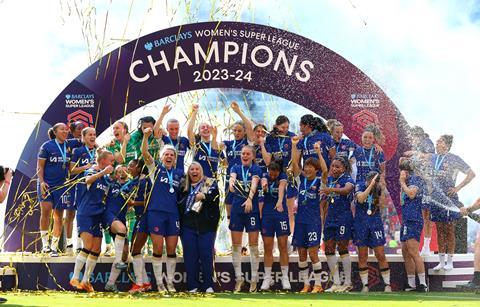
Barclays and the Women’s Super League is another example. It works because it’s a long-term partnership that shows up through multiple content moments across the ecosystem, from grassroots stories through to elite competition. It feels embedded rather than inserted, which is what drives attention and relevance in the moment.
And the data shows why this is accelerating. 75% of fans say they’d accept higher costs if sport delivered social or environmental impact, while 78% believe governing bodies should actively guarantee access and participation. There’s clear appetite for impact, but only when it feels real and visible in sport.
Trust is shaped in real time content
Most partnerships now communicate what they’re doing well. The harder part is building content that fits into the constantly changing way we naturally consume sport.
One of the most noticeable shifts has been in podcasts, with some moving from audio-only formats on Spotify into filmed, 60-minute YouTube conversations that are watched as much as they are listened to, complimented by live events. A great example of how sport content now exists across overlapping formats. This matters because strong partnerships show up across a wider sports and entertainment content ecosystem. If the moments they create don’t feel native to that culture or forced to fit whatever the hot topic is at the time, the message struggles to land.
Take Marcus Rashford’s work on free school meals during the pandemic. It resonated because it came from lived experience, shaped by his own childhood growing up in Manchester where his family relied on free school meals and food banks at times. Fans weren’t consuming his message through a standalone campaign disconnected from football, they were seeing it through the same feeds where they already followed the game.
Lewis Hamilton’s work with Mission 44 operates in a similar way. Founded to create greater access to STEM careers for young people from underrepresented backgrounds, the initiative is deeply personal to Hamilton’s own experiences growing up and navigating motorsport as the only black driver in Formula One. Through partnerships across engineering, motorsport and education, Mission 44 shows how athlete platforms can drive long-term impact while still feeling connected to the culture surrounding the sport itself.
Purpose-led partnerships are increasingly judged on whether they’re integrated across diverse sports and entertainment content ecosystems. This is where the shift from reach to relevance becomes clear. It’s all well and good having lots of eyeballs on campaigns, made easier in the connected world we live in, but the challenge for brands is whether a partnership shows up in the moments that actually shape how sport is experienced, in real time, within culture. That’s where trust is built, and where purpose starts to carry commercial weight.
There’s clear appetite for substance over symbolism. Fans aren’t rejecting commercial partnerships, they’re rejecting shallow ones. When 72% believe sport carries greater social responsibility, and a large majority are willing to support higher costs for genuine impact, the expectation isn’t visibility of purpose, but proof of it.
Strong purpose-led partnerships now operate across three layers: long-term commitment, visible real-world impact, and content that feels like it belongs.
When those three align, purpose stops being something a brand talks about, and starts becoming something fans experience as part of sport itself.
In that environment credibility doesn’t need to be declared. It can be demonstrated, repeatedly, in the content moments fans choose to stop, watch and share.

Harvey Taylor is head of strategy and consulting at Mongoose






No comments yet