








“A billabong in a bit of a desert of a week for new telly”
My Brilliant Career, Netflix
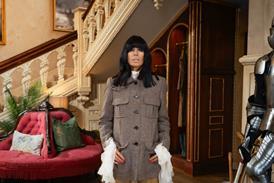
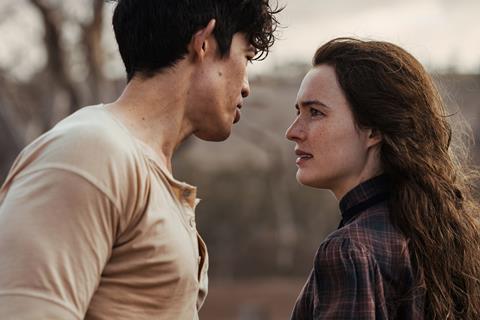
“Who doesn’t love Australian telly? Its dramas (The Newsreader) and its comedies (Colin from Accounts; Fisk), its soaps (Neighbours) and its kids shows (Bluey) all have a kind of natural, unforced energy that we can’t seem to get enough of. And now here’s an Aussie period drama that again works wonders for not trying to be too clever, for being funny, for bouncing along a bit like a daft kangaroo. My Brilliant Career is a billabong in a bit of a desert of a week for new telly.”
James Jackson, The Times
“You’ll be unsurprised to hear that the showrunner, Liz Doran, has modernised things for a Netflix audience. So Harry, portrayed in a 1979 film version by the late, great Sam Neill, is played here by Slow Horses actor Christopher Chung and the character is given half-Chinese parentage. Doran has also invented an indigenous character, Nell (Sherry-Lee Watson), who is an expert horse wrangler on the farm and becomes Sybylla’s confidante. And Sybylla’s bachelor uncle is now involved in a secret gay romance. If you’re a fan of the novel and regard it as a sacred set text, I can imagine that these changes may be hard to stomach. Of course, there were gay relationships in Franklin’s time, so that isn’t too much of a mental leap, but were close friendships between Aboriginal people and their white employers really as easy as this? We could debate that all day. As a way of introducing Franklin’s likeable heroine to a new audience, though, this series is a charming coming-of-age tale.”
Anita Singh, Telegraph
“Doran’s creation retains all the book’s sense of defiance but adds a welcome soupcon of more optimism too. It crackles with intelligence and wit, gives all of its characters room to breathe (although it may ultimately be Sybylla’s show, everyone has something meaningful to do and contribute, and the cast is all-round magnificent) and, without ever becoming superficial, never loses its lightness of touch. A joy. A brilliant, brilliant joy.”
Lucy Mangan, The Guardian
Murder Trial: Death of a Dog Walker, BBC2
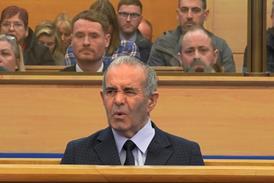
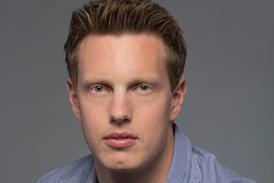
“Courtroom documentaries are rarely like the melodramatic court scenes that we see in TV dramas. Invariably they are more gripping — pieces of true crime theatre. Murder Trial: Death of a Dog Walker (BBC2) was no exception and also offered the viewer a helpful tutorial on how not to behave in a police interview if you are accused of murder. The No 1 lesson: try not to be arrogant. Or creepy around female detectives. David Campbell did himself no favours in this respect. The police interview video showed Campbell, suspected of shooting dead Brian Low in a remote lane in Aberfeldy, Scotland, being supercilious and patronising, saying of the female officer in the room: “I like the company of attractive ladies.” The male officer advised him she would be “crawling out of her skin”. This is a public service to the rest of us should we be in this position. Be the opposite.”
Carol Midgley, The Times
“Scottish law allows trials to be filmed, but the pictures are usually as flat and lifeless as CCTV. This was different — real wizardry was done in the editing room, rendering the courtroom footage tense with drama. At one moment, with the camera behind an expert witness as he gave evidence, we saw Campbell framed through the man’s spectacles. That’s a shot any Hollywood cinematographer would be proud of.”
Christopher Stevens, Daily Mail
The Spy Next Door: The Anna Chapman Story, Channel 4
“There is an interesting documentary somewhere in here, but – ironically – it’s not the parts about Chapman that are the most engrossing. The only woman interviewed here is Marina Litvinenko, widow of Alexander, killed in London in 2006. Russia has never admitted killing Litvinenko with a cup of polonium-laced tea but, in 2021, the European court of human rights ruled that it was responsible. What we hear from Litvinenko is brief but impactful, not least when it comes to her view on how Russia would later use Chapman in its propaganda efforts. And, from Litvinenko to Boris Berezovsky – found dead at his home in Ascot in 2013 – via a string of other suspicious deaths on UK soil, there is another, more intriguing set of threads that is mentioned only briefly here (for more, maybe try Patrick Radden Keefe’s nonfiction book London Falling). The final sting on Chapman is told in tense, exciting fashion, with asides for all the surreal details of course (her ex-husband being advised by the infamous spin doctor Max Clifford, for one). But ultimately this programme is little more than a salacious look at a footnote in spy history. “Red hot” indeed.”
Hannah J Davies, The Guardian





No comments yet