


















Previous MacTaggart speakers reveal their favourite lectures of the past half century

In the past half century, 48 people have delivered the James MacTaggart Memorial Lecture – often making headlines, shaping policy and ruffling industry feathers in the process.
As the MacTaggart arrives at its 50th iteration and BBC News director-turned-Tortoise Media founder James Harding puts the finishing touches to his contribution, Broadcast has asked former lecturers which speeches stood out for them as the most memorable or influential.
“For the impact it had on me personally, David Olusoga’s was everything a MacTaggart should be”
Jack Thorne, screenwriter
For screenwriter Jack Thorne, who delivered the lecture in 2021, “picking a favourite MacTaggart is like picking a favourite nephew or niece”.
He enthuses about “the raw power of Michaela Coel’s [2018] and the strength of James Graham’s [2024] and Dorothy Byrne’s [2019]”. But, he says, it’s the 2020 speech that stands out. “For the impact it had on me personally, David Olusoga’s systematic destruction of how and why the industry behaves as it does, and the talent lost, was everything the MacTaggart should be.”
Not every speech has been such a roaring success – industry grandee and former ITV chair Peter Bazalgette reflects that there has been “an awful lot of forgettable posturing, not least by me” on the podium.
His top speaker is Jeremy Isaacs, who gave the lecture in 1979 as director of programmes for Thames Television.
“He launched the idea of a fourth TV channel championing unheard voices and independent production,” Bazalgette, who gave his own address in 1998, says. Within a few years, Channel 4 was born, with Isaacs as its first chief executive.
Forty-six years on, “Channel 4 now needs to be reinvented, probably in partnership with other PSBs”, but whatever form it takes, he says, “its spirit should persist: difficult, provocative, surprising”.
Wonderhood Studios founder David Abraham, who gave his MacTaggart during his tenure as chief executive of the channel that Isaacs’ lecture helped launch, points to then-ITV director of channels David Liddiment’s speech in 2001 as his standout.
“It was a crowd-pleaser that – quite literally – played to the gallery of producers, who applauded his ‘creative first, ratings second’ message to the rooftops. But, like many of the meatier MacTaggarts, it also made waves in broader policy terms,” Abraham says.
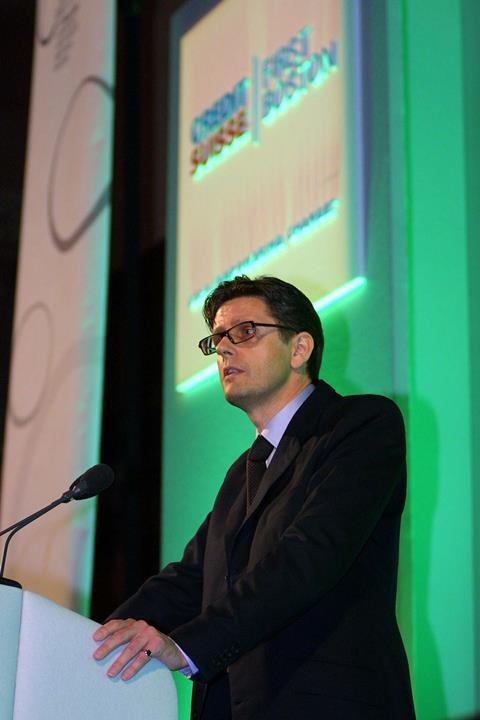
Liddiment’s speech also took aim at the BBC, attacking a creeping commercialism in its editorial decisions and aggressive counter-scheduling moves against ITV – Abraham notes this did come, conveniently, just after ITV was overtaken by BBC1 as the UK’s most popular channel.
But, he says, Liddiment’s “creative championing” remains relevant. “Looking back, this moment probably represented the high-water mark of linear PSB power,” he says.
Since then, the landscape “has changed beyond recognition”, with the US global tech platforms overshadowing the entire UK media industry in a way that was once “unimaginable”. “What I remember was an industry with some swagger on the global stage – aware of America but by no means cowed by it. I do miss that,” Abraham recalls.
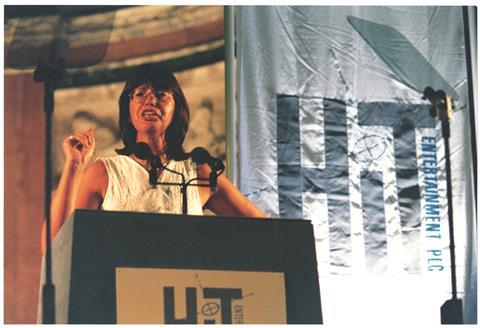
Broadcaster Janet Street-Porter, who delivered her speech in 1995, recalls: “My MacTaggart was about the ‘M’ people – male, mediocre and middle class (and too many) who monopolised telly and who stopped brave new talent breaking through to the mainstream.”
Little has changed, she points out, adding: “Middle-class niceness still has a stranglehold, and the M people are still in most of the top jobs.”
“Murdoch used his MacTaggart to slag off the BBC, which he thought was run by a supremely smug middle class. He revelled in his outsider status”
Janet Street-Porter, broadcaster
Her favourite, however, was that given in 1989 by Rupert Murdoch. Street-Porter recalls that “people were terrified”, ahead of the polarising media tycoon’s address.
“Murdoch used the opportunity to slag off the BBC, which he thought was run by a supremely smug middle class,” she says. “He revelled in his ‘outsider’ status – and was determined to set up a rival network with different values that, in his eyes, was more modern.”
Street-Porter isn’t the only contributor to reminisce about their own lecture. For another former C4 boss, Lord Grade, who gave his address in 1992, the screenwriter Dennis Potter’s 1993 lecture stands out, although, Grade admits, it might be “for the wrong reason”.
“He could write a hell of a lot better than I could,” the Ofcom chair explains, remembering Potter decrying what he saw as the creativity-stifling, top-down management style of the BBC and its tendency to back down in the face of politically motivated criticism – similar themes to those explored by Grade the year before.
“Of course, he was much more eloquent than I and brought it to life in a way that was quite shocking in its impact – but brilliant,” Grade says. “The way he said it, with his gift of words and his passion for broadcasting and the way he expressed himself, was telling – the most brilliant MacTaggart imaginable.”
Dorothy Bryne remains delighted with the outcome of her own lecture, given when she was head of news and current affairs at Channel 4: “Both The Sun and the Daily Mail devoted an editorial to condemning me for calling Prime Minister Boris Johnson a ‘known liar’ – what a terrific outcome.”
Looking back at the rest of the speaker cohort, she’s struck by the lack of ethnic and gender diversity. “They found it so hard to get a woman that they let two blokes do it twice – incredible,” she says. Former BBC director general John Birt delivered the lecture in 1996 and 2005, while Mark Thompson spoke in 2002 and 2010, first as C4 chief executive and then as director general.
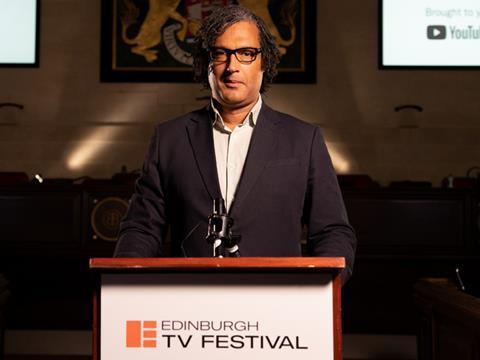
“No offence meant to either of them, but as speakers they’re no Winston Churchills,” Byrne says. Her favourite, she says, was Thorne’s – he spoke about the shocking consequences of the industry’s lack of accessibility for disabled people and “opened up minds to the way that the interests of people with disabilities have been overlooked”.
Thorne and the “brilliant” Coel, were “both searingly honest”, free from what Bryne describes as “corporate blah”.
Coel gets more appreciation from 2023 speaker Louis Theroux, who cites her lecture as the most impressive, “for the skill of its storytelling and the galvanic power of the story it had to tell”.
The revelations about her experiences of harassment and discrimination in the industry, were, he says, “ballsy as hell”.
With festival director Fatima Salaria acknowledging the continuing challenge of finding bold, heretical speakers to take the lecture into its next 50 years, that could be exactly what the MacTaggart needs.
Editor’s pick: Charles Allen lobs a hand grenade at C4
Thinking back over nearly 20 MacTaggarts prompts waves of nostalgia (although not for the uncomfortable wooden seats of [former venue] the McEwan Hall). The quality has fluctuated wildly over the years, but my favourite was my first, in 2006.
Charles Allen was never the best-loved industry figure. Dubbed ‘The Caterer’ for his background running the Little Chef chain, the ITV chief executive’s tenure was coming to an end just as I joined Broadcast. The clear expectation was that his MacTaggart would be an exercise in self-justification, explaining why buying Friends Reunited was almost as good an idea as launching ITV Digital.
Instead, he lobbed a hand grenade at Channel 4, accusing it of favouring the risqué over the risky, the banal over the bold, in a desperate pursuit of ratings. “When exactly did remit become a four-letter word at Channel 4?”, he pondered.
It was provocative and unexpected, cutting and witty. It was fun being in the press room minutes after the speech landed. C4’s PR supremo Matt Baker was frantically firefighting, and journalists were rubbing their hands at a bona fide PSB bunfight.
For very understandable reasons, the TV Festival has shied away from asking traditional broadcaster bigwigs to give the MacTaggart in recent years. But Allen’s lecture is evidence that if they’re genuinely prepared to say something of note, there’s no better booking.






No comments yet