



















As 34% of UK consumers plan to cancel a streaming service this year, EY’s latest research identifies key strategies platforms must adopt to retain subscribers
Streaming services have revolutionised the television landscape over the last decade, but they have also saturated consumers with content and inadvertently created an environment where grabbing and retaining the attention of viewers is increasingly difficult.
With so many disparate services competing for eyeballs, providing a fresh mix of content that consistently appeals to subscribers at a price point they are willing to pay is no easy task.
The next challenge is ensuring subscribers don’t drown in this huge sea of content and are still easily able to find something they want to watch.
Decoding the Digital Home
In the battle for customer mindshare, EY’s annual Decoding the Digital Home report offers streamers valuable insight into how consumers choose which streamers to back, and what streamers can do to reduce churn.
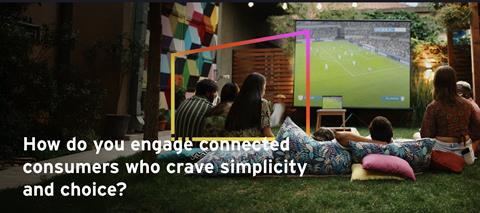
The Decoding the Digital Home study is EY’s annual report investigating consumer attitudes towards streaming and connectivity.
It’s a survey of 2,000 UK consumers, which reviews attitudes towards technology, media and telecoms products and services.
This year’s report showed consumers are looking for good value for money; an aggregator to help them find content; high quality content and a good range of content; as well as fewer and more relevant ads.
The survey highlighted an ongoing trend of subscribers following a pattern of subscribe-watch-cancel, with factors such as price rises and content being dropped from a streamer’s library singled out as common reasons for subscriber cancellations.
This year’s Decoding the Digital Home reveals that attractive monthly pricing remains the most decisive factor driving consumers to consider a new subscription.
Next up is extensive content libraries (35%), access to specific content (34%), and original or exclusive content (28%), which have all grown in importance year-on-year.
Households often subscribe to multiple paid platforms, but more than one-third (35%) of UK survey respondents say they are interested in reducing how many platforms they pay for.
This is largely down to a lack of favoured content on a particular platform, coupled with the desire for cost savings. 34% of consumers plan to cancel a streaming service in the next year.
The good news is 41% of survey respondents have resubscribed to one or more platforms they previously cancelled, which is up from 33% last year.
Added to this, just over a third (35%) have subscribed to a streaming platform in the last 12 months due to the availability of live sports on that platform.
The content mix
Martyn Whistler, director, media and entertainment sector at EY UK&I, said: “In recent years, streaming services have added more and more content to their portfolio.
Sometimes the difference can be from something as simple as one or two pieces of premium content that drive traffic.
“We’ve seen in our Decoding the Digital Home report that sport is still something that drives traffic to services, largely because sport is still the bedrock of the water cooler conversation.”
Vidisha Kanchan, who focusses on AI strategy and transformation for media companies, at EY Studio+, adds that “there’s a real appetite in the UK for content that feels culturally familiar, particularly distinctly British shows like Amandaland and Happy Valley.”
In May, Broadcast is publishing a second article covering EY’s Decoding the Digital Home study that goes deeper into the different content strategies streamers are adopting to help keep their libraries fresh and appealing for both new and existing customers.
The user experience
The user experience – in particular, the ability for subscribers to easily find content they want to watch in any library – is crucial for retaining their custom.
Consumers are frustrated by complex interfaces and excessive options, yet recommendation engines can sometimes complicate content discovery rather than simplify it.
However, AI is set to overhaul how users find content, offering conversational search as well as contextually aware promotions.
40% of survey respondents in EY’s Decoding the Digital Home report say they would find AI-assisted content management useful.
“No one wants to spend ages trawling around a site looking for something, and these companies spend a lot of time doing user experience testing to ensure this doesn’t happen, but I’m not sure a lot of the streaming services have got that right yet,” says Whistler.
“When you’re confronted with a user interface that has 50+ options of things to watch, or it has multiple layers of menus that you have to click through to get down to something you want to watch, that becomes immensely frustrating.”
Recommendation engines “throw loads of stuff at you,” he adds. “It may be stuff that’s recommended for you, but it isn’t always right and may not be anything you’re interested in. Just because you watched this, doesn’t automatically mean you’ll want to watch these 20 other things.”
Whistler advises streamers go back to basics and simplify the user experience. “Simplifying the experience for the consumer would certainly be appreciated based on the research that we’ve got. Maybe focus on specific content or specific genres rather than just giving everyone the option to view everything and leaving them to dissect it all,” he says.
Marketing for the AI age
AI is turning marketing into an always-on system. Agents reshape discovery, AI scales content, and leaders must build trust and governance.
How is AI reshaping the future of marketing?
- AI is shifting marketing from campaign cycles to an always-on operating model that adapts continuously to customer signals.
- AI agents and new discovery patterns will increasingly shape how customers find and evaluate brands, often beyond owned channels.
- Leaders must set governance and guardrails to scale AI safely, protecting brand trust, quality and human judgment.
Click here to find out how EY can help marketing leaders provide growth by connecting strategy, data and technology, powered by AI and proven by results.
According the EY’s survey, consumers also want more aggregation of content, so they don’t have to keep switching between platforms.
“What we’re seeing is three different types of aggregator model. The first pulls all these different streaming services onto a single platform with a single bill and a single interface.” says Whistler.
“It makes life simple and it means you can do a voice search that will take you down into those different apps, so it becomes a much more seamless experience.”
It also means that streamers don’t have to go out and look for their next 500,000 or million subscribers, instead they can “just piggyback on what aggregators are doing,” says Whistler.
The second trend EY points to is aggregation through M&A. We see plenty of this and at scale, which brings together different suppliers of content under the same roof. “You’re probably going to see more of that,” says Whistler.
A third type of aggregation is when providers bring other content into their portfolio. We see this consistently, whether it’s older, teaser content designed to whet the appetite and entice consumers to other services or simply access to bigger content libraries.
Meanwhile, the BBC has done a deal with YouTube to put more of its content on there.
“So, we’re seeing these aggregating models, some of which are quite traditional in the content acquisition, content sharing world. Some of them are more dramatic, like M&As, and some of them are a logical extension of the multitude of streaming services coming together to make life easier for consumers,” sums up Whistler.
Binge watching
The way streamers release new content is also a consideration for consumers. Some opt to release one episode a week, which is “very unfamiliar to a generation that’s grown up with binge watching,” says Whistler.
For streamers releasing complete series for binge‑watching, Whistler recommends putting more effort into varying the ads viewers are shown, with a greater focus on contextual advertising. “On some of the ad funded models, you get the same adverts repeating themselves ad nauseum through all the ad breaks,” he says. “So, by the third episode, you know the adverts back to front. That ad variation isn’t something the streaming services have worked out yet, and it’s disruptive to the experience.”
Power to the People
To help reduce churn, Kanchan believes streamers should let consumers lead the experience. Contrary to what you might expect, enabling subscribers to sign up and cancel subscriptions with relative ease often conversely helps retain them as customers.
Kanchan explains: “Many mobile and broadband bundles now include streaming services like Netflix at no extra cost, and telcos are increasingly looking to give customers the flexibility to switch these services on or off each month. While it might seem that allowing customers to switch off could accelerate churn, a single app that brings together mobile and streaming subscriptions and makes it easy to toggle services based on what they’re watching or when content expires can actually increase the likelihood that customers switch those services back on in the future.”
“You’re basically betting on the fact that you’re going to have a higher return of customers because of the experience you’re providing,” adds Kanchan. “I think streaming platforms need to step away from using pricing as the only commercial lever to retain consumers because a frictionless, better viewing experience and the right content slate for your audience means you’re going to have a much higher return of customers, even if you offer them an out.”
“In scenarios where you use price or a contract to trap customers, most people don’t come back because cancelling and signing back up may feel unnecessarily complex.”
One size doesn’t fit all
The ‘one size fits all’ approach streamers tend to adopt is also looking increasingly dated now technology – most obviously AI – has opened opportunities for a much more personalised offer.
Offering a bespoke service tailored to individuals is likely to appeal more to consumers and reduce the likelihood of them looking to cancel their subscriptions.
EY has researched what it calls Digital Home Personas and has devised seven different personas in the digital home. These are Premium and pleased; Digital devotes; Informed savers; Content comes first; Beyond the bundle; Disengaged users; and Drowning in Digital.
Any digital home is likely to have two or more of these personas, so the ‘one size fits all’ approach doesn’t work. The challenge for streaming services is to differentiate their service in a way that speaks to the various personas EY has identified.
Find out more
To find out more about EY’s media research and the services it offers streaming platforms and the wider television industry, click here or click the box below.
Broadcast partnered with EY to create this feature






No comments yet