






















Just like mainstream sports, significant returns are up for grabs, says Jonathan Broughton
While England’s World Cup campaign ended in valiant defeat last week, eSports players around the world are warming up for their own championship in August: The International 2018.
Their professionalism and attitude to teamwork should offer some clues for how TV producers can crack covering the emerging format, which has been a huge success online but has yet to make much of an impact on TV.
Past attempts to broadcast eSports have often fallen flat – partially due to its niche nature, but also due to channels choosing to broadcast segments rather than full tournament coverage.
The World Series of Video Games cancelled its MTV programming slots in 2007 and Champion ship Gaming Series, modelled after the NFL, collapsed in 2008 after losing its backing, which included DirecTV and Sky.
Launching soon! Broadcast Intelligence’s Insights will offer readers an in-depth analysis of the media industry. Register your interest at www.broadcastintel.com
It’s perhaps unfair to lay the blame squarely at broadcasters’ feet, though, as older games did not lend themselves well to full tournament broadcast, being repetitive in nature and somewhat inaccessible for the casual viewer.
Modern eSports are different – with a focus on teamplay over the individual, and complex stratagems similar to those found in professional mainstream sports.
This has helped to draw in fans of traditional sports, and prompted major media players to invest in tournaments, leagues and teams.
Popular game-streaming platform Twitch increased its viewing from 192 billion hours in 2014 to 355 billion last year, and market intelligence company NewZoo predicts the industry will be worth $1.6bn (£1.2bn) by 2021.
Popular games
In terms of hours viewed, by far the most popular eSports are the Multiplayer Online Battle Arenas (MOBAs). These games account for more than half of Twitch’s eSports viewing and take the lion’s share of tournament prizes – The International 2017 had a prize pool of $24.69m (£18.68m). It’s no accident that this has occurred.
Modern eSports were designed from the ground up to resonate with this viewership. Teamplay is core, but rather than relying on an arbitrary set of synergies and co-dependencies, the tactics of the medium come in the form of movement, balance, goals and careful map design.
Essentially, eSports are successful when they draw directly from the design of mainstream sports.
Much in the MOBA world will seem alien to fans of traditional sport – there are no balls to kick in a game like DOTA.
However, ignoring the specific rules and instead looking at movement, balance, objectives and map design, some familiar themes emerge: designated boundaries (like the markings on a football pitch); player positioning; and team tactics (when to defend or attack).
Friendly areas must be defended and opposing areas attacked – leading to a balanced approach that normally results in offensive and defensive player roles being assigned. Sounds a bit like England v Croatia, doesn’t it?
ESports fans have also begun to mimic the habits of traditional sports viewers. Teams are more important than players, transfer windows are eagerly watched, and a significant proportion of audiences now comprise non-gamers who are simply fans of the format.
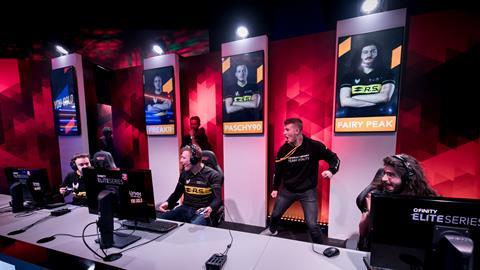
And broadcasters are re-evaluating their approach to eSports too: last year, BBC3 streamed the Gfinity Elite Series One, while Sky and ITV partnered with sports network Ginx to launch a dedicated eSports network. Turner, ESPN and BT Sports have also invested.
For savvy producers and broadcasters, engaging with the format as it emerges could prove a wise gamble. Just as eSports have begun to mimic real sports, so could the broadcast of eSports provide meaningful returns.

Jonathan Broughton is lead analyst for the Insight arm of Broadcast Intelligence






No comments yet