

As lead VFX studio on Surviving Earth, Milk VFX spent two years building a scientifically grounded prehistoric world
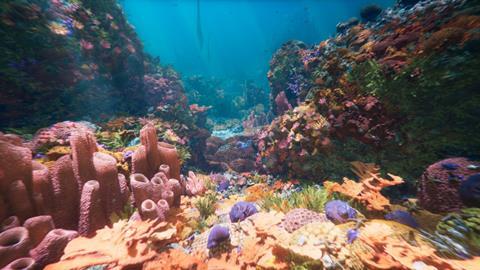
Milk VFX was the lead visual effects studio on Surviving Earth, the series co-produced by Universal Television Alternative Studio, a division of Universal Studio Group, and Loud Minds.
Working closely with executive producer Tim Haines, production VFX supervisor Jean-Claude Deguara, VFX executive producer Kate Vaisey and VFX producer Corrie Callender, Milk collaborated with partner studios Lola Post, FIN VFX and Floating Rock to deliver the series’ visual effects.
Creative direction at Milk was led by VFX supervisor He Sun, alongside animation supervisor Joe Tarrant and assets supervisor Harsh Borah, with senior VFX producer Katherine Smith overseeing production. Additional creative leadership was provided by VFX supervisors Andrew Morley, Andy Quinn, David Sadler-Coppard and Donal Nolan, supported by VFX producer Louisa Hoi-Tung Leung.
Across a two-year collaboration, Milk completed over 1,000 shots for the series. The work encompassed 73 hero creature assets and more than 100 environments, including 13 real-time environments built in Unreal to support the show’s extensive previs, virtual art department work and hybrid real-time workflows.
The biggest challenge for Milk was building a large, scientifically grounded population of prehistoric creatures. Working closely with palaeontologists, Milk developed hero species, from insects and marine life to mammals, reptiles and dinosaurs. Early paleoart concepts were turned into digital maquettes, then sculpted, rigged, textured and groomed into fully realised creatures.
Fossil research, skeletal reconstruction, anatomy and modern behavioural studies shaped everything from muscle structure and gait to skin detail and subtle movement. Rigging and surfacing were designed around believable biomechanics and surface details such as scales, feathers and translucent skin. Scientific accuracy guided each stage, with animation balancing anatomical correctness and natural, expressive performance. Milk’s creature-FX system added muscle dynamics and skin sliding to improve realism.
Throughout production, Haines encouraged the VFX teams to embrace both scientific authenticity and emotional storytelling. VFX was embedded from the earliest stages, fostering a collaborative environment in which showrunners, directors, DoPs, scientists and artists worked as a unified group.
The project began with the team meeting with Haines to define the scale and ambition of the series. They then developed an approach that categorized creatures into primary and secondary assets based on their role in the story, helping guide how the work was prioritised throughout production.
The team used a mix of traditional VFX techniques and new, show-specific methods. One of the most notable was a shooting strategy known as “The Arena.” This involved blocking out scene movements on location using scale-accurate creature cutouts ranging from hand-sized to over 20 feet.
By mapping specific areas and keeping animation within defined zones, the team could capture multiple camera angles from a single performance animation, giving them more flexibility in the edit. The success of these longer sequences relied heavily on the skill and experience of the animation team.
The first year of production focused on preparation, filming, and processing. Footage was delivered in structured blocks, allowing different stages of the process to run in parallel and keeping things moving across departments. Production itself was complex, with four directors working simultaneously across multiple global locations. The team filmed in extreme environments, including high altitudes and temperatures exceeding 50°C, across South America, New Caledonia, Europe, and the United States.
Milk introduced several production innovations developed specifically for the demands of Surviving Earth. These included a new cross-department workflow uniting real-time and traditional VFX pipelines; bespoke systems for managing large volumes of creatures and environments; and specialised tools for enhancing skin, fur and fine surface detail. Together, these advancements enabled the delivery of more than a thousand complex creature- and environment-heavy shots within the schedule of a factual television production.
Unreal Engine played a central role in Milk’s workflow, from previs through to post-production. Key sequences were previsualised in Unreal to plan shots and on-set camera moves, with some assets refined for final shots. The Coral Forest sequence is a standout example, combining a large practical set with Unreal-driven planning, virtual camera passes and CG extensions. Milk also created a small virtual production setup, pairing a miniature physical build with a digital backdrop to capture distinctive micro perspective shots using real-time lighting.
Recreating prehistoric environments required a blend of on-set capture, real-time worldbuilding and digital artistry. Terrain data and photography gathered in Malta, New Caledonia and Iceland were transformed into prehistoric environments, ranging from ancient seafloors to towering Prototaxites forests. Milk also developed a custom procedural landscape generator within Unreal Engine, allowing artists to create expansive environments quickly while keeping full creative control.
One of the most complex scenes was a stampede featuring Edmontosaurus and Nanuqsaurus, requiring intricate animation, crowd simulation and detailed creature-FX to convey scale and urgency. A dramatic flood sequence needed large-scale water and environment work, with one shot created entirely in Unreal Engine. Another highlight was the bioluminescent Endoceras sequence, where layered effects and atmospheric compositing created a striking underwater set piece.




No comments yet