











As younger audiences flock to the likes of MrBeast, The Sidemen and DanTDM, traditional TV production and post firms are having to take a look at how they fit into the mix. Michael Burns explores where the two sectors can best collaborate
The media landscape has shifted dramatically as solo creators, armed with little more than a smartphone and a direct line to their audience, disrupt a market still built around traditional formats. But what happens when creator-led IP scales to the point where digital-first broadcasters and brands want in? And what do established TV workflows actually contribute?
Lucy Smith, who founded Fawkes Digital after years of working in traditional TV production, has pivoted away from “chasing narrowing commissioning opportunities” towards funding opportunities between creators and brands, and digital broadcasters such as Channel 4.0, Good Food, Garnier and BBC iPlayer.
The aim is to get IP in front of audiences faster. A recent example is CEOs Go Wild, hosted by Tinuke Oyediran. The first episode was shot for £250 on two iPhones and released on LinkedIn, with six episodes now completed.
“Broadcasters are audience curators, studios are IP creators,” says Smith. “Creator shows often reach bigger audiences on YouTube than they do when they transition to a broadcaster, but broadcasters like Netflix and Amazon are realising that colossal creators like MrBeast and The Sidemen can actually draw their millions of subscribers to their platforms.
“Digital-first studios own something powerful – formats that have already been derisked with an audience”
Lucy Smith, Fawkes Digital
“Digital-first shows often begin life as an MVP [Minimum Viable Product] to gauge audience reaction before scaling, but always retain a lean digital production set-up to maximise the money going on screen,” she adds. “This test-and-iterate approach means that digital-fi rst studios own something powerful – entertainment formats that have already been derisked with an audience.
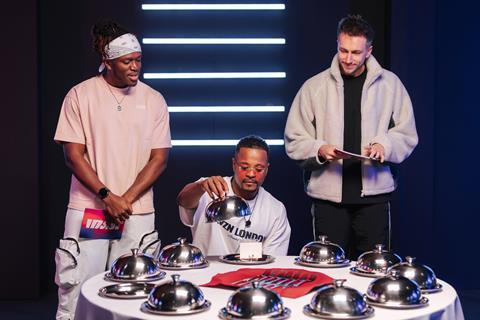
“If Netflix is going to throw money at something, then of course you hire the best crew, build a more impressive set and – crucially – cast the biggest creator talent.”
Bronagh Monahan, co-founder of talent management and production company MonRae Productions, has spent years advising talent on what resonates online. She says broadcasters now actively need digital talent.
“The challenge is translating something that works on YouTube or TikTok into a format that still feels authentic”
Bronagh Monahan, MonRae Productions
“The challenge is translating something that works natively on YouTube or TikTok into a format that still feels authentic, but can scale for broadcast,” she says. “We don’t approach that like a traditional production company. Economically, we’re leaner and, creatively, we’re closer to the audience.”
Studios like this act as a bridge, “helping broadcasters reach audiences they struggle to engage, while ensuring creators retain the qualities that made them successful in the first place”, says Monahan.
In 2021, MonRae Productions developed Let’s Game for Sky Kids (120 x 10-minute episodes) featuring gaming influencers DanTDM and Ethan Gamer. The show remains one of the channel’s most-watched and its spin-off s are still going strong.
Traditional production isn’t sitting still. This February, ITV Studios launched Studio 55, led by executive vice-president of brand and commercial partnerships Will Scougal. It follows last year’s launch of Zoo 55, a digital label that ties brands into social media, gaming and streaming platforms.
According to Scougal, Studio 55 acts almost like a commissioner.
“Studio 55 connects creators with ITV Studio thinking and brand partners,” he says. “In so doing, we help creators build longterm strategic partnerships built on IP, which can also extend into licensing partnerships.”
“The creative ambition of creators can be realised in ways that are only possible with a big studio”
Will Scougal, Studio 55
Distribution is a core advantage. Studio 55 partners with Zoo 55 to build collaborative models that allow “content to meet people where they are” and help scale revenue quickly.
“One of the largest benefits to partners is in the way we approach data and insight,” Scougal adds. “The creative ambition of creators can be realised and distributed in ways that are only possible in partnership with a big studio.”
Staying nimble
The structure and speed of ‘digital-fi rst’ can be very different from content formatted for traditional broadcast, “but we aim to remain nimble from pre to post. We can scale up as needed,” says Scougal.
Smith describes similar flexibility. “If we’re self-funding a test format, we’ll shoot it on iPhones and edit in-house.”
External remote post-production help is brought in on bigger projects. “This usually takes the form of senior freelance editors working remotely and using Frame.io to ‘note up’ from the execs, commissioner and brand side,” says Smith. “We have yet to use a bigger post-production facility, but that could well change as the budgets of our projects scale.”
Smith says branding the show – including logos, thumbnails, format graphics and merchandising – can be as important as the show itself: “We always bring on world-class graphics specialists early in pre-production to create a bespoke brand around each entertainment format that can be embedded in the shoot.”
She adds: “The deliverables definitely change when working for a broadcaster. There’s Ofcom QC [required] when delivering for a broadcaster – even for a YouTube-first show.”
A key decision for MonRae on Let’s Game was resisting the instinct to overcomplicate. “The show was produced remotely, using the talent’s existing setups, in the same environments their audiences already recognise,” says Monahan. “It allows talent to work in a way that feels natural to them.
“We weren’t trying to upgrade the aesthetic in a traditional TV sense,” she adds. “In a way, the production model reflects the audience’s behaviour: they’re already watching this kind of content, in these formats. The job is to meet them there, not pull them somewhere unfamiliar.”
Smith notes that fully crewed-up entertainment formats massively increase professional responsibility, which is second nature to TV companies.
“Robust duty-of-care protocols, location release forms, health-and-safety vetting, as well as Ofcom regulations, may have never occurred to small digital teams,” she says.
Scougal agrees, saying Studio 55 stays true to ITV Studios’ production values, such as duty of care, diversity and representation for creators and brands. “We’re finding that there’s a real ambition to create larger-scale, longer-term partnerships that can benefit as much from the infrastructural and operational expertise as they do from creative and craft support that we can bring.”
Coming in as a ‘fixer’ with the assumption that creators need TV companies to professionalise them is unlikely to impress, and some facilities are adapting their models instead. Post house Vaudeville Sound is deliberately importing the infrastructure of professional TV production into the creator space.
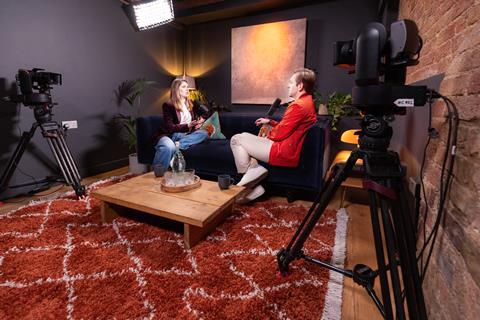
Built in partnership with The Finish Line, it has launched a podcast and video production studio in Shoreditch to broadcast standard, equipped with three Sony FR7 robotic cameras, Nanlite professional lighting and Shure SM7B broadcast microphones.
According to founder and chief executive Daniel Jones, Vaudeville’s model is a fullservice offering rather than a dry hire, with producers, technical crew and support built in. “A lot of podcast studios say, ‘Here’s a room, go for it. Help yourself’,” says Jones.
“But everything’s an add-on. If you actually get to three cameras and an engineer at the level we’re offering straight off the bat, we’re the same price, if not a bit cheaper, than all those add-ons total up to. We’re bundling that in because for us, podcasting is new, but audio isn’t. This has to be a wrap-around care that we give to any production.”
Need for speed
The robotic cameras are not about flexibility; they are about speed and reproducibility. Jones employed a DoP to build a library of lighting and camera presets so that a creator can walk in and be shooting within minutes. “A podcast content creator would not expect to be hanging around for three hours while someone adjusts the lighting,” Jones says. “They want to go in and press record, but with TV studio options.”
The entire pipeline runs within the Blackmagic ecosystem – capture via ATEM, edit, audio and grade in DaVinci Resolve. The rationale is straightforward: keeping everything in one platform delivers the turnaround speed that creator workfl ows demand. AI handles social clips, best-of cuts and line-cut adjustments automatically from a transcript. Live streaming is available as a package option. At the other end of the scale, a full grade, mix and graphics package is also on offer.

What distinguishes Vaudeville from the average podcast studio, Jones argues, is less about the cameras than the compliance infrastructure behind them: “We deliver to Apple, Disney, Amazon, Netflix, BBC, Channel 4 – and they’re expecting that content to be handled and delivered at the same level as a TV show.”
That kind of broadcaster-grade security and delivery capability is not something most podcast studios provide. As the lines between creator content and premium platform content blur, Jones is betting that it will increasingly matter.
Over in Soho, the Dean Street Podcast Studio has deployed VeePod, which applies virtual production thinking to podcasting. Founder Rob Chandler positions it as a cost-efficient middle ground for price-sensitive creator budgets. It offers infinite customisable digital sets without physical builds, addressing both cost and creative limitations.
“The pricing is roughly £200 an hour for studio time and £200 for editing,” he says. “For creators, that can feel expensive, but with sponsorship, it becomes viable. Compared to traditional production, it’s low-cost.”
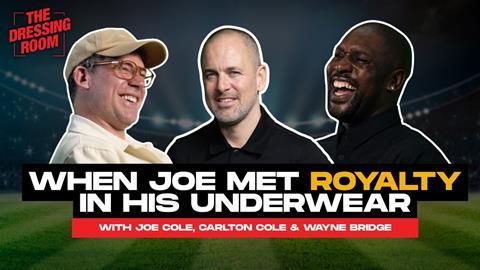
It has also been gradually building. “We’ve picked up projects like Gabby Logan’s podcast [The Mid·Point] and a football podcast [The Dressing Room with Joe Cole, Carlton Cole & Wayne Bridge], but more recently, we’re seeing higher-level creators, particularly those coming from TikTok, starting to use the studio.”
“Instead of filming everything themselves on an iPhone, creators can come to a studio, batch content and increase output”
Rob Chandler, VeePod
Such creators are looking for a more efficient way to produce content at scale, something more professional but still predictable in cost. “They become time-poor,” says Chandler. “So instead of filming everything themselves on an iPhone, they can come into a studio, batch content and increase output.”
Crucially, the workflow remains familiar. “Creators have the idea, they can book it, walk through the door, deliver, leave, get the footage, and do what they need to do instantly. That’s their workflow. That’s the run-and-gun process that they’ve developed.”
He cites a beauty influencer adapting quickly to a multi-camera set. “They’re used to small setups, but they know how to deliver to camera. It’s just a case of adjusting to landscape and multiple angles.”
Editing can be handled by VeePod or handed back to the creator.
Chandler says creators are starting to adopt more structured production, with volume being a key driver. He talks about creators who would normally film multiple pieces at home, having to change clothes and locations to avoid ‘viewer fatigue’.
“The advantage of using VeePod is that we can just change backgrounds, instantly, from simple colours to more complex environments, without them having to move location.”
Middle ground
It also offers more flexibility for brand integration. “We can do anything,” says Chandler. “From having a product placement on a shelf or in the background, to having a double-decker bus driving past outside the window with an advertising sign on it.”
As Chandler points out, a simple creator video can be made very cheaply, whereas even a basic corporate video can cost tens of thousands when you factor in larger crews and traditional workflows. Facilities like VeePod and Vaudeville off er a middle ground: fast, structured production that aligns with creator workflows while introducing elements of broadcast discipline.
Too much discipline doesn’t suit the DIY ethos of creators. “Creators are used to autonomy; take that away, and you risk losing what makes them compelling,” says Monahan. So it becomes a balance: structured where it needs to be and flexible where it matters most. That hybrid approach is probably where the future of this kind of production sits.”






No comments yet