

















“If we stop requiring it to be another landmark and appreciate it as just another wildlife series, Blue Planet III is a corker”
Blue Planet III, BBC1
“We settle down in front of a fresh Blue Planet, trying to escape a weary sadness that stalks us from several angles. It is a new natural history show narrated by the 100-year-old David Attenborough, so there cannot be many more of those to enjoy. It is a Sunday-night showcase on BBC One, which is nothing like as significant a shared cultural event as it once was. The film-making can’t possibly be as revelatory as the original Blue Planet in 2001, and even the impact Blue Planet II had on conservation in 2017 feels unrepeatable: the attention it brought to plastic pollution in the ocean turned out to be a minor blow struck in a battle against environmental catastrophe that we have, since then, continued to lose. But if we stop requiring it to be another landmark and appreciate it as just another wildlife series, Blue Planet III is a corker. Its excellence is a bright flash of hopeful defiance, and if it often falls into familiar patterns, that familiarity is a comfort.”
Jack Seale, The Guardian
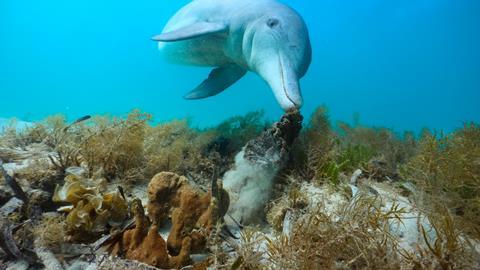
“Blue Planet III (BBC1) is another magnificent achievement, a marvel of a series that has been four years and 100 expeditions in the making, and which yielded a remarkable discovery about dolphins. As the “how we did it” section at the end revealed, the team, working in Shark Bay, Australia, had been determined to solve the mystery of why bottlenose dolphins carry sea sponges. It had previously been thought they carried them to protect their snouts while foraging on the seabed, but brilliant underwater footage proved this wrong. A pregnant dolphin used it as a stopper or a bung to plug up the escape holes in “bommies” — isolated outcrops of coral reef in which fish hide from predators. It was an extraordinary spectacle seeing the dolphins using the sea sponges, as we would use wire wool in a mouse hole, to stop their prey fleeing back into the reef’s protective cavities. The planning, the intelligence! Attenborough said it was one of the most sophisticated examples of trap-setting in the animal kingdom. And respect to the camera team, who had to swim in water teeming with tiger sharks to get this precious footage, which will surely bag them an award.”
Carol Midgley, The Times
“As is the modus operandi of any nature documentary worth its salt, Blue Planet III is threaded through with the conservationist message that all this underwater spectacle and life is in grave danger, culminating in the story of the disastrous bleaching of coral. Attenborough’s voice, sonorous and soothing as it is, may as well be a foghorn sounding an alarm – the same one it has been sounding for the past three decades. At the same time, much of the message doesn’t even need to be said. The sight of two polar bears, a species that has become totemic in the climate change conversation, playing together in Norway says more than Attenborough ever could. Blue Planet III could well be one of Attenborough’s final projects, and it would be a fitting legacy for the broadcaster: spectacular and moving, a call to action that manages to uplift even amid obvious catastrophe.”
Annabel Nugent, Independent
“In the interest of balance, Attenborough’s scripts attempt to mitigate the doom by highlighting interventionist missions to repair some of the damage to species. Here we see newly hatched turtles or young seal pups, thwarted by obstacles unseen by previous generations, live to fight another day. The message is pushed that mankind – and not just the admirable marine biologists and resourceful natural history film crews – can get it right too. The quotas set in 2013 for harvesting menhaden fish have seen huge population surges of marine species near New York City. The results are spectacular and, because they involve splashing humpbacks, lucrative. Now if they can just preserve Attenborough too…”
Jasper Rees, Telegraph




No comments yet