














“Who needs the Duchess of Sussex when you have a show that is already as daft and sure of itself as this?”
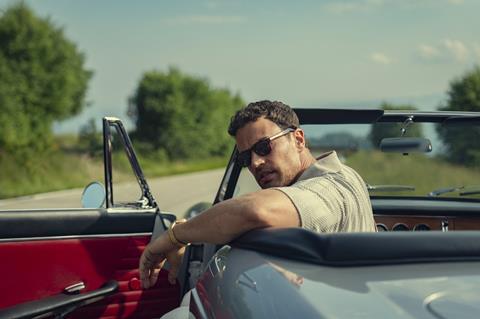
The Gentlemen, Netflix
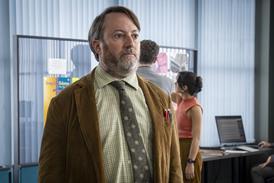
“You continue to sense that Ritchie is keen for the show, which started as a 2019 film of the same name, to serve as a meaningful fable of Eddie’s moral descent. There is a bit of Christian theology thrown in later, along with some folklore elements, when Susie’s imprisoned dad, Ray Winstone’s growly kingpin Bobby Glass, communes with a mythical being in a lakeside sauna. But this is a show far too in love with carnage, wisecracks, lavish cinematography and fast editing to hold on to any depth or seriousness for too long. You come to this for chases, showdowns and more baroque deaths than you can shake a shooting stick at (you just know that when a tiger is introduced in episode one it will be lunching on human flesh before the credits roll). Who needs the Duchess of Sussex — a rumoured casting addition for the next series — when you have a show that is already as daft and sure of itself as this?”
Ben Dowell, The Times
“There’s a certain comfort in Ritchie’s commitment to the bit, a sense of reassurance in the knowledge that in these restless times, his fetishisation of the gentry and preoccupation with uninhibited wide-boys remains immutable. But it ain’t half slow, ma’am. For all its international hijinks, its oi-oi-saveloy geezerisms, you may still find yourself wishing the whole thing would, in the words of Bobby, “gerra faaackin’ move on”.”
Sarah Dempster, The Guardian
“The second series of Guy Ritchie’s The Gentlemen is darker than the first. It’s also less funny. The only hilarious thing about it now is the rumour that the Duchess of Sussex has been in advanced discussions to join the show. Meghan to appear in an operatic drama about an aristocratic family with a warring heir and spare? Whoever came up with this stunt casting idea is a genius. The show has been a big success for Netflix, and it’s not hard to see why. The Ritchie clichés may come thick and fast – drugs, Cockneys, gangsters, Mockneys – but series one was fun. It barrelled along with a healthy sense of the ridiculous. Series two takes up the story a year on, and there is a nastier edge. The best comic characters, coke-addled toff Freddy and space-cadet weed-cultivator Jimmy, don’t get much of a look-in, although we do get an amusing Hugh Bonneville as a bouffant-haired lord. Mostly, though, we follow Eddie Horniman (Theo James) as he gradually loses his moral compass.”
Anita Singh, Telegraph
“If this gangster drama took itself more seriously, the execution of a Lincoln’s Inn lawyer at his desk would be too much to stomach – with a clear plastic bag over his head filling up with blood, before his brains are blown out. But in The Gentlemen, that’s all part of the hurly-burly. Geoff will tut-tut, and the Duke will murmur some urbane quip, and the mess will be tidied away as easily as the butler empties the drawing room ashtray of cigar butts after a late night. The real gristle of the show is provided not by Theo James, who subscribes to the Roger Moore school of eyebrows-only acting, but by Kaya Scodelario. She plays Susie Glass, daughter of Bobby, and the brains behind the Duke’s dope empire.”
Christopher Stevens, Daily Mail
“Adapted from Ritchie’s own 2019 film, The Gentlemen has been a slow-burn hit for Netflix. It took five months, after the show premiered in 2024, for a second series to be commissioned; now a third has been ordered before the second has even aired. The word-of-mouth success could be attributed to the show’s playful subversion of genre conventions, which might have made it hard for viewers to know what to expect but provided several standout shock moments. In its second series, the sensibility is clearer: a gangster romp, so ludicrous that it ascends into the realm of comedy. Eddie and Susie tussle with Peruvian cartels, corrupt Emirati royals, and industrial action amongst their cannabis growers. It is a world away from The Wire or even The Sopranos. This is Goodfellas for a generation raised on comic book movies.”
Nick Hilton, The Independent
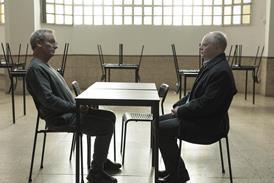
Stolen Babies, BBC2
“The dehumanisation, the cruelty is unfathomable and the film leaves the viewer to sit and wrestle with the accruing conundrums. To say that it is the result of different attitudes is only to push the bafflement back a stage: how could they, we, anyone privilege the importance of marriage over the right of a mother to keep her child; how could class – and it was overwhelmingly young working-class women’s babies being given to middle-class couples – be such a blinding factor; how could religious belief have such a chokehold on a society that rage-fuelled punishment could be visited on women with barely a murmur of reproach; how could babies be treated like commodities?”
Lucy Mangan, The Guardian
“A staggering feature-length documentary about forced adoption in the UK, is the kind of film that knocks you sideways. It is like something from The Handmaid’s Tale: it shows in heart-rending detail how, between 1949 and 1976, more than 250,000 unmarried mothers in the UK were forced by the state to hand over their newborn babies for adoption. Only this year did Sir Keir Starmer finally make a public apology for what happened. One way in which this scandal was enacted, the documentary makes painfully clear, was through the suffocating power of language. The women were addressed at the time and for years afterwards as “unmarried mothers” rather than “mothers”. Their plight was framed as a moral transgression rather than young girls falling in love and getting pregnant by mistake. As all of the first-hand testimony here describes it, the women had somehow “failed”. Thus, when the social workers came to take their child away and give it to someone else, it went to someone “better”.”
Benji Wilson, Telegraph



No comments yet