






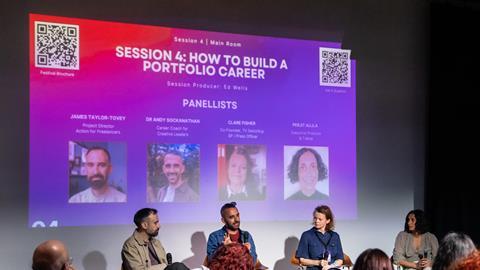
Breaking down silos, shaking up recruitment practices and expanding careers discussed at first of two conferences to support freelancers
The inaugural Freelancer Fest took place on 13 June delivering clear messages to freelancers who are grappling with tough market conditions and facing huge levels of uncertainty in their careers.
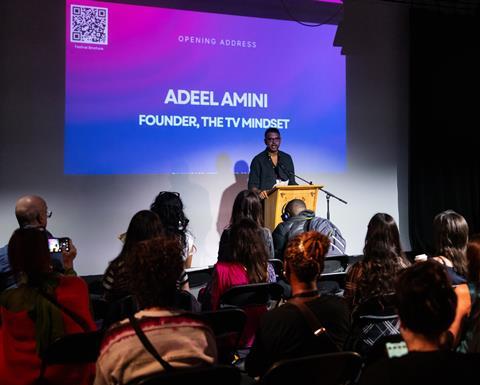
Created by TV Mindset and Action For Freelancers, the day of panels, workshops and networking took place in east London, and was driven by “a burning mission to break down barriers”, according to TV Mindset founder Adeel Amini.
The event aspires to connect and empower freelancers, helping them identify their next career move and to feel more connected and less alone.
The second free Freelancer Fest takes place in Glasgow on 21 June, and here are Broadcast’s top five takeaways from the London event.
Broadcasters need to get closer to freelancers
Former freelancer-turned UKTV commissioning editor Emile Nawagamuwa delivered a keynote address calling for greater transparency between “the people who make the TV and the people who transmit it”.
“Broadcasters and freelancers must communicate and collaborate better than we currently do,” he said. “We desperately need to move away from this distant, arm’s-length relationship that so many freelancers tell me they’ve experienced.”
There is, he said, “a really defined client/supplier barrier” between production companies, freelancers and broadcasters, which is compounded by the fact that those working at broadcasters are on staff contracts. Nawagamuwa acknowledged that some imbalance is inevitable in a situation where one party ispaying the other, but suggested commissioners needed to make more effort to reach out to the freelancers working on the projects they order.
“I think one of the most important things is for broadcasters and commissioners to be curious about freelancers – to get to know them, to speak to them as human beings, as colleagues,” he said, adding that they should be treated with “the same high standards and respect that we treat our valued contributors, and even our talent”.
Recruitment needs to change
Given the lack of roles currently available in the industry, when it comes to recruiting people for the jobs which do exist,
Disability consultant and creative strategist Ally Castle believes that when it comes to recruitment, the industry is still “stuck in old systems”, where people are alerted to jobs by word of mouth or closed WhatsApp groups.
Ideally, she said, every job would be advertised on a public platform, but she acknowledged this is unlikely to happen any time soon. And she warned that, given the scarcity of available roles at present, “disproportionately, the underrepresented minoritized groups are going to be the ones that are more negatively affected”.
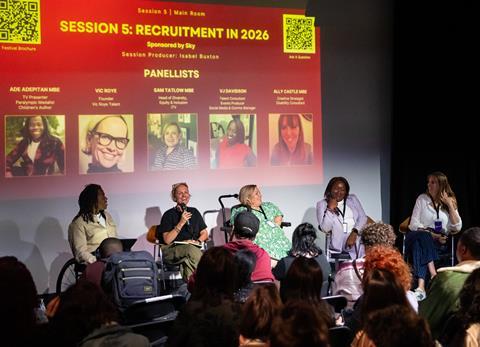
Sam Tatlow, head of diversity, equity and inclusion at ITV, agreed.
“We’re in a kind of middle period where we’re still following old processes, while in a new era of television, where actually we all need to be working slightly differently,” she said.
“There’s fundamentally a problem with supply and demand – there’s, there’s lots of people, and not as many opportunities out there,” she said. “And the opportunities that that previously enabled people to fill gaps within their careers, no longer exist.”
Fellow panellist, talent manager Vic Roye said there are “absolutely no excuses” for failing to advertise a job widely, irrespective of how soon after greenlight production needs to start. “I can get an ad out in 15 minutes… and I get the majority of CVs through in the first 12 to 24 hours,” she said.
Portfolio not pivot
As opportunities in TV dwindle, many freelancers are considering where else the can make the most of their skills. But, Action for Freelancer project lead James Taylor-Tovey strongly suggested that the emphasis should be on creating a portfolio career, not “pivoting” into new professions.
“The reason I have an issue with the word [pivot] is that if you’re building a portfolio, it allows you to stay in the industry,” he said. “I think pivot suggests you’re moving away and you’re never going to come back.”
His fellow panellist, executive producer Perjit Aujla, who several years ago expanded her career to include training, agreed.
“Give yourself permission to go off and try something else – just try it gently,” she said. “It doesn’t need to be a massive change.”
Ideally, she said, exploring new avenues, shouldn’t involve “undertaking really costly retraining and it shouldn’t be you starting from scratch in some completely different industry”.
“You’ve already got tons of skills, it’s just about looking at how you reapply those skills in a way that means you can take sideways steps,” she said, adding: “There are lots of adjacent careers that are really complementary to what we do in television”.
Learn about social content – and the opportunites it offers
Digital and social media content is expanding as producers and broadcasters chase the eyeballs which have migrated online video sharing platforms such as YouTube and TikTok.
Hal Arnold, director of production at Little Dot Studios, believes there are opportunities for TV freelancers in this space as their knowledge and expertise is applicable to social video.
Often the only real differentiator between digital content and traditional TV content is budget, he said – which often means smaller teams and tighter turnaround times online.
“Everything you know in the TV space is applicable to digital and will continue to be so, because when we deliver a TikTok video to the BBC, we still got to have all that paperwork in place,” he said. “It’s all transferable, it’s just a mindset and it’s just a willingness to go in, eyes open.”
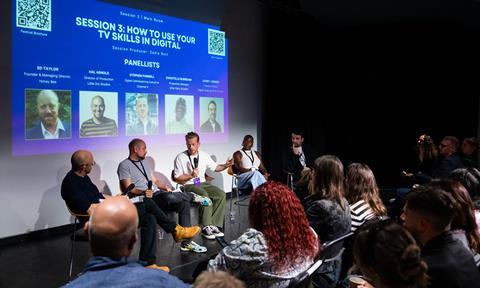
Danny Lorimer, creative director of Sony Pictures Entertainment’s newly-formed digital studio, agreed. But he warned that TV professionals needed to be familiar with the digital world if they hope to exploit it.
“The single biggest thing I would say is: watch digital content. When I interview freelancers I ask, ‘What’s your favourite YouTube channel?’. The number who say Hot Ones or Chicken Shop Date is incredible – they’re great shows, but that’s the first tier of entry. It’s like applying for a TV company and saying you don’t watch any TV.”
He also urged freelancers to have a go at making their own video content, even if only to get to grips with how the platforms work.
He said: “If you can show that you can build a digital following, even a small one, it’s a good thing to have at interview.”
And, he added: “Don’t be put off by people on LinkedIn making it seem way more complicated than it actually is. It’s just still making good content and getting people to watch that stuff.”
It is tough out there – but struggling freelancers shouldn’t feel they have failed
Every single speaker at the event was clear that the shifting market had created a difficult, and in some cases, unsustainable situation for freelancers, where there simply aren’t enough jobs to go around. The result is experienced, talented workers unable to find employment.
Opening the event, Adeel Amini said: “For months, maybe years, many of us have looked at silent phones and empty inboxes and thought, ‘Is it me? Am I a failure? Have I lost my talent?’”
He went on: “Not a single person in this room should feel that way. The system is struggling, but your talent, your drive, and your worth have not diminished one fraction.”
Later, during a panel discussion, he urged freelancers to appreciate that a lack of work “doesn’t take away your skills, doesn’t take away what you’re good at”.
Tickets for the Glasgow edition of Freelancer Fest, which will take place at The Social Hub Glasgow on Sunday 21 June are available here: http://bit.ly/TVMffGlasgow






No comments yet